Manufactured home utility connections need parcel-specific review before you commit to land. Confirm who controls each service, whether service reaches the planned home site, and who can approve the connection.
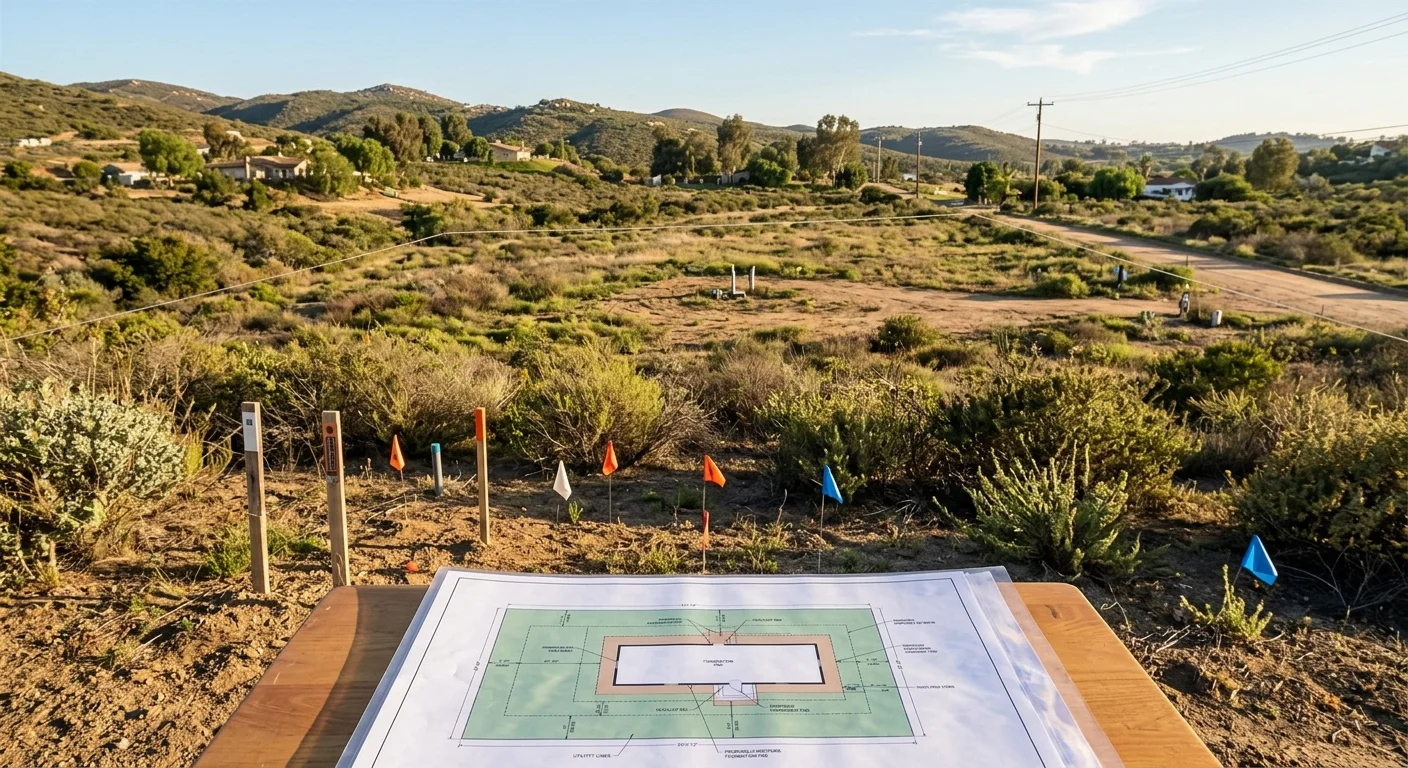
A listing that mentions nearby utilities doesn’t answer those questions. Written findings from the agencies, providers, dealer, installer, and site professionals give you a clearer basis for deciding whether to proceed.
Identify the city or county jurisdiction
Start by identifying which government office handles the parcel. Don’t rely only on the city name shown in a listing or mailing address. Ask the planning counter to confirm the jurisdiction using the parcel information.
This matters across San Diego County. A parcel near Oceanside, Ramona, Chula Vista, or San Ysidro shouldn’t be reviewed using an answer obtained for another location. Coastal North County, inland North County, central San Diego, East County, and the South Bay can involve different agencies and service providers.
For land outside a city boundary, begin with San Diego County Planning & Development Services. Its site is an approved place to find the county’s current contact paths. For land within a city, ask that city’s planning office where to begin.
Give the agency the exact parcel identifier and proposed use. Explain that you’re considering a manufactured home on private land. Ask which office can address land use, placement, foundation, access, and utility questions.
Don’t ask only whether manufactured homes are generally allowed. Your questions need to cover the proposed home and its intended location on that parcel. A general answer about the area isn’t a parcel approval.
Record the following details:
- The agency and department contacted
- The staff member or public counter used
- The parcel information supplied
- The home type described
- The questions asked
- The date of each answer
- Any follow-up contact or document requested
Our guide to putting a home on private land explains the broader placement decision. The utility review is one part of that process, but it needs its own written record.
Confirm which utilities reach the parcel
Build a manufactured home site utility checklist around the planned home location. Don’t stop after confirming that a service exists somewhere near the property. Ask whether the provider can serve the proposed home site and what further review is needed.
Cover each service separately. Your checklist may include electricity, drinking water, wastewater, gas, and communications. On a parcel where a well, septic system, propane, or another private system is being considered, ask the governing agency and qualified site professional what must be evaluated.
Use direct, parcel-specific questions:
- Does your organization serve this parcel?
- Is service already present on the property?
- Where is the nearest confirmed service point?
- Can you review the proposed home location?
- What information is needed for a capacity decision?
- Who determines whether an extension is possible?
- Which findings can be provided in writing?
- How long should the written answer be treated as current?
A seller, listing agent, neighbor, or prior owner may offer helpful background. Treat that information as a starting point. It shouldn’t replace confirmation from the organization that controls or provides the service.
Keep the difference between “nearby,” “available,” and “approved” visible in your notes. Ask the provider which description is accurate for this parcel. If the provider can’t confirm an answer yet, write “not confirmed” beside that item.
Don’t turn uncertainty into an assumption. Note what couldn’t be confirmed and who must decide it. That creates a useful next step without inventing a requirement, capacity, or price.
For rural property, use our septic and well checklist to organize water and wastewater questions. Rely on parcel-specific agency and professional findings rather than general expectations.
Separate utility capacity from connection cost
Utility capacity and connection cost are different questions. Keep them on separate pages of your due-diligence file.
Capacity asks whether the proposed service can be supported. Cost asks what work, approvals, materials, and provider charges would apply. A positive answer to one question doesn’t supply an answer to the other.
Don’t publish or rely on a generic allowance for manufactured home utility connections. The governing agency, utility provider, dealer, installer, and qualified site professionals must address the actual parcel.
Ask each organization to label its answer clearly:
- Confirmed service status
- Capacity review still needed
- Proposed connection point
- Work included in the written scope
- Work excluded from that scope
- Charges set by another organization
- Conditions that could change the finding
- Date through which the answer remains usable
If someone gives you a verbal price, request a written scope. Check whether it covers only the provider’s portion or also addresses work between the service point and home site. Don’t add missing work to your budget using an estimate from memory.
The same discipline applies when comparing parcels. A lower land price doesn’t establish a lower total project cost. Compare written findings for the same categories before deciding which property fits.
Our guide to costs before mobile home placement can help organize the wider purchase picture. Keep its categories separate from any parcel-specific utility findings you receive.
When an amount or rule remains unknown, state that plainly in your decision sheet. List the authority or provider that sets it, then request confirmation before your land contingency or other decision point passes.
Coordinate dealer and installer site reviews
Bring the dealer and installer into the utility discussion before selecting a home or finalizing the site plan. Give each professional the same parcel documents, proposed home location, and written utility findings.
Land & Home SD connects buyers with licensed, independent manufactured home professionals. We don’t connect utilities, prepare site plans, perform installation work, or approve a parcel.
Ask the dealer to identify the proposed home’s relevant specifications and documents. Ask the installer what parcel information and site review they need. Then take any unresolved service questions back to the governing agency or utility provider.
California defines a manufactured home as a qualifying structure built on or after June 15, 1976. The definition includes systems within the home, but it doesn’t answer whether a particular San Diego County parcel can supply those services. California HCD’s manufactured and mobilehomes page is the approved starting point for current regulator information.
You can also use HCD’s occupational licensing page to find the regulator’s current licensing resources. Don’t substitute a business card, advertisement, or verbal statement for the regulator’s information.
During coordination, watch for unanswered handoffs. A provider may address service to a stated point without addressing the path to the home. A dealer may discuss the home without deciding site feasibility. An installer may need agency findings before completing a useful review.
Put those boundaries in writing. Assign every open question to the organization that can answer it. Don’t ask one party to confirm another party’s requirements, charges, or approval.
The buying and placement process offers a broader sequence for working through a purchase. For utility due diligence, keep the parcel, home, provider, and site information aligned throughout that sequence.
Get written findings before buying land
Create one parcel file before making the final land decision. It should show what was confirmed, what remains open, and which organization controls each unanswered item.
Start with the parcel identifier and jurisdiction. Add the proposed home type and location. Then attach agency correspondence, provider responses, site notes, home information, and written scopes. Label each document with its source and date.
A simple decision table can keep the record readable:
| Item | Who confirms it | Current status | Written proof |
|---|---|---|---|
| Parcel jurisdiction | City or county office | Confirmed or open | Agency response |
| Service area | Utility provider | Confirmed or open | Provider response |
| Capacity | Utility provider or governing authority | Confirmed or open | Written finding |
| Home specifications | Dealer | Confirmed or open | Home documents |
| Site connection scope | Installer and site professionals | Confirmed or open | Written scope |
| Unresolved approvals | Governing agency | Confirmed or open | Agency direction |
Don’t mark an item complete because someone expects approval. “Expected,” “nearby,” and “previously used” aren’t the same as a current written finding for your proposal.
Read every scope for exclusions. If trenching, grading, restoration, design work, testing, equipment, or agency charges aren’t addressed, don’t assume they’re included. Ask the responsible professional whether that category applies and who can price it.
Before committing, send the same site plan and home information to everyone involved. Conflicting versions can produce answers that don’t fit together. Keep dated copies when plans change.
Our private-land feasibility guide helps frame the larger decision. Use it alongside the utility file, not as a replacement for parcel-specific answers.
If no authority can confirm a requirement, fee, or capacity, record that gap. Ask who has final authority and what they need to decide. A clear unknown is safer than an unsupported assumption.
When to call us
Call before committing when the parcel’s jurisdiction, utility status, or professional roles remain unclear. Land & Home SD can help you organize the buying decision and identify the licensed local professionals you still need.
Call us at (858) 400-4608 and we’ll walk through your options and connect you with a licensed local dealer.