The cost of putting a mobile home on land isn’t one number. Your budget may need separate figures for the home, parcel, access, grading, utilities, foundation, permits, delivery, setup, and title work. Confirm each category for the exact San Diego County parcel before you commit.
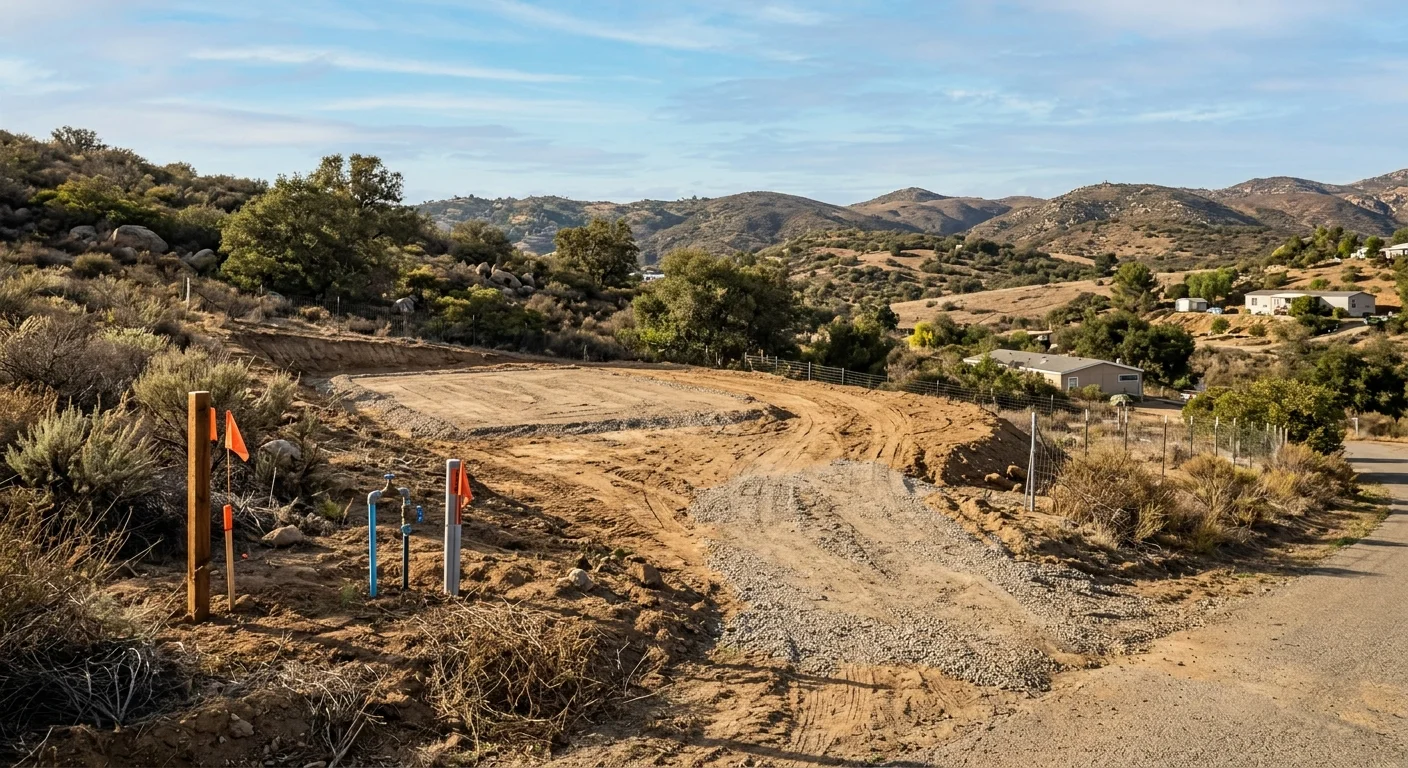
Separate the home price from site preparation
Start with two columns. One covers the home and its stated sales package. The other covers everything needed to place that home on the chosen parcel.
Ask the seller to identify exactly what the home price includes. Don’t assume delivery, installation, foundation work, utility connections, permits, or finish work are included. Each excluded item needs a responsible party and a written figure.
Your land column also needs careful boundaries. Separate the purchase price from parcel research, access planning, site evaluation, grading, drainage, foundation design, utility work, permit charges, and any required title or lien work. If financing is involved, ask the lender to identify its charges separately.
This structure prevents a low home price from hiding an incomplete placement budget. It also makes competing proposals easier to compare. Our manufactured home cost and pricing guide can help you organize the home side of that worksheet.
California law uses different definitions for mobilehomes and manufactured homes. A qualifying structure built before June 15, 1976 is a mobilehome. A qualifying structure built on or after that date is a manufactured home. Confirm the unit’s legal description and documents before requesting placement quotes.
Don’t copy a total from another project. A quote tied to an Encinitas parcel shouldn’t become the working budget for land in El Cajon. Label every proposal with the parcel address, home details, date, included work, exclusions, and the person who supplied it.
Check access, grading, utilities, and foundation scope
Access comes first because the home must reach its planned location. Ask the installer to review the proposed route before pricing placement. The written response should address the road, entrance, turns, overhead clearance, staging area, and final approach.
Don’t accept “delivery included” without a boundary. Ask where delivery begins and ends. Confirm whether the proposal covers route planning, transport, unloading, placement, joining sections, exterior closure work, steps, landings, and cleanup. If an item belongs to another company, record that company beside it.
Grading needs its own written scope. Ask what site information is required before anyone prices clearing, excavation, drainage, pad preparation, or related work. If a report, plan, or professional review is needed, identify who orders it and who pays for it. Don’t place an allowance into the budget unless its source is named.
Handle utilities one service at a time. Ask the relevant provider or qualified professional to confirm availability and scope for electricity, water, sewer or another wastewater arrangement, gas if proposed, and communications. Record whether the quote stops at the property line, meter, foundation, or connection point.
Foundation costs also need a clear path. For installation as a permanent fixture, California Health and Safety Code section 18551 requires a building permit, ownership or qualifying lease evidence, lien information, approved foundation plans, and manufacturer installation instructions. The statute states an $11 fee per transportable section, but that isn’t the total foundation or permit cost and may be adjusted. Confirm the current charge with the reviewing agency.
Match the parcel to the permitting authority
Buying land doesn’t answer whether your proposed home and placement plan will be accepted. Before committing, give the parcel address and home description to the appropriate public office. Ask which agency reviews the site, which applications apply, and which plans it expects.
For land that may fall under county review, start with San Diego County Planning & Development Services. Ask whether that office is the correct authority for the parcel. If it isn’t, request the name of the city or agency that is.
Don’t ask only, “Can I put a manufactured home here?” Describe the actual proposal. Include the unit, intended use, foundation approach, access point, utility plan, and proposed location on the parcel. Ask for written directions or links to the current application materials.
Those figures must come from the reviewing county or city office. Ask it to separate planning, building, grading, foundation, utility, inspection, and recording items that may apply to your proposal.
Registration and title questions belong with California HCD, not the DMV. HCD’s registration and titling information is the starting point. For a used home, ask the escrow and title parties what documents, lien releases, and tax clearance information they need.
Our guide to placing a manufactured home on private land in San Diego covers the broader decision. Use it alongside parcel-specific answers from the actual reviewing authority.
Build a quote checklist for dealers and installers
A useful quote should tell you what is included, excluded, and still unknown. Give every dealer and installer the same parcel and home information. Then ask them to respond to the same checklist:
- What home, model, and transportable sections does the proposal cover?
- Is transportation included, and where does that scope end?
- Has someone reviewed access to the planned placement area?
- Which site preparation items are included?
- Which foundation tasks, plans, and materials are included?
- Who handles permit applications and agency coordination?
- Which utility connections are included, if any?
- Which exterior closure and entry items are included?
- Which tasks need separate contractors or providers?
- Which figures are fixed, quoted allowances, or still unconfirmed?
- What documents or site findings could change the scope?
- Who receives payment for each part of the project?
Ask for names beside every responsibility. “By owner” or “not included” is useful only when you know who must supply the missing work. An empty line isn’t a budget.
Use our private-land placement service to prepare for conversations with licensed independent local professionals. Land & Home SD can help you compare the roles without claiming to perform the installation.
Some buyers also consider a combined purchase structure. Our article about manufactured home and land packages in San Diego explains that route. Keep the same discipline there. Separate the parcel, home, site work, permit path, utilities, title work, and financing figures.
Before comparing totals, return any proposal with an unclear exclusion. The lowest number may simply contain fewer tasks. Compare matched scopes, not only the last line.
Identify every figure that still needs confirmation
Beyond the statutory item noted above, get current placement amounts directly from the agencies and professionals responsible for the parcel. Keep unknown costs open instead of filling them with a regional estimate.
Mark each of these figures “not confirmed” until its source supplies it:
- The land purchase and closing figures
- The manufactured home purchase figure
- Delivery and transport-related charges
- Route or access work
- Clearing, grading, drainage, and pad preparation
- Foundation design, materials, and installation
- Electricity, water, wastewater, gas, and communications
- Planning, building, grading, inspection, and recording charges
- Title, lien, escrow, and tax-related amounts
- Entry steps, landings, exterior closure work, and cleanup
- Financing and insurance figures, when applicable
For permit figures, ask the county or city reviewing office. For utility figures, ask each provider about the exact parcel and connection point. For home, transport, foundation, and installation figures, request written proposals from licensed independent professionals. Ask escrow, title, tax, lender, and insurance contacts for their own portions.
If someone provides a single project total, ask for the underlying scope. Record the source, date, parcel, home, inclusions, and exclusions. Don’t replace an unknown with a figure borrowed from another county, city, home, or lot.
The better question isn’t, “What does placement usually cost?” Ask, “Which required items remain unpriced for this parcel and home?” That question exposes gaps before they become commitments.
When to call us
A conversation is useful before you buy land, select a home, or accept a placement proposal. Land & Home SD can help you organize the open questions and identify which local professionals should provide the missing figures.
Call us at (858) 400-4608 and we’ll walk through your options and connect you with a licensed local dealer.