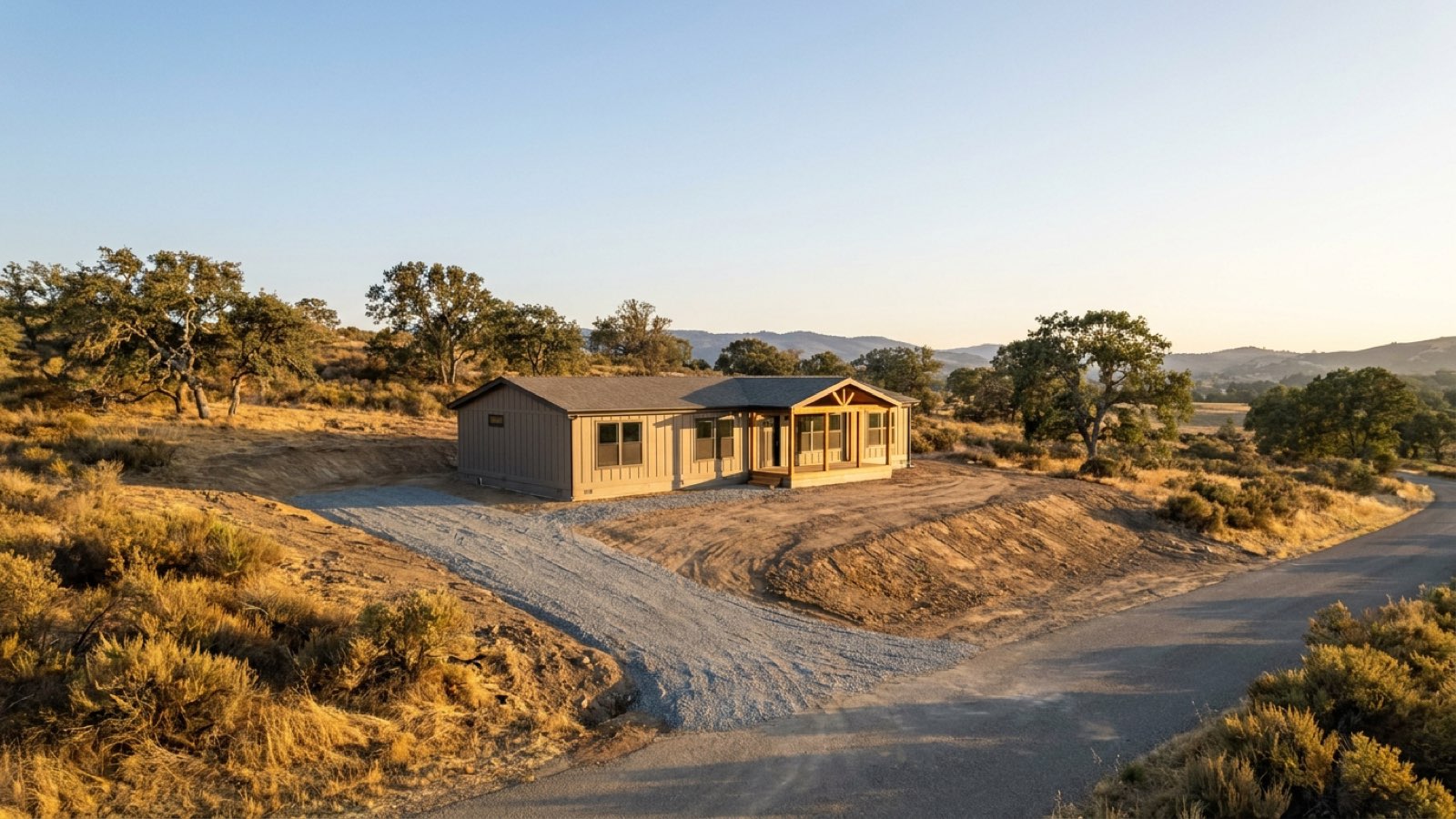
Instead of shopping for land and a home as two separate deals, you lock in both at once, and the lender treats the finished property, land plus permanently affixed home, as a single piece of real estate. That structure changes how you finance it, how you permit it, and how long the whole thing takes.
This is general education, not lending or legal advice. Confirm any specific lot’s zoning and any loan’s terms with San Diego County Planning & Development Services and a licensed lender before you commit to a parcel.
What is a manufactured home and land package?
It’s a bundled purchase of raw or semi-improved land and a new HUD-code manufactured home, planned and built as one project. You’re not inheriting someone else’s lot-plus-home combo. You’re starting with a parcel that’s zoned for a manufactured home, ordering a new home from a dealer, and coordinating the site work, permits, and installation so the home lands on a foundation system the county has approved. Once it’s set and inspected, the dealer or a licensed installer files a 433A with the county recorder, which converts the home from personal property to real property, tied permanently to that parcel. That single step is what makes conventional mortgage financing possible later, and it’s what separates a package deal from a mobile home sitting on a rented space.
This is different from placing a home on private land you already own free and clear. Here, the land purchase and the home purchase happen together, on the same timeline, often through the same financing.
How do you finance land and a home together?
Most buyers use a one-time-close construction loan, sometimes called a land-home loan, that funds the land purchase, the site work, and the home in a single package with one closing and one set of payments once construction wraps. Because the home gets affixed to the land and the 433A is filed, lenders can treat the whole thing as real property from the start, which opens the door to conventional and government-backed programs rather than the shorter-term, higher-rate chattel loans used for homes on rented land. FHA and VA both have construction-to-permanent options that can cover land and a manufactured home, but they’re harder to source than a standard mortgage. Fewer lenders offer them, so expect to ask specifically for a manufactured housing construction loan and to shop more than one lender.
The alternative is buying the land with cash or a separate land loan, then financing the home on its own, which usually means chattel financing if the home isn’t affixed yet. That path can work, but it splits your closing costs and rate risk across two transactions instead of one. For a deeper breakdown of loan types and qualifying, see manufactured home financing and how manufactured home financing works in California.
Where can you still find land for a manufactured home in San Diego County?
Mostly in the inland and rural parts of the county, where lot sizes and zoning still allow it. Coastal and central San Diego are built out and expensive, and most zoning there doesn’t permit a standalone manufactured home on a residential parcel. The backcountry is a different story. Areas like Ramona, Valley Center, Fallbrook, Alpine, Jamul, Julian, Campo, and Boulevard have larger parcels, more agricultural and rural residential zoning, and a longer track record of manufactured and modular homes on private land. Pricing and availability shift constantly, so a specific lot always needs its own zoning check with the county before you write an offer. Our San Diego locations page breaks down where our network is most active, and Ramona is a good example of a market with real land inventory.
What does the process look like from lot to move-in?
It runs in a fairly fixed order, and skipping a step is what causes delays.
- Find land zoned for a manufactured home. Confirm the parcel’s zoning allows it as a primary residence, not just an ADU or agricultural accessory unit.
- Verify utilities and access. Check whether the lot has power, a well or water connection, septic or sewer, and a legal recorded easement for road access. Rural lots often need a septic feasibility study before anything else moves forward.
- Order the home. Work with a dealer to select a HUD-code home that fits the lot, the setback requirements, and your budget.
- Grading, foundation, and permits. The county reviews grading plans, foundation design, and utility connections before issuing building permits. This stage takes the longest on undeveloped land.
- Set and finish the home. The home gets transported, craned or set onto the foundation, and connected to utilities, then finished out (skirting, decks, driveway).
- File the 433A. Once final inspection passes, the installer records the 433A, converting the home to real property and closing out the construction loan into permanent financing.
Walking through the buying and placement process with a dealer in our network before you commit to a lot can catch zoning or utility problems early, while they’re still cheap to fix.
What drives the total cost of a land-and-home package?
Two things stack together: the land itself and everything it takes to make that land buildable. Land price varies enormously by area, lot size, and whether it already has usable access and utilities. Site work is the part buyers underestimate most: grading, a septic system or sewer connection, drilling or connecting a well, running power to the site, building or improving a road, and pouring the foundation. On an undeveloped rural parcel, site work can add tens of thousands of dollars depending on distance to utilities and terrain. Permit fees layer on top of that, and they vary by jurisdiction and scope of work. The home itself, delivery, and setup round out the package. For a fuller breakdown of what goes into the home price specifically, see what a manufactured home costs and manufactured home cost in San Diego.
What should you check before buying a package deal?
Confirm five things before you sign anything: that the parcel’s zoning actually allows a manufactured home as a residence, that utilities are either available or realistically budgeted for, that a permit path exists with the county for the specific foundation and grading you’ll need, that your financing is pre-approved for a construction or land-home loan (not just a standard mortgage), and that the plan includes filing the 433A so the finished property counts as real property for tax and resale purposes. Skipping any one of these is how buyers end up with land they can’t build on, or a home they can’t easily refinance or sell later. If you’re weighing a factory-built home against site-built or modular and prefab homes, it’s worth comparing options before you commit to a specific lot, since some parcels suit one build type better than another.
We’re a free buyer referral service for San Diego County, not a dealer, a lender, or a law firm. We connect buyers with independent licensed professionals across the county’s San Diego locations who handle land sourcing, site work, and installation.
Frequently asked questions
Can you buy land and a manufactured home with one loan?
Yes, one-time-close construction loans (land-home loans) can fund the land, site work, and the home in a single closing, and some FHA and VA construction programs cover manufactured homes as well, though fewer lenders offer those options.
How much land do you need for a manufactured home in San Diego?
It depends on the parcel’s zoning, not a fixed minimum, since setback rules, septic sizing, and lot coverage limits all factor into what a specific lot can support. Rural parcels in areas like Ramona or Valley Center often run larger than typical suburban lots, which gives more flexibility.
Is it cheaper to buy land and a manufactured home separately?
Not usually. Buying separately often means paying two sets of closing costs and financing the home with a shorter-term chattel loan until it’s affixed and converted to real property, while a bundled package can finance both under one construction loan with one closing.
Do land-and-home packages qualify for FHA or VA loans?
They can. Both programs have construction-to-permanent options that cover manufactured homes on land the borrower owns or is purchasing, but these loans require more specialized lenders than a standard home mortgage, so plan to shop around.
Can I put a manufactured home on rural or agricultural land in San Diego County?
Often, yes, but it depends entirely on the parcel’s specific zoning designation, not on the general area. Some agricultural zones allow a manufactured home as the primary residence, others restrict it to farm labor housing or accessory use, so a zoning check with the county before purchase is essential.