A listing tagged Rancho Valley can point at a different legal park name, a different city, or an unincorporated East County street. That mix-up gets expensive after you have paid for an inspection and a deposit. Match the current park name, the city or county on the space, and the written occupancy terms before you offer.
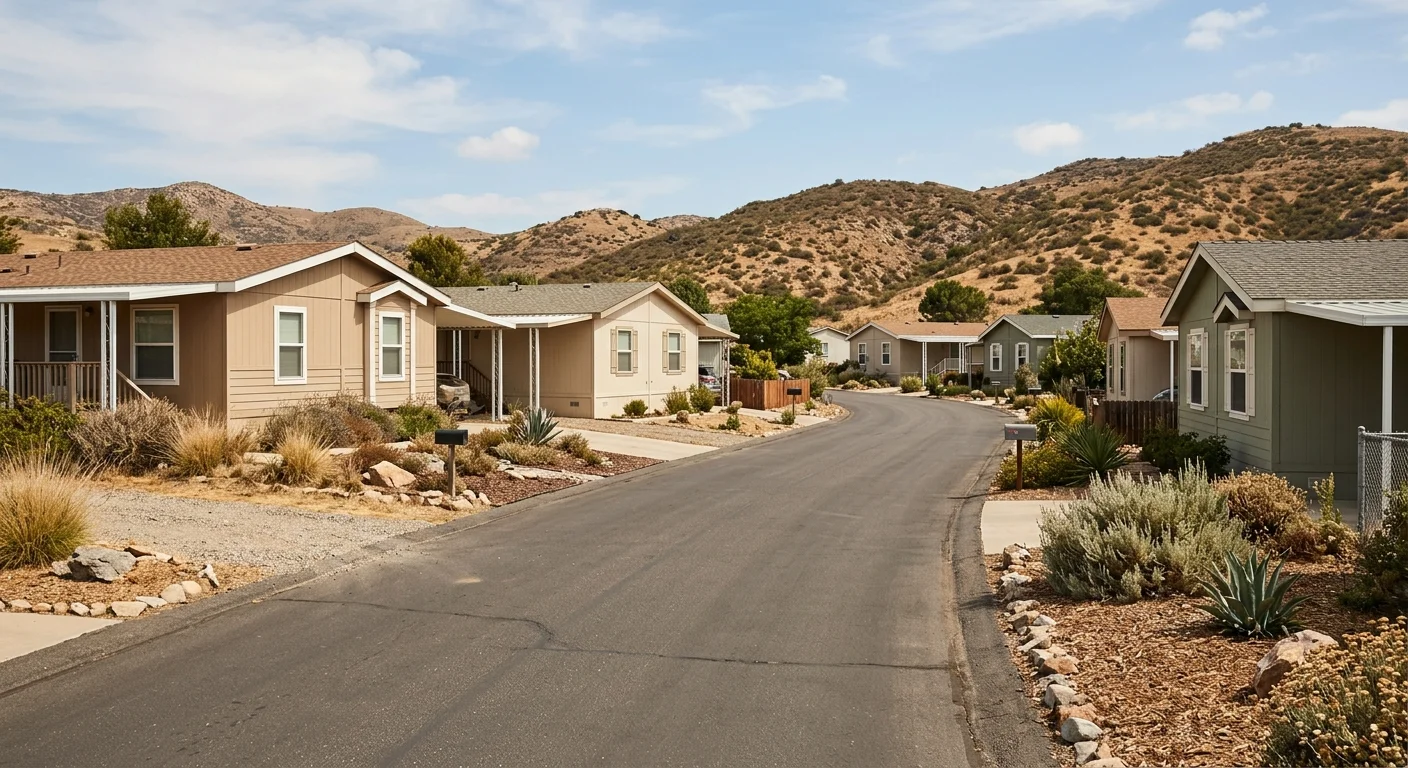
Confirm the park’s current name and location
People type “rancho valley mobile home park” because a listing, a map pin, or a friend used that label. The name on a space agreement, an HCD title, or a tax bill can read differently. Start with the legal name, then the street, then the city.
Land & Home SD’s verified claims ledger does not include a current legal name, street address, space count, or published charge sheet for a community titled exactly Rancho Valley Mobile Home Park. The public California HCD manufactured and mobilehome pages also did not give us a confirmed, current identity for that exact string. Treat every Rancho Valley manufactured homes listing as a lead to verify. It is not proof of the park.
Ask management for the legal park name as it appears on the space rental agreement. Match that string to the home’s HCD registration. Match both to the address on any tax document. Walk the map pin against the street on those papers. East County listing titles often keep an old marketing name after a sale or a rebrand.
Two nearby names make this worse. Rancho San Diego is a place name in unincorporated East County, just south and east of the City of El Cajon. It is not, by itself, a park identity. Rancho Bonita is a different named community with its own buyer checks. A “Rancho” or “Valley” label in El Cajon is not automatically the same community.
Land & Home SD does not operate this park, represent management, sell homes there, approve applications, or set charges. You contract with the seller and with the park. The independent dealer or installer we connect you with handles licensed sales and set work.
If the office cannot produce a current legal name and a matching street, pause. A photo tour is not identity. A recycled flyer is not identity either.
Separate El Cajon from nearby East County results
El Cajon is an incorporated city on the I-8 corridor in inland East County. It sits east of La Mesa, west of Alpine, and south of Santee and Lakeside. Summer heat on a pad there is a different living condition than a coastal space in Encinitas. Street grades, housing stock, and which counter issues a permit also change once you leave city limits.
Map pins for this search spill into Lakeside, Santee, and unincorporated pockets around Rancho San Diego. A ZIP code is a mail hint. It is not a jurisdiction. Confirm whether the space is inside the City of El Cajon or in county territory. City hall and San Diego County Planning & Development Services are different counters. County PDS handout 103 covers eligible manufactured homes on private lots in county jurisdiction. It is not a park occupancy rulebook. It is not a City of El Cajon park standard.
Use our El Cajon mobile home park buyer checks for the citywide pass, then come back to this named-park file. If the pin drifts north, run the same identity test in Lakeside or Santee. Do not force an El Cajon story onto the wrong street.
Age rules, pet rules, and guest rules are park-specific. We could not confirm from the ledger whether a community marketed as Rancho Valley is 55-plus, all-age, or something else. Read the current rules packet from the office. California’s Mobilehome Residency Law exists as Civil Code sections 798 through 799.13 and applies to mobilehome park residency. The detailed tenant-protection list could not be verified from the primary sources in our ledger, so do not treat a blog summary as your rights. Read the statute and the park’s current writing together.
Searchers also ask whether a general statewide rent cap applies inside a park. That point could not be confirmed in the claims ledger for this community. Park occupancy in California sits in its own statute family. Get current advice from a qualified local professional before you treat an apartment rule as a park rule.
Review written park, title, and financing records
Buy the paper, not the listing photos.
Start with the park file. Get the current space agreement, the current rules, the current charge sheet, any occupancy policy, and the written process for approving a buyer. Ask what the monthly charge includes and what is billed apart from it. We have no verified space rent, utility bundle, or deposit figure for this park. Confirm every number with management before you budget. For how those line items usually stack in the county, see our space rent checks.
Then pull the title file. Manufactured homes and mobilehomes in California are registered and titled through the Department of Housing and Community Development, not through the DMV. Under Health and Safety Code 18007, a manufactured home is a post-June 15, 1976 HUD-code home. Under 18008, a mobilehome is the pre-June 15, 1976 unit. That date changes construction standards, lender comfort, and insurance questions. Pull the HCD title, the registration card, and lienholder names. For a used home, California law puts the current registration card, junior-lien copies, and the certificate of title into escrow. HCD registration and titling is the public starting point. Pair that with our El Cajon title checks before offering.
A park purchase is usually a home plus a space tenancy, not a lot you own. Converting a home to a permanent foundation is a separate HCD and local-permit path under Health and Safety Code 18551. Local agencies generally cannot require that conversion for a home already in a mobilehome park, with limited exceptions around park conversions. Confirm which deal you are actually buying.
Then build the financing file. HUD Title I can finance a manufactured home, a lot, or both. HUD states the home may be personal property or real estate, and that a borrower may lease a site in a park with a required initial lease term of three years and at least 180 days’ advance written notice if the lease will be terminated. That is HUD’s published structure. It is not an approval, a rate, or a promise that this park’s lease will qualify. Walk the buying and placement process with a licensed local dealer before you apply. Verify that dealer on HCD occupational licensing.
A listing at a round number that looks like a bargain still needs this same stack. We have no verified sale prices for homes in this park, including low advertised figures. Condition, title, and park approval decide whether a cheap home is buyable.
Compare this park with other East County options
Once the identity is real, compare the living deal, not the marketing name.
Los Coches Mobile Home Estates is a different named East County community with its own paperwork. Santee, Lakeside, Alpine, and the rest of El Cajon each change commute, heat, and which agency you call. Use the East County compare-before-touring notes so you are not touring three parks that are actually two cities and a county island.
Park versus private land is the bigger fork. A park space is typically a tenancy under the Mobilehome Residency Law plus an HCD-titled home. Private land in county jurisdiction can involve PDS review, a foundation path, and a different tax and loan shape. Land & Home SD can connect you with licensed independent dealers and installers for either path. We do not sell manufactured homes from inventory, and we do not hold park spaces.
Ownership of the park itself is another fork. Some East County communities are resident-owned. Others are investor-owned. We could not confirm the ownership form for a park marketed as Rancho Valley. The space agreement and any recorded park documents are the source. A map label is not.
Replacement rules matter if the home on the space is past its useful life. Parks set their own standards for incoming units, subject to state law. Get those standards in writing before you bid on a tired home with a plan to swap it.
Amenities and activity calendars are nice when they are real. They are not in our verified ledger for this name. Tour them in person. Do not budget around a listing’s recreation paragraph.
Confirm current terms before applying or offering
Applications and offers lock you into today’s terms, not last year’s flyer.
Sit with management and ask for the current charge sheet, the current rules, the occupancy policy, and the buyer-approval steps. Ask how utilities are billed. Ask how often charges change. Ask what happens if you need to replace the home later. Write down the date of the copy they hand you. If two listings for “Rancho Valley” show two different streets, treat them as two parks until the papers match.
Do not send a deposit to a seller until the park has confirmed, in writing, that you can occupy that space on those terms. Seller and park are different parties. Park approval of the buyer is often a separate gate from the home sale.
If you need a loan, take the current lease and rules to the lender before you fall in love with the floor plan. HUD’s three-year initial lease structure is a floor for Title I lot-lease cases. The park may require a longer term, a shorter remaining term, or a form the lender will not take. Confirm that against this park’s current paper.
Then inspect the home as a manufactured or mobilehome, including the chassis, roof, electrical, and any additions. Additions on park homes are a frequent title and permit mess. If an addition is not in the HCD record, ask the dealer we connect you with how to handle it before you offer.
When to call us
Call before you write a deposit on a home whose park name, city, and space terms still disagree. Land & Home SD is a referral service. The consult is free to buyers and comes with no obligation. Call us at (858) 400-4608 and we’ll walk through your options and connect you with a licensed local dealer.