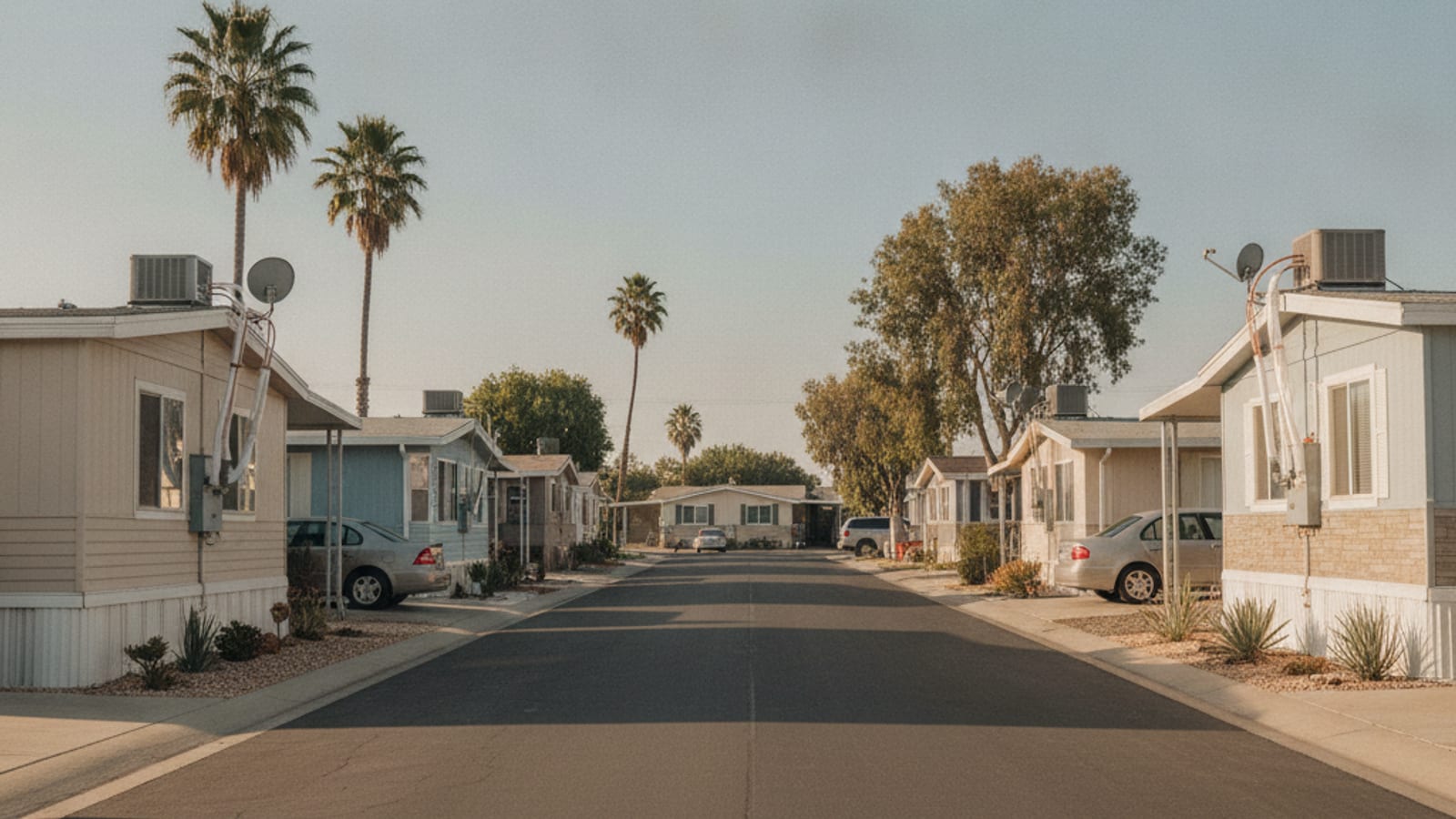
There’s no single number for mobile home space rent in San Diego County. It shifts by city, by park, by whether the lot backs up to a golf course or sits three streets from the freeway, and by whether that park has a local rent ordinance capping increases at all. What you can pin down is what actually drives the price, which San Diego County cities regulate space rent and which don’t, and how to weigh a low home price against a park where rent has room to climb. That’s what decides whether a park home is a smart buy or a slow leak on your budget.
What is space rent, and what does it actually cover?
In a land-lease community, you own the manufactured home itself but pay monthly rent for the ground it sits on. That’s space rent, sometimes called lot rent or pad rent. It’s separate from your mortgage or cash purchase price on the home.
What it doesn’t cover varies by park: some bill electricity and gas separately, some include basic landscaping maintenance in common areas, and clubhouse or pool access is sometimes an add-on fee rather than baked into the base rent. Ask for the park’s current rent schedule and fee sheet before you make an offer on any home, not after.
Mobile home space rent in San Diego: is there rent control?
Partially, and it depends entirely on which city the park sits in. California’s Mobilehome Residency Law (Civil Code Section 798.30) is a statewide law that governs how parks operate, but it does not cap how much a park can raise your rent. What it does require is a minimum 90-day written notice before any rent increase takes effect. No statewide dollar or percentage ceiling exists.
The actual rent caps come from local ordinances, and seven San Diego County cities have adopted their own mobile home space rent stabilization rules: Chula Vista, Escondido, Imperial Beach, National City, Oceanside, San Marcos, and Santee. The mechanisms differ by city. Chula Vista and Oceanside tie allowable increases to a share of the Consumer Price Index. Imperial Beach and National City use a flat percentage cap. Escondido and Santee route increases through a rent review board that has to approve them case by case, and San Marcos uses a combination of CPI and net operating income factors.
Outside those seven cities, including the city of San Diego itself and most unincorporated areas, there’s no local cap on space rent increases. The MRL’s 90-day notice still applies everywhere in the state, but the park can raise rent by whatever amount it wants as long as it gives proper notice. That distinction matters more than almost anything else when you’re comparing two otherwise similar parks.
What about long-term leases: do they still get you out of rent control?
They used to, and this is worth knowing because a lot of older articles on this topic are now out of date. Assembly Bill 2782 closed that loophole for any lease signed on or after February 13, 2020. Leases signed before that date kept their exemption only until they expired or until January 1, 2025, whichever came first. Section 798.17 was repealed on that date, so the deadline has passed either way.
In practical terms: if you’re buying a home today, do not assume a long-term park lease will shield you from a local rent ordinance. As of 2026, it won’t. If a seller or park manager tells you otherwise, verify it directly with the park’s current lease terms before you sign anything.
What drives space rent up or down within San Diego County?
A few factors explain most of the spread between the cheapest and most expensive parks in the county.
Location. Coastal and near-coastal parks in cities like Carlsbad, Encinitas, and Oceanside generally carry higher space rent than inland parks in El Cajon, Santee, or Ramona. Land value drives this the same way it drives every other housing cost in the county.
Local rent ordinance. A park in one of the seven cities with a rent stabilization rule has a ceiling on how fast rent can climb. A park just outside that city’s border, sometimes literally across the street, doesn’t.
Age and amenities. Newer 55+ communities with a clubhouse, pool, fitness room, and on-site management tend to charge more than older, no-frills parks built decades ago. You’re paying for the amenities whether you use them or not.
What’s bundled in. A park that includes water, sewer, and trash in the base rent isn’t necessarily more expensive overall than one that bills them separately at a lower headline rent. Compare the all-in monthly number, not just the quoted space rent figure.
Park ownership. Resident-owned parks and some nonprofit-operated communities tend to see slower rent growth than parks owned by large corporate operators, though this varies case by case.

How should space rent factor into your buying decision?
Space rent is the recurring cost that a home listing price doesn’t show you. Two homes priced identically can have very different total costs of ownership depending on what the park charges and whether that park has any ceiling on future increases.
Run the math the way you’d run it on a rental property. Add twelve months of space rent to your annual cost of ownership alongside the mortgage or cash outlay, property tax on the home itself, and insurance. Then ask what happens if rent rises 5 to 8% a year for the next decade in a park with no local ordinance, versus a park where a CPI-linked cap limits that growth. Over ten years, that gap can matter more than a modest difference in the home’s purchase price.
It’s also worth asking the park directly about its rent increase history over the past five years before you commit. Past behavior is the best signal you’ll get for what to expect going forward, since neither state law nor most local ordinances guarantee a specific future number.
Our manufactured home cost guide breaks down the purchase-price side of this equation in more detail, including how park versus private-land ownership changes your total investment. And our buying process walkthrough covers how we help buyers evaluate a park home’s full cost picture, not just the sticker price on the home itself.
Chula Vista mobile home parks: what to know before you buy
Chula Vista carries one of the largest concentrations of mobile home and manufactured home parks in San Diego County, spread across both the western part of the city and the newer Otay Ranch area to the east. It’s also one of the seven cities with a local space rent stabilization ordinance, which ties allowable increases to the Consumer Price Index. That combination, real inventory plus an actual rent ceiling, is a big part of why Chula Vista shows up so often in park-home searches across the county.
That said, “rent controlled” doesn’t mean “cheap.” A CPI-linked cap still allows increases every year, and a park’s starting rent before you buy matters as much as the cap on future growth. If you’re specifically looking at manufactured homes for sale in Chula Vista, ask for the current rent schedule and the park’s increase history going back five years, then compare that against parks in nearby South County cities that don’t have an ordinance at all. Our Chula Vista manufactured homes page has more on the local market, and our full San Diego County service area covers every city with active park inventory.
Frequently asked questions
Is there rent control for mobile home space rent in San Diego?
It depends on the city. Chula Vista, Escondido, Imperial Beach, National City, Oceanside, San Marcos, and Santee each have their own local space rent stabilization ordinance. The city of San Diego and most other San Diego County cities do not have a local cap, so only the state’s 90-day notice requirement applies there.
How much notice does a park have to give before raising space rent?
California’s Mobilehome Residency Law requires at least 90 days written notice before any space rent increase takes effect, regardless of which city the park is in. This is a statewide minimum, not a substitute for a local rent cap.
Can a long-term lease help you avoid rent increases?
Not anymore. Long-term leases used to be exempt from local rent control ordinances under Civil Code Section 798.17, but that exemption was phased out and the section was repealed on January 1, 2025. Any lease today is subject to the local ordinance, if one exists, regardless of its length.
What’s typically included in space rent?
It varies by park, but space rent commonly covers the lot itself plus access to shared amenities. Many parks bundle water, sewer, and trash into the base rent, while others bill those separately. Always ask for the park’s full fee schedule, not just the headline space rent number, before comparing homes.
Is space rent negotiable when you buy a home in a park?
The rent itself generally isn’t negotiable since it’s set by park management under park-wide rules, not per resident. What can vary is the home’s purchase price relative to that rent, and some parks are more transparent than others about rent history and planned increases. Asking directly, before you make an offer, is the only reliable way to find out.
Should I still buy in a park with no local rent ordinance?
It can still make sense. Plenty of well-run parks outside the seven ordinance cities keep increases modest as a matter of practice, and location or price may outweigh the lack of a formal cap. The point isn’t to avoid those parks entirely, it’s to go in with eyes open and ask about increase history before you commit.
Talk through the numbers before you commit
Space rent is the part of buying into a mobile home park that’s easiest to underestimate and hardest to undo once you own the home. The right move is knowing what a specific park charges, what its increase history looks like, and whether a local ordinance gives you any ceiling at all, before you fall in love with a listing.
Land & Home SD helps San Diego County buyers work through that full picture, park by park, before any offer goes in. Call (858) 400-4608 and we’ll help you find a park with rent you can actually plan around, and a home that fits it. No pressure, no obligation.