If you’re searching for mobile homes for sale in East County San Diego, divide the search before booking tours. Start with separate El Cajon, Santee, Lakeside, and Alpine folders. Then compare title, land, financing, and seller details using one consistent checklist.
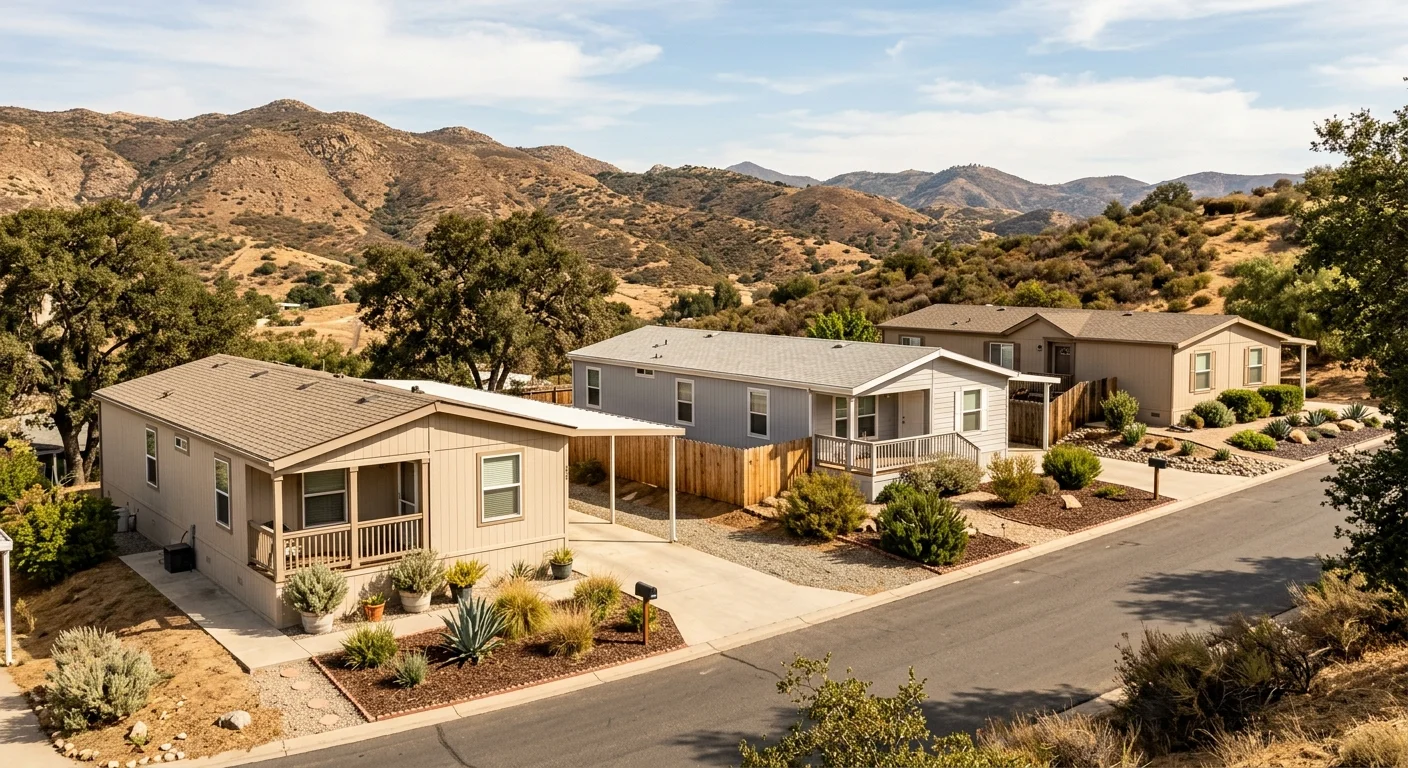
Group searches around I-8 and SR 67
A single East County search can produce a scattered list. Grouping results around I-8 and SR 67 makes that list easier to manage. Use the routes as planning labels, not proof that a home has convenient access.
Begin with an I-8 folder for El Cajon and Alpine searches. Create another folder around SR 67 for Santee and Lakeside. Keep each listing under the place name used by the seller. Don’t silently move a result because another label seems more accurate.
Search each place twice. Use “mobile home” in one search and “manufactured home” in the other. Sellers and listing platforms don’t always use the same term. California law also distinguishes them by construction date. A mobilehome was built before June 15, 1976. A manufactured home was built on or after that date and meets the applicable definition.
The California Department of Housing and Community Development publishes current information for manufactured and mobilehomes. Use its guidance when a listing’s terminology seems unclear.
Record the listing URL, stated location, home type, and seller contact. Also note whether the advertisement mentions a park, leased space, or included land. Leave a field blank when the listing doesn’t answer it.
That first pass should produce four smaller search groups. It shouldn’t produce a winner. The goal is to identify comparable homes before travel, calls, or paperwork begin. Buyers who still need a wider baseline can review our guide to manufactured and mobile homes for sale.
Separate El Cajon, Santee, Lakeside, and Alpine
Treat all four place names as separate searches. Don’t assume that an East County label tells you which agency handles a property. A mailing address, listing headline, and governing jurisdiction may not answer the same question.
A place name alone cannot assign a property to an incorporated city or unincorporated community. Confirm the jurisdiction for the exact parcel before relying on permit or land-use statements.
Ask the seller for the complete property address and parcel information. Then confirm which public agency handles that location. For property represented as being under county jurisdiction, start with San Diego County Planning & Development Services. If another jurisdiction is named, ask that agency to confirm its role.
Keep a location sheet for each search area. Use the same fields:
- Address and parcel information supplied by the seller
- Jurisdiction confirmed for that specific property
- Park name, when the home is advertised inside a park
- Whether land is stated to be included
- Seller or dealer identity
- Listing update date shown by the platform
- Questions that remain unanswered
This separation prevents details from one listing from drifting into another. It also helps when two advertisements use similar photos or descriptions.
For deeper local preparation, use the El Cajon offer checklist and the Santee park buyer checklist. Those pages organize questions for their named searches. They don’t replace verification for the home you’re considering.
Compare park homes with land-owned homes
The biggest sorting question isn’t the kitchen finish. It’s what the buyer would own after closing.
For a park listing, ask whether the advertised sale covers the home only. Request the current written terms that would apply to the buyer. Ask whether there is a separate park review, what charges are stated, and which restrictions affect occupancy or future plans. Don’t rely on figures copied from an older listing.
For a land-owned listing, ask the seller to document that the land is included. Confirm how the home and land are described in the transaction documents. Don’t treat phrases such as “on land,” “land-owned,” or “real property” as interchangeable proof.
Get the current rules and property-specific details directly from the seller, park management, escrow holder, lender, and governing agency before committing.
Build a side-by-side sheet with neutral fields:
- What property is included in the sale
- How the home is titled or recorded
- Which recurring charges are disclosed
- Which approvals are still pending
- Which financing options the buyer’s lender will consider
- Which documents support each answer
Leave unsupported claims marked “not confirmed.” That label is useful. It shows exactly where another call or document is needed.
A lower advertised price doesn’t settle the comparison. Neither does the phrase “includes land.” Compare the full ownership arrangement and the documents behind it. Our buying and placement process explains how to organize those decisions before an offer.
Carry one title and financing checklist
Take the same checklist to every East County tour. Consistency makes gaps easier to spot. It also gives a lender or escrow professional a cleaner file to review.
Start with the home’s construction date and identifying information. The date matters because California defines pre-June 15, 1976 units as mobilehomes and later qualifying units as manufactured homes. Don’t guess from appearance, remodeling, or the wording of an advertisement.
For a used manufactured-home sale handled through escrow, California law addresses the current registration card, title certificate, and documents held by junior lienholders. Ask the escrow professional which documents apply to the specific transaction. HCD, rather than the DMV, handles manufactured-home registration and titling in California.
Use HCD’s registration and titling page as the official starting point for current agency information. If a listing mentions a form, foundation status, or recording term, ask HCD or the responsible local agency what that item proves.
Your checklist should include:
- Construction date and identifying details
- Current registration and title documents
- Named owners and any disclosed lienholders
- Land ownership documents, when land is advertised
- Park documents, when a space is involved
- Written lender conditions for that home
- Escrow questions and unresolved document gaps
Financing can’t be confirmed from the listing category alone. Give the lender the actual title, land, foundation, and park information. Ask for a written explanation of what still needs verification. Keep that response with the listing rather than relying on memory during the next tour.
Verify listings before scheduling tours
A tour should follow basic listing verification. It shouldn’t be the first time you discover what the seller is offering.
Contact the seller or dealer through information you can independently confirm. Ask whether the home remains available. Request the exact address, stated ownership structure, construction date, and documents available for review. When a dealer or salesperson is involved, consult HCD’s occupational licensing information and ask HCD how to confirm current status.
Compare the reply with the advertisement. Pause when the location, ownership type, seller identity, or included property changes between conversations. Ask for the correction in writing.
Photos also need context. Request confirmation that they show the listed home. Ask which fixtures, exterior features, and improvements are included. Don’t assume a map pin, community photo, or sample interior represents the exact property.
Before scheduling, confirm these points:
- The home is still offered by the named seller
- The tour location matches the property being discussed
- The seller has explained whether land is included
- The park or private-land status is clear
- Title and registration documents can be discussed
- Your lender has enough information for an initial review
- Unconfirmed claims are listed for follow-up
Save screenshots or copies of the advertisement you reviewed. Listing language can change, so your notes should show which version informed your questions.
Land & Home SD doesn’t sell homes or hold inventory. We help buyers organize the search and connect them with licensed independent local professionals. That keeps the referral separate from the seller’s statements and the buyer’s final transaction.
When to call us
Call before an East County tour when the title, land, park, or financing details don’t line up. Land & Home SD offers buyers a free, no-obligation referral, but the buyer contracts and pays the matched professional directly.
Call us at (858) 400-4608 and we’ll walk through your options and connect you with a licensed local dealer.