When you’re buying rural land for a manufactured home, confirm the water and wastewater path before treating the parcel as home-ready. A listing, neighboring house, or visible utility marker can’t replace written findings for that specific land.
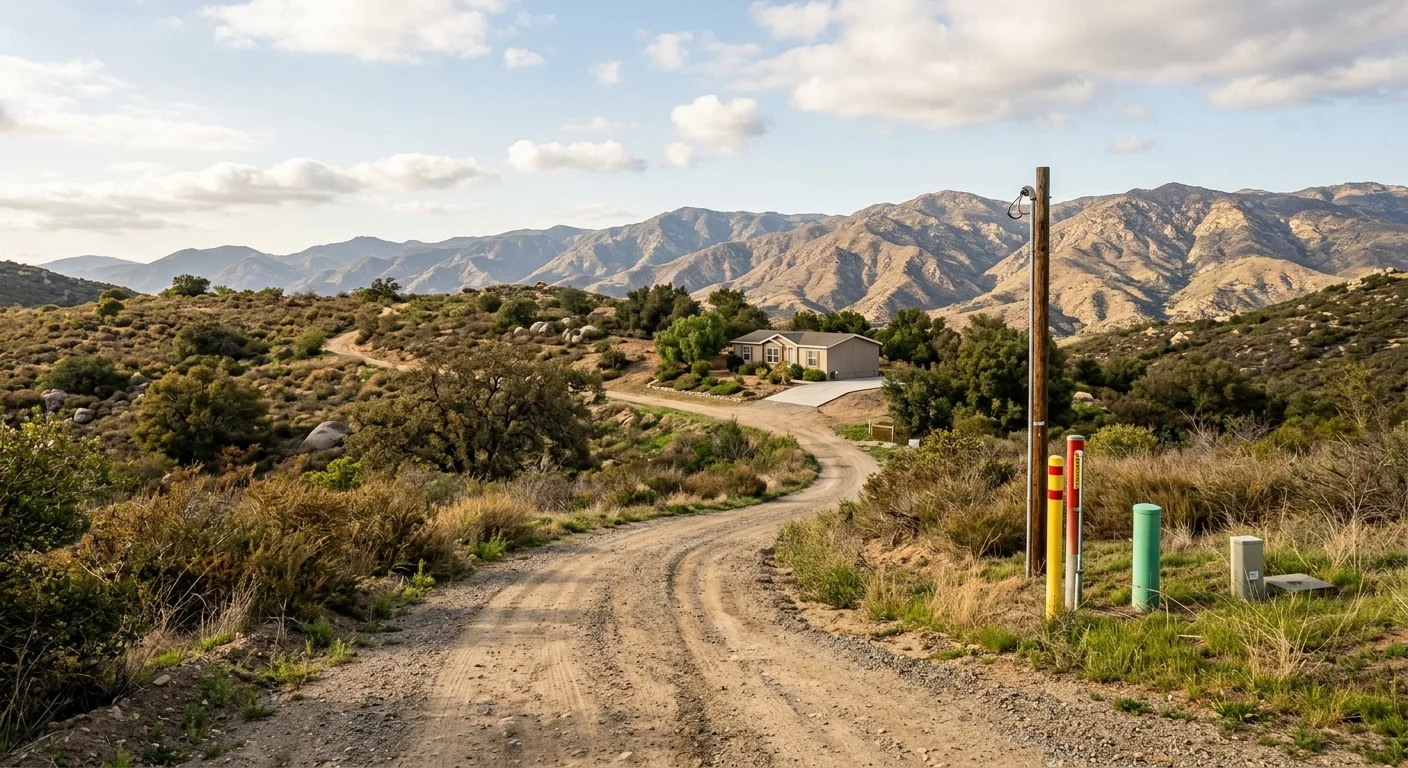
Confirm whether the parcel uses public utilities
Start by asking one direct question: does this parcel have confirmed public water and sewer service? Treat each utility as a separate issue. Water availability doesn’t confirm sewer availability, and the reverse is also true.
Ask the seller or listing agent for written documentation. Useful items may include current account records, utility correspondence, approved plans, or other parcel-specific material. A listing phrase such as “utilities nearby” doesn’t answer whether a connection is available to this parcel.
Confirm which utility provider serves the address or parcel number. Then ask that provider what it can verify in writing. Don’t rely on a marker, pipe, hydrant, meter box, or neighboring connection alone. Ask whether the provider recognizes the parcel and what further review it recommends.
If public service can’t be confirmed, don’t automatically assume a well or septic system will work. Record the answer as “not confirmed” and move to parcel-specific research. The authority and qualified professionals must determine what can be considered.
This utility check belongs near the start of any private-land placement plan. It should happen before a home selection drives the rest of the purchase. A home may fit the buyer’s goals while the land still needs unresolved research.
Keep a simple log with four columns:
- The utility or site question
- The person or office contacted
- The document received
- What remains unconfirmed
That log gives the buyer, dealer, and land professionals the same starting point. It also keeps an informal conversation from becoming an assumed approval.
Treat septic and well records as parcel-specific
A septic check before buying land should focus on the exact parcel. The same applies to a well check before buying rural land. Don’t transfer an answer from a nearby home, another listing, or a parcel across the road.
Ask the seller for every available record connected to the land. For septic, that might include prior correspondence, plans, reports, service documents, or approvals. For a well, request available construction records, reports, service documents, and water-test material. These examples aren’t proof that any document is current or sufficient. The reviewing authority decides what it will accept.
Match each document to the property address and parcel identification. Ask who prepared it, when it was prepared, and what land it describes. If the paperwork can’t be tied to the parcel, mark that gap clearly.
Ask the governing city or San Diego County office for the current parcel-specific requirements. Then ask which professional credentials, tests, and reports that office accepts.
A qualified septic professional can inspect available records and evaluate the wastewater questions identified by the authority. A qualified well professional can examine the well-related material. Ask the authority who must collect or analyze any water sample before ordering work.
Our broader guide to a manufactured home on private land in San Diego helps place these checks within the larger buying process. Keep one distinction clear: a record describes what was documented. It doesn’t automatically confirm what will be accepted for a new project.
Separate utility feasibility from home pricing
Keep the land decision and the home price in separate columns. A home quote doesn’t confirm that a rural parcel can support the proposed placement. A promising parcel doesn’t confirm the final home scope either.
Ask the manufactured-home dealer to identify the home information needed for site review. Give the land professional and governing authority that information without asking them to price the home. Their written findings should stay focused on the parcel and proposed use.
Build the budget from separate written scopes:
- Land purchase and closing items
- Water-source investigation and possible connection work
- Wastewater investigation and possible system work
- Site access and preparation
- Foundation and home installation
- The manufactured home and selected options
This list isn’t a price estimate. It prevents an attractive home number from hiding unresolved land work. Our guide to costs before mobile-home placement explains how to keep site items visible while comparing proposals.
Ask each provider to state what its scope includes and excludes. If a price depends on later findings, label it that way. Don’t turn an allowance, placeholder, or verbal range into a confirmed cost.
California law distinguishes manufactured homes from older mobilehomes by construction date. A manufactured home is built on or after June 15, 1976 and designed for use as a single-family dwelling when connected to required utilities. California HCD publishes information about manufactured and mobilehomes, but its main page doesn’t settle a rural parcel’s septic or well feasibility.
The practical order is land findings first, coordinated home planning second. Both tracks can move together, but neither should be mistaken for approval of the other.
Identify the city or county authority
The correct government contact depends on the parcel’s jurisdiction. A San Diego County mailing address doesn’t settle that question. First confirm whether the property falls within a city or the unincorporated county.
For an unincorporated parcel, begin with San Diego County Planning & Development Services. Give the office the parcel address and parcel identification. Ask whether it is the correct authority for zoning, placement, septic, well, and building questions. If another county office handles part of the review, request that office’s current contact path.
For land inside a city, start with that city’s planning or building counter. Ask which department reviews the proposed manufactured-home placement. Then ask which authority addresses water and wastewater for that parcel.
This distinction matters when comparing backcountry listings around Ramona, Julian, Valley Center, or Jamul. A regional place name describes the search area. It doesn’t identify the governing counter by itself.
Separate your questions by topic. That makes written replies easier to track:
- Is the proposed residential use confirmed for this parcel?
- Which office reviews manufactured-home placement here?
- Which entity can confirm public water or sewer availability?
- If public service isn’t confirmed, who reviews the alternatives?
- Which parcel records can the buyer request?
- Which current reports or professional findings will the office accept?
California HCD regulates manufactured housing at the state level. Local parcel questions still need the correct local authority. Land & Home SD can connect buyers with licensed independent manufactured-home professionals, but it doesn’t determine jurisdiction, approve land, design septic systems, test water, or drill wells.
Save the name, date, and written reply from each office. If two answers conflict, take both back to the authorities and ask for clarification.
Get written findings before buying land
Before committing to rural land, assemble a written due-diligence packet. The goal isn’t a thick folder. It’s a clear record of what has been confirmed, what remains conditional, and who controls the next decision.
Include the parcel identification, jurisdiction confirmation, utility responses, seller-provided records, and professional findings. Add the proposed home’s basic information when it has been selected. Keep assumptions on a separate page so nobody mistakes them for approvals.
For each septic or well item, use one of these labels:
- Confirmed in writing
- Requires further review
- Not confirmed
- Not applicable, according to the named authority
Don’t upgrade a verbal comment to “confirmed.” Ask whether the office or professional can provide a written response, report, or record. If it can’t, note that limitation.
Get those details directly from the governing city or San Diego County office before relying on them. Ask a qualified professional to explain any technical finding in relation to the proposed project.
Review the packet with the buyer’s real estate agent and, when appropriate, the buyer’s attorney or other adviser before removing protections or completing the land purchase. They can help the buyer decide how unresolved findings affect the transaction. Land & Home SD doesn’t provide legal, engineering, water-testing, or septic-design services.
Online listings remain useful for finding candidates, but they aren’t the final record. Our guide to buying land for a manufactured home through Zillow explains what to verify after a parcel catches your attention.
A clean decision doesn’t require every answer to be favorable. It requires each important answer to be documented, assigned to the right authority, and considered before the land controls the home plan.
When to call us
A conversation is worthwhile when you’ve found rural land but haven’t chosen a home, dealer, or placement path. Call us at (858) 400-4608 and we’ll walk through your options and connect you with a licensed local dealer.