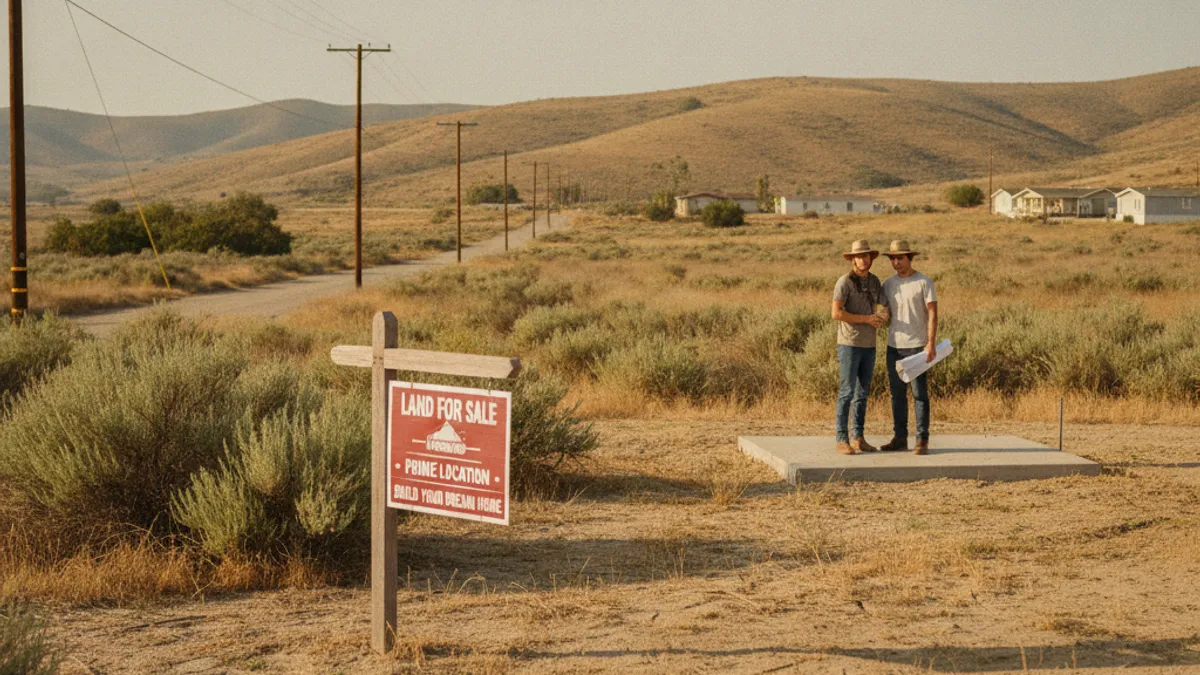
A vacant lot on Zillow can look like a straightforward opportunity: a price, an acreage number, a map pin. Whether that lot can actually hold a manufactured home is a separate question the listing usually doesn’t answer, and it’s the question that matters most.
Zoning determines whether you can place a manufactured home at all
Not every residentially zoned parcel in San Diego County allows a manufactured home, and not every parcel that allows one allows it under the same conditions as a site-built house. Zoning designations vary by jurisdiction, whether the land falls within city limits or unincorporated county territory, and the specific zone the parcel carries. A listing might say “residential” without specifying whether manufactured housing is permitted outright, permitted with conditions, or not permitted at all. Confirming zoning directly with the relevant planning department for that exact parcel, before you make an offer, is the only reliable way to know.
Utilities are rarely as simple as they look on paper
A rural or semi-rural San Diego County lot might rely on a private well and septic system rather than municipal water and sewer, and both come with their own approval and inspection process before a home can be placed. Electrical service may require a new utility connection, sometimes at real cost if the nearest line is far from the building site. A listing photo of open land doesn’t show any of this, and “utilities available” in a listing description can mean anything from “hookup is at the curb” to “the nearest connection point is a significant distance away.” Get a specific answer for the actual parcel, not the general area, before you assume utility costs will be minor.
Access and easements matter more than acreage
Some County lots, especially in backcountry and rural areas, are landlocked or accessed only through a shared easement across a neighboring property. That access arrangement affects not just convenience but whether you can legally bring construction equipment and, eventually, a manufactured home transport onto the site at all. A title search or a conversation with a local land specialist can surface easement issues that a Zillow map view won’t show.
Soil, grading, and foundation requirements
Manufactured homes need a compliant foundation system, and the type required depends on the site’s soil conditions, slope, and seismic considerations, all of which vary across San Diego County’s geography, from flat inland valleys to steep canyon and hillside lots. A parcel that looks buildable from a listing photo may need significant grading or a more involved foundation engineering process than a flatter, more stable lot nearby. This is typically confirmed with a soils report and a licensed contractor or engineer, not estimated from a listing description.
What bringing utilities to a raw lot can actually run
Costs vary enormously by site, but a few general patterns hold across San Diego County. Drilling a well typically runs into the thousands of dollars depending on depth and the geology of the specific area, and there’s no guarantee of a productive well until it’s drilled, some sites require a second attempt. A septic system, sized to the home and reviewed by the county health department, is a separate permitted project with its own cost range depending on soil percolation and lot layout. Extending electrical service to a site far from the nearest utility pole can also carry a real cost, sometimes a significant one, if new poles or trenching are required.
None of these are numbers to lock in from a general article. They’re line items to get actual bids on for a specific parcel before you buy it, since a lot that looks like a bargain on price can lose that advantage entirely once utility costs are added in.
What to verify before you make an offer
Before committing to a specific parcel, confirm zoning allows a manufactured home on that lot, get a specific utility and access assessment rather than a general one, and understand what foundation work the site is likely to require. A specialist who works in placing manufactured homes on private land across San Diego County can help you evaluate a specific parcel against all of this before you’re financially committed to it.
Frequently asked questions
How do I find out if a parcel allows a manufactured home?
Contact the planning or zoning department for the jurisdiction the parcel falls under, city or county, and ask specifically about manufactured housing on that parcel’s zoning designation.
Does every rural San Diego County lot have well and septic already installed?
No. Some vacant land requires new well drilling and septic system installation, both of which involve permitting and inspection before a home can be occupied. Confirm the specific parcel’s utility status before assuming.
Can I put a manufactured home on any land I own?
Not automatically. Zoning, foundation requirements, utility access, and local building code all factor into whether a specific parcel is buildable for a manufactured home. Verify with your local planning department before assuming.
Is landlocked land a dealbreaker for a manufactured home site?
It depends on whether a legal easement exists for access. A title search or attorney review can clarify whether access rights exist and what they allow.
If you’re considering land for a manufactured home in San Diego County, call Land & Home SD at (858) 400-4608 before you make an offer, and we’ll help you figure out what the parcel can actually support.