A first modular-home tour can make a floor plan feel settled too early. Before choosing finishes or discussing deposits, confirm what’s being offered and whether it fits your San Diego County property.
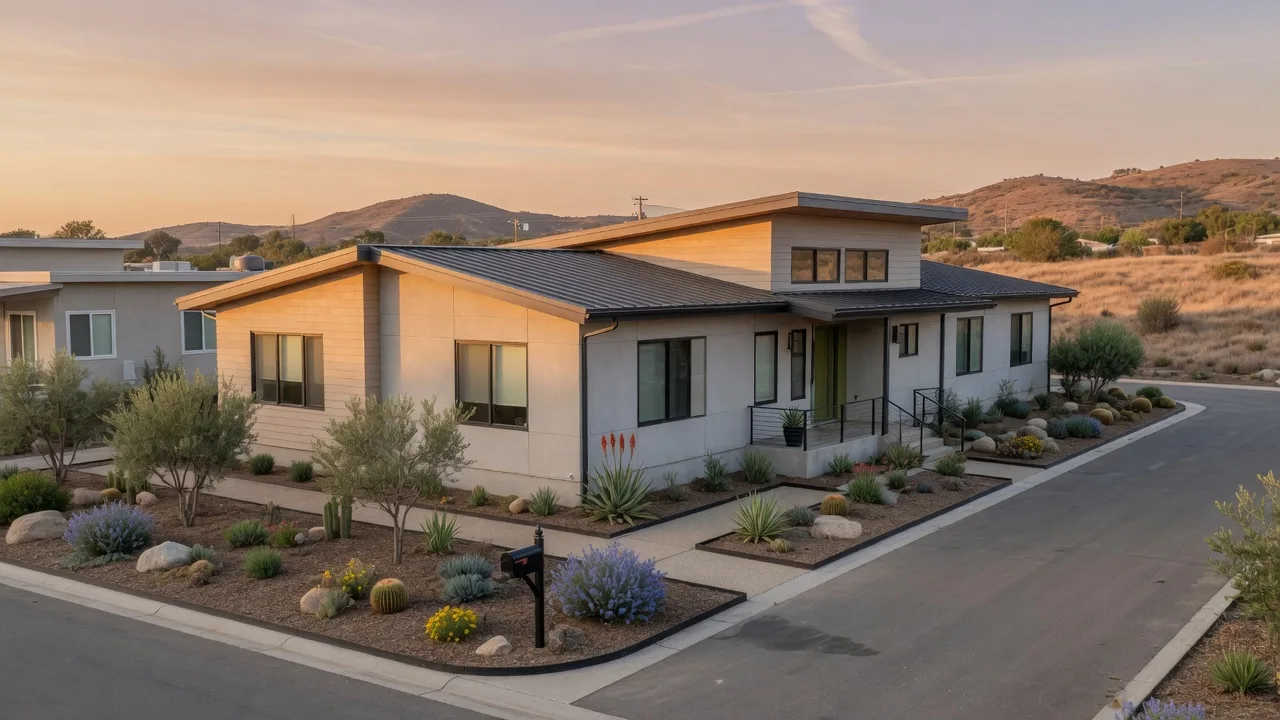
Use the tour to collect documents, names, and written answers. You’re comparing a complete project, not just the rooms inside a model.
Confirm you are shopping modular, not manufactured
Start by asking the salesperson to identify the home’s legal construction type in writing. Marketing terms such as prefab, factory-built, modular, and mobile can appear together. They don’t describe the same legal category in California.
Under California law, modular homes fall within “factory-built housing.” They’re wholly or substantially made offsite, then assembled onsite under California Building Standards Code requirements. Manufactured homes are built on a permanent chassis and follow federal manufactured-home standards when constructed on or after June 15, 1976.
That difference can affect the agencies, documents, professionals, and financing involved. Our factory-built home terminology guide explains the categories before you compare models.
During the tour, request written answers to these questions:
- Is this exact model classified as factory-built housing or a manufactured home?
- Which entity builds the modules?
- Who sells the home to the buyer?
- Who designs the foundation and site improvements?
- Who transports and sets the modules?
- Which documents identify the home’s construction standard?
- Does the displayed model match the quoted specifications?
Don’t rely on the model’s appearance. A pitched roof, modern siding, or drywall interior doesn’t establish its legal category.
Also confirm the identity of the seller. California HCD has enforcement authority over manufactured-home dealer and salesperson licensing. Specific licensing requirements for a modular-home transaction weren’t confirmed in the approved research. Ask the seller which license applies, then verify that answer with the relevant agency before paying or signing.
Land & Home SD is a referral service. We don’t sell homes or hold inventory. We help buyers understand the category they’re considering and connect them with licensed, independent local professionals.
Match the floor plan to the San Diego lot
A model-home tour shows how rooms connect. It doesn’t prove that the home fits your parcel. Bring a parcel map, survey if available, site photos, and notes about existing structures.
Ask the dealer or designer to mark the proposed home footprint on a site plan. The plan should identify the home’s orientation and the space needed for site work. If they can’t connect the model to your parcel yet, treat the tour as product research only.
Your first lot-fit discussion should cover:
- The proposed building location and orientation
- The finished floor height
- Foundation design responsibility
- Access for transported modules and setting equipment
- Existing buildings, walls, trees, slopes, and driveways
- Proposed utility routes and connection points
- Drainage questions that need site review
- Any design changes needed for the parcel
Don’t assume a plan shown in San Marcos will fit unchanged in Chula Vista, Encinitas, El Cajon, or an unincorporated county community. Ask which local authority controls the property and which parcel information has actually been reviewed.
For property outside an incorporated city, San Diego County Planning & Development Services is the county permit and zoning destination. An incorporated property may have a different local department. The specific zoning, setback, utility, grading, and access requirements for your parcel weren’t confirmed here. Get written direction from the authority responsible for that address.
If you’re still choosing land, read our guide to buying land for a modular home in San Diego. It keeps the land decision separate from this first-tour checklist.
Separate factory, transport, and site contracts
A model price or sales presentation may not describe the entire installed project. Don’t call a modular home affordable until every major scope has a responsible party and a written basis.
Ask for a responsibility table before comparing proposals. Put each task in one column and the responsible company in another. Add a third column for the contract or document covering that task.
The table should address these project areas:
- Design and engineering
- Factory construction
- Options, finishes, and substitutions
- Module transportation
- Delivery access planning
- Foundation and site preparation
- Module setting and assembly
- Utility connections
- Exterior steps, porches, decks, or similar work
- Permit applications and inspections
- Cleanup, corrections, and final documents
This exercise exposes gaps without guessing what a proposal includes. If two companies mention the same task, ask who controls it. If nobody claims a task, don’t assume it’s included elsewhere.
Request the legal name of every contracting party. The manufacturer, seller, transporter, site contractor, and installer may have different responsibilities. Ask who receives each payment and who approves changes.
Before signing, match every verbal statement to the proposed agreement. Record model identifiers, selected options, plan revisions, and exclusions. Don’t treat a brochure rendering as a contract document.
Our guide to modular-home contracts in San Diego goes deeper into scope gaps and change documents. The buying and placement process also shows how separate project decisions connect.
No verified local market price or standard package amount was available for this article. Ask each provider for a written proposal tied to your parcel and selected model. Confirm current charges directly with the company setting them.
Plan city or county permit reviews
Before choosing a model, identify the agency that will review the project. Don’t accept “San Diego approved” as a complete answer. San Diego County contains incorporated cities and unincorporated communities, so the responsible local authority depends on the property.
Ask the project team to write down:
- The property address and parcel information used
- The agency expected to review the project
- The construction classification being submitted
- The plan set currently available
- The professional preparing site-specific documents
- The party responsible for each application
- The inspections expected for the proposed scope
- Any unresolved question that could change the design
Then confirm the agency and submission path with the local authority. A dealer can help organize the project, but the authority decides what it will accept.
California’s verified definition of factory-built housing says concealed components are made offsite and the home is assembled onsite in compliance with California Building Standards Code requirements. That doesn’t establish the requirements for a particular parcel. The approved claims ledger doesn’t confirm modular-home permit fees, review periods, local zoning standards, or a universal approval process.
That gap matters during a first tour. If someone quotes a fixed permit amount or approval date, ask for the source and the assumptions behind it. Find out whether the statement applies to your address, model, and site scope.
Don’t sign based on an unverified claim that a project won’t require review. Foundations, site construction, and utility work should be addressed through the appropriate local process. The professionals handling that work should explain their roles in writing.
For a broader view of the product and placement decisions, visit our modular and prefab homes guide.
Confirm financing and warranties before you sign
A floor plan can work while the financing doesn’t. Speak with the lender before treating a dealer proposal as settled. Give the lender the proposed construction type, property arrangement, contract structure, and list of project participants.
Ask the lender to identify what it needs from the seller, builder, site contractor, and buyer. Don’t assume approval for one factory-built home carries over to another model or parcel.
No modular financing rate, down payment, approval standard, or loan term was verified for this article. Those details depend on the lender and transaction. Request current terms directly from the lender and review the written conditions before committing to the home.
Use the same care with warranty language. Land & Home SD doesn’t provide a warranty. Ask each company to supply its own written warranty or service terms before signing.
Your questions should include:
- Which company covers factory components?
- Which company covers transportation-related damage?
- Who addresses site work and utility connections?
- What document controls if sales language conflicts with written terms?
- How are defects reported?
- Who coordinates an issue involving more than one company?
- Which exclusions apply to the selected home and site scope?
Specific warranty durations, coverage, exclusions, and claim procedures weren’t confirmed in the approved ledger. Don’t accept a general promise as a substitute for the actual documents.
Finish the tour with a document request. Ask for the model specification, floor plan, option list, proposed scope, exclusions, participating company names, and available warranty language. Take those materials home. Compare them against the parcel questions, permit path, lender conditions, and separate contracts.
When to call us
Call before a model choice, land decision, or contract makes the project harder to change. Land & Home SD offers buyers a free, no-obligation conversation and serves San Diego County.
Call us at (858) 400-4608 and we’ll walk through your options and connect you with a licensed local dealer.