Buying land and a modular home should start with the parcel, not the floor plan. The right home still needs a workable site, clear contracts, suitable financing, and an identified permit path. Confirm those pieces before you close on land or order a home.
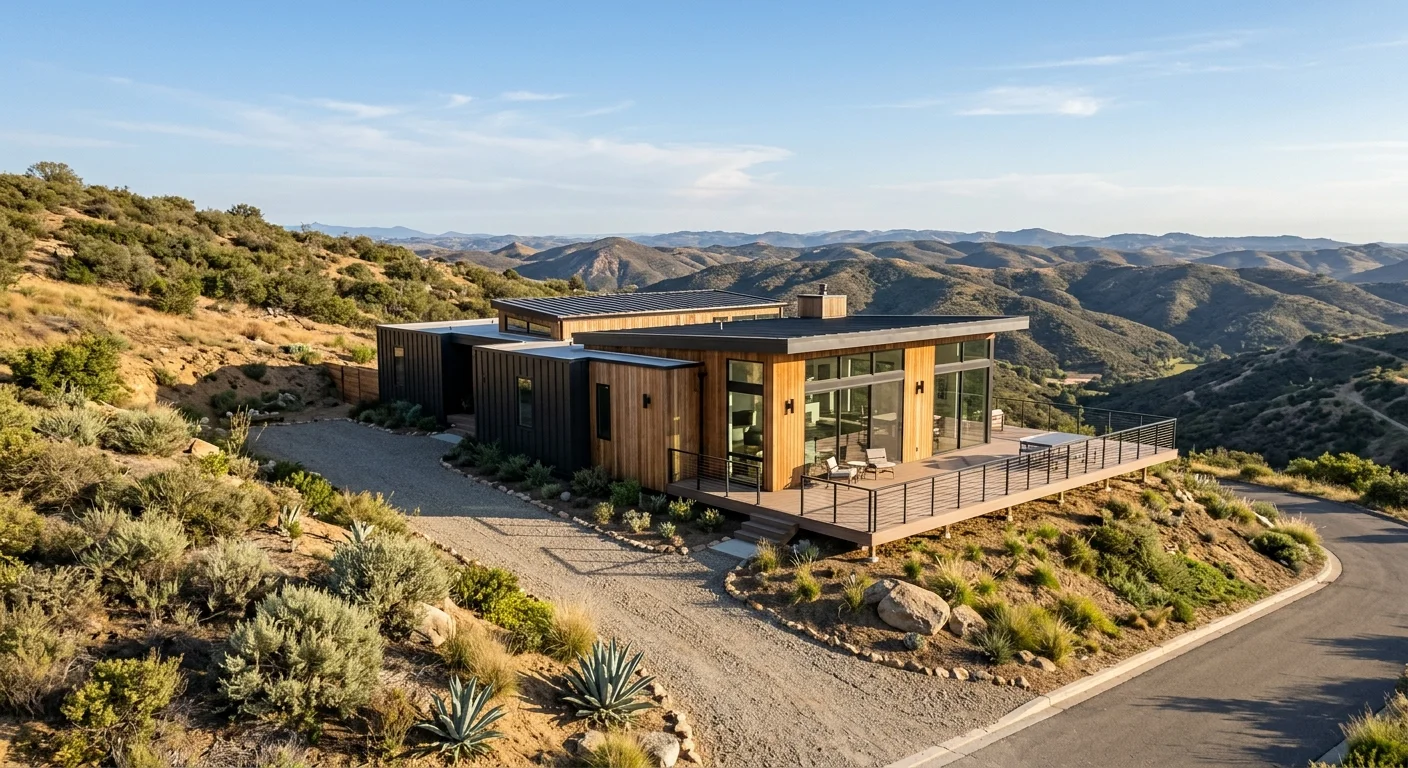
Check zoning before choosing a floor plan
Start with the exact parcel address and its governing planning office. A San Diego County mailing address alone doesn’t answer every zoning question. Ask the seller or agent which city or county office governs the property, then confirm that answer yourself.
If the seller says the parcel falls under county review, begin with San Diego County Planning & Development Services. For a city-governed parcel, contact the planning department listed on that city’s official website. Give the office the parcel address and assessor’s parcel number, if available.
Ask whether the proposed residential use is allowed. Then describe the project as a modular home, not simply a prefab home. Ask about the proposed size, placement, foundation, access, utilities, grading, and wastewater plan. Request written guidance whenever the office provides it.
California law classifies modular homes as factory-built housing. Under California Health and Safety Code Section 19971, factory-built housing is wholly or substantially manufactured offsite. It’s then assembled onsite under California building standards. The definition excludes mobilehomes.
That distinction matters. A manufactured home is built on a permanent chassis and follows a different regulatory framework. Our guide to manufactured, modular, mobile, and prefab terms explains the supported differences.
Don’t assume a listing agent, home seller, or neighboring owner has confirmed your project. A parcel near Fallbrook and one in Chula Vista deserve separate checks. The same applies across coastal North County, East County, central San Diego, and the South Bay.
The governing city or county office must answer that question.
Separate land, home, transport, and site contracts
Treat the purchase as several connected scopes, even if one company coordinates them. The exact contract structure varies. Your job is to identify who controls each part and what their written price includes.
Create separate budget and responsibility lines for:
- The land purchase
- The modular home and selected specifications
- Transport from the factory
- Foundation and site preparation
- Placement or assembly work
- Utility connections
- Permit preparation and inspections
- Interior or exterior work completed onsite
These categories aren’t a universal list of required contracts. They’re questions to resolve before signing. Ask each company to mark included work, excluded work, allowances, and work assigned to someone else.
A home agreement may focus on the factory-built structure. That doesn’t automatically tell you who evaluates access, prepares the foundation, coordinates site work, or handles utility connections. Ask whether transport includes delivery only or any onsite placement. Ask who checks whether the route and parcel access fit the proposed modules.
For site work, request a written scope tied to the exact parcel. It should identify the professional responsible for each listed task. Don’t rely on a verbal statement that another company will handle an unclear item.
Also ask what happens if the parcel isn’t approved for the proposed plan. Review cancellation terms, deposits, design charges, and change-order language before paying. Land & Home SD doesn’t set those terms or prices. The buyer contracts and pays each professional directly.
Our modular and prefab homes guide can help you organize the home side. The guide to putting a home on private land covers the broader parcel conversation.
Compare construction and land financing paths
Financing needs to match both the land transaction and the modular project. Don’t assume a land approval automatically covers the home, transport, or site work. Get written answers from the lender before setting contract dates.
Each lender sets its current program terms. Ask the lender to explain its requirements for your parcel and proposed home.
Begin with these questions:
- Does the lender finance the land, home, and site work together?
- Can the land close before the modular contract is final?
- Which project costs can be included?
- Which costs must the buyer pay separately?
- What plans, contracts, bids, or approvals must be submitted?
- How and when does the lender release funds?
- What happens if the design or site scope changes?
- How does the lender classify the completed property?
Use “modular home” or “factory-built housing” consistently. Don’t switch to “manufactured home” because the terms sound similar. California defines these housing categories differently, so keep the project classification consistent in agency, builder, and lender documents.
Build a comparison sheet for every lender. Record the project classification, covered costs, required documents, conditions, and dates. Ask for current figures directly from the lender. Land & Home SD doesn’t publish unverified rates or financing estimates.
If you’re also considering a manufactured home, review our guide to manufactured-home and land packages in San Diego. That article addresses a different home type. Keep its title, foundation, and regulatory questions separate from your modular project.
Before removing a land contingency, have the relevant professionals review the financing and construction sequence. That may include your lender, real estate professional, modular provider, site contractor, and legal adviser.
Map city or county permit responsibility
Your permit map should name the governing office and the person responsible for every submission. “The builder handles permits” is too vague. Ask which builder, which permit, and which office.
Start with a simple project sheet. Include the parcel address, parcel number, modular home description, proposed placement, and known site work. Use the same description for every planning, lending, and contractor conversation.
Then document these responsibilities:
- Who confirms the planning jurisdiction
- Who checks whether the proposed use is allowed
- Who prepares the building plans
- Who prepares foundation or site documents
- Who submits each application
- Who responds to correction requests
- Who schedules required inspections
- Who confirms that final records are complete
Don’t assume factory construction removes local site review. California’s factory-built housing definition says the home is assembled onsite under California building standards.
For county-governed land, ask San Diego County Planning & Development Services for current direction. For city-governed land, use that city’s official planning or development department. Ask each office which departments must review your proposed project.
Save the office’s reply with the date, employee name, and project description. If advice changes, you’ll know exactly what information produced each answer.
Access, grading, utilities, wastewater, and other site questions can change the project scope. Ask the governing office which reviews apply to the exact parcel. Then have the appropriate licensed professionals define the work.
This step protects the rest of your plan. A floor plan can change. An unresolved parcel issue can affect the land contract, home order, financing, and site agreement together.
Build a due diligence file before closing
A good due diligence file puts every claim beside its source. It also exposes missing answers before they become contract problems.
Create folders for land, planning, home, site work, financing, and contracts. Keep the original documents, not just notes from a phone call. Add the date and contact name to every conversation summary.
For the land folder, request the title documents, legal description, parcel map, and seller disclosures available for the transaction. Ask a qualified title or real estate professional to explain anything you don’t understand. Don’t guess how an easement, access issue, or recorded restriction affects the proposed home.
The planning folder should contain the governing office’s written responses. Save any parcel reports or application guidance the office provides. Note which questions remain unanswered.
Your home folder should include the proposed model, dimensions, plans, specifications, exclusions, and factory contract. Confirm that every professional is discussing the same version. A changed floor plan can make older site answers unreliable.
The site folder should identify the parties evaluating placement, foundation, access, utilities, and other onsite work. Keep written scopes and current bids. Mark any allowance or excluded item that still lacks a price.
The financing folder should show what the lender has reviewed. Include the land contract, home contract, site scopes, and requested planning information. Record outstanding conditions in plain language.
Finally, create a one-page gap list. Common warning signs include an unidentified planning jurisdiction, contradictory project classifications, missing site scopes, and verbal promises that don’t appear in a contract. Don’t close the file until the responsible professional has addressed each item.
No single checklist confirms that every San Diego County parcel works for a modular home. The governing agency, lender, title professional, dealer, and installer each answer different questions. Your file keeps those answers connected.
When to call us
Call before signing for land when the parcel, modular contract, or professional roles still feel unclear. Land & Home SD can help you organize the questions and identify the local professionals needed for the next step.
Call us at (858) 400-4608 and we’ll walk through your options and connect you with a licensed local dealer.