A Carlsbad park search involves two separate decisions. You’re choosing a home and the community around it. Compare the rules, land arrangement, monthly obligations, title records, and condition before making an offer.
Verify every park’s current name, age rules, amenities, space rent, address, availability, and contact details directly with park management and the appropriate public authority.
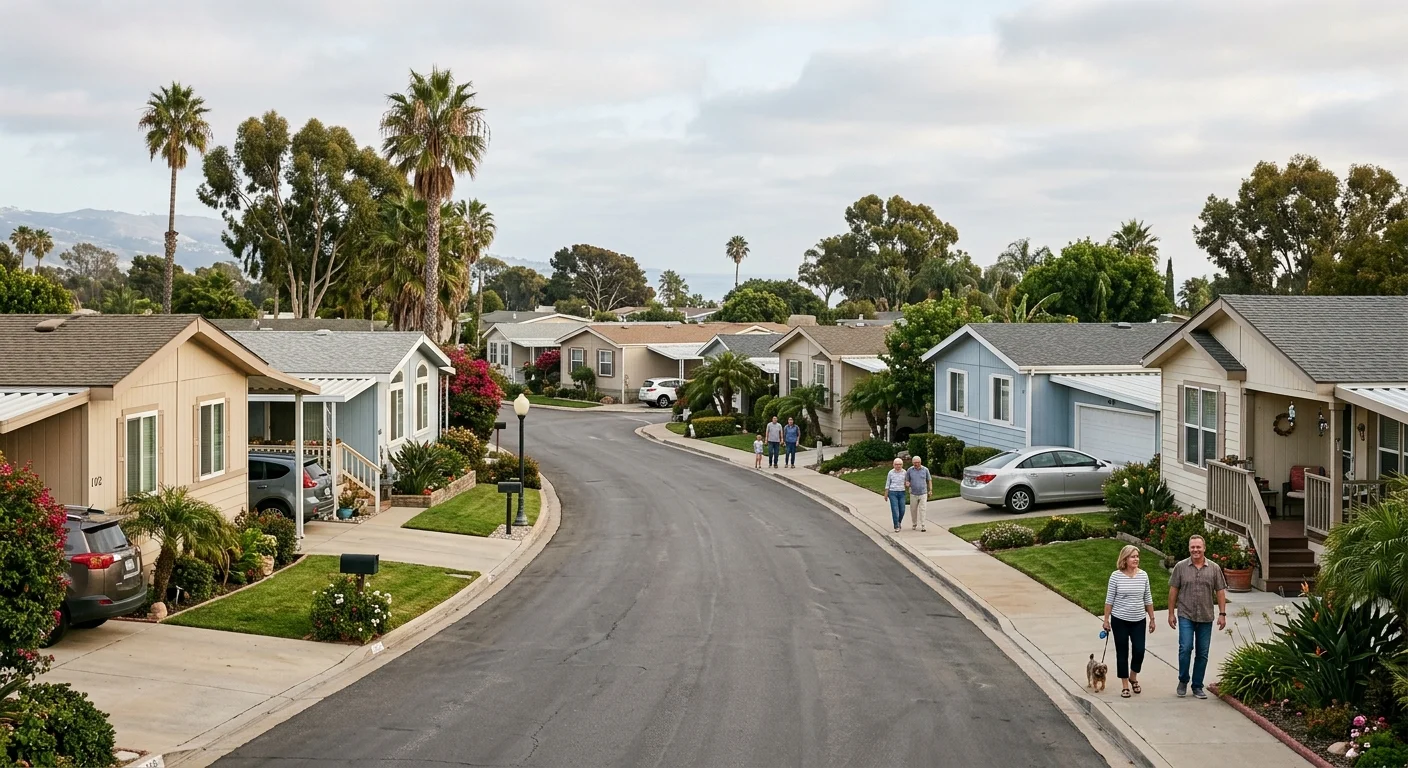
Choose between all-age and age-qualified communities
Start by confirming who may occupy the home. Don’t rely on a listing label such as “senior,” “adult,” or “all-age.” Ask park management for the current eligibility policy and a complete written copy of the community rules.
Clarify whether the policy applies to every resident or only one household member. Ask how guests, caregivers, adult children, and future occupants are treated. These details can affect whether the home fits your plans today and later.
You should also ask whether management reviews buyers or occupants. If an application exists, request the current version before making an offer. Find out what documents management requires and which decision must occur before closing. Don’t assume that buying the home automatically resolves every park requirement.
Compare the community’s daily character, too. Visit during more than one part of the day when possible. Listen for road noise and nearby activity. Look at guest parking, lighting, mail access, shared areas, and the route from the space to the entrance.
A rule that seems minor during a tour may matter after moving. Review policies covering pets, parking, exterior changes, storage, rentals, guests, and home-based activity. Ask management which document controls if the listing and park paperwork conflict.
Buyers focused on age-qualified options can also read our guide to 55-plus mobile home communities in San Diego. Treat that overview as a starting point. Current eligibility still needs direct confirmation for the specific Carlsbad community.
Compare space rent, ownership, and park rules
Never assume a park listing includes the land beneath the home. Ask the seller and escrow professional to identify exactly what transfers. The answer should distinguish the home, the site, any ownership interest, and any continuing park payment.
Request the current space-rent amount directly from management. Also ask what that payment covers and what remains separate. Utilities, common services, parking, storage, and other charges should appear in writing before you compare homes.
Park management sets the applicable amount, so confirm it before relying on any advertisement. Our guide to mobile home space rent in San Diego explains the questions to bring into that conversation without guessing a local figure.
California has a Mobilehome Residency Law covering mobilehome park residency. Review the current law and get qualified advice when a lease term or park rule affects your decision.
Ask for every document tied to occupancy and ongoing payments. That package may include the proposed rental agreement, park rules, fee disclosures, application materials, and notices provided by management. If a document is referenced but missing, pause and request it.
Build a simple comparison sheet for each Carlsbad option. Record only confirmed information:
- What property or interest is being sold
- The current space rent and included items
- Other charges shown in writing
- Occupancy and age rules
- Pet, parking, rental, and modification policies
- Management’s current contact information
- Documents still missing or awaiting confirmation
This approach makes different listings easier to compare. It also keeps an attractive interior from overshadowing an unsuitable land arrangement or park rule.
Account for coastal conditions and daily travel
A Carlsbad buyer should treat coastal exposure as an inspection question. Don’t assume every location has the same conditions. Ask an independent inspector to evaluate what’s actually present at the home.
Have the inspector examine exposed metal, fasteners, skirting, roof seams, drainage, ventilation, windows, and visible staining. Ask whether any observed condition suggests moisture or salt exposure. Request photographs and plain explanations for anything needing more review.
Look beyond the home during your tour. Check how water appears to move around the space. Note ground surfaces, roof drainage points, vegetation near the structure, and access beneath the home. Don’t diagnose these conditions yourself. Record them so the inspector can investigate.
Daily travel deserves the same care. Test each trip yourself instead of trusting a broad travel-time estimate. Drive from the park to work, school, shopping, medical care, or transit at the times you expect to travel.
Check both the main route and a practical alternate. Note difficult turns, steep approaches, entrance visibility, and visitor access. Confirm where residents and guests may park. Ask management whether parking assignments or vehicle restrictions appear in the written rules.
Location comparisons should reflect your actual week. A community may look close on a map yet feel inconvenient during your regular schedule. A short test drive gives you evidence tied to your needs, without relying on an unverified average.
For a wider regional comparison, use our overview of mobile home parks across San Diego County. Then return to the Carlsbad property and verify every community-specific detail.
Verify each community before scheduling a tour
Online directories can contain old names, outdated contact details, or incomplete rules. Verify a community’s current name, address, contact information, and rules before treating it as a purchase candidate or recommendation.
Start with the listing address and the name used by the seller. Ask park management to confirm the community’s current name, address, occupancy policy, available amenities, and tour process. If the seller provides different information, request clarification before visiting.
Keep a dated note showing who supplied each answer. Save copies of the current rules and proposed agreement. A screenshot of an advertisement isn’t a substitute for documents tied to the specific sale.
Before scheduling, confirm these points directly:
- The listing is inside the stated community
- The home remains available for consideration
- The park’s current age or occupancy category
- Whether management has a buyer application
- Which amenities are currently available
- The exact space and guest-parking arrangements
- The current management contact channel
- Which documents you may review before an offer
Land & Home SD doesn’t operate, manage, or represent any park. We help buyers organize the decision and connect with licensed independent manufactured-home professionals.
California’s Department of Housing and Community Development regulates manufactured and mobilehomes. Dealer and salesperson licensing rules exist under California law, and HCD has enforcement authority. Review HCD’s current information and ask the department how to confirm a professional’s status.
Use the park’s own records for community policies. Use the seller, escrow professional, and appropriate public authority for transaction documents. If something can’t be confirmed, mark it unresolved. Don’t turn an unanswered question into an assumption.
Plan financing and inspection before making an offer
Financing should begin with the exact property, title status, land arrangement, and buyer facts. Ask each lender for its current written programs, rates, down payment requirements, eligibility rules, and other terms tied to the particular Carlsbad home.
Tell the lender whether the proposed sale includes land or involves a park space. Provide the home’s available identifying and title documents. Ask which inspection, appraisal, insurance, park, and escrow conditions apply. Don’t transfer a financing answer from one listing to another.
California uses different legal terms based on construction date. Under state law, a “mobilehome” was constructed before June 15, 1976. A “manufactured home” was constructed on or after that date and meets the statutory definition. Confirm the date and records rather than choosing a label from the listing description.
Registration and titling are handled by California HCD, not the DMV. For a used manufactured-home resale, state law requires escrow instructions to address the current registration card, title certificate, and registration copies held by junior lienholders. A county tax collector may also be asked for a tax-clearance document when local property taxation applies. Review the current process through HCD registration and titling.
Schedule an independent inspection before removing an inspection condition. Give the inspector access to the home, exterior, roof where appropriate, utilities, supports, and accessible areas below the structure. Confirm the inspector’s experience and credentials yourself.
Match every repair concern to a responsible party. Ask who owns the affected component, who may approve changes, and whether park permission is needed. Don’t assume the seller, park, dealer, or installer carries the same responsibility.
Our pages covering manufactured homes for sale and the buying and placement process can help you organize the next step. They don’t replace property-specific documents, inspections, lender terms, or park approval.
When to call us
A conversation helps when you’re comparing land arrangements, unclear title records, park paperwork, or different professional roles. Land & Home SD can help you organize the open questions before you commit. Call us at (858) 400-4608 and we’ll walk through your options and connect you with a licensed local dealer.