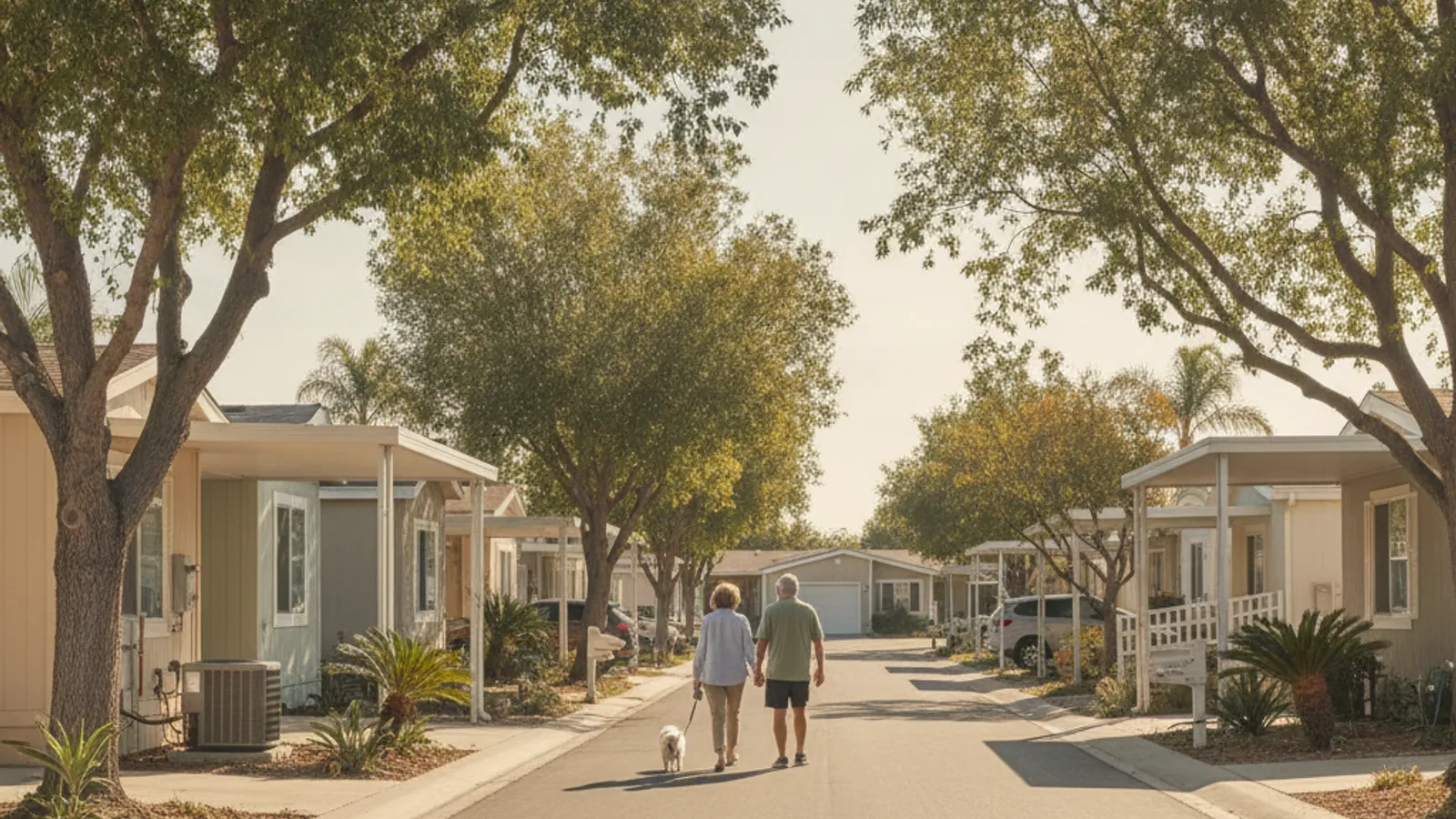
San Diego County has many 55+ mobile home communities. Confirm the current age-restriction paperwork, space-rent history, park financials, and written rules for the specific park before you buy. Skip that checklist and you can fall in love with a home in a park that raises rent every year or sells to a buyer who doesn’t renew the lease. Here’s how to tell the difference before you sign anything.
How 55+ mobile home communities in San Diego County differ from all-age parks
A “55+” community isn’t a marketing label. It’s a legal category with real requirements attached, and understanding them protects you as a buyer.
Ask park management for the written age-eligibility policy and the documents used to support it. If eligibility affects the purchase, have a qualified professional explain the current federal and state rules for that community.
California layers its own rule on top through Civil Code Section 51.3. State law defines a “senior citizen” as 55 or older in a qualifying senior housing development, and it spells out who else can live in the unit: a “qualified permanent resident” (typically a spouse, cohabitant, or someone 45 or older who moved in before the qualifying senior’s death or prolonged absence), a permitted health care resident, or anyone under 55 as a temporary guest for defined stretches of time. The law also requires parks to allow guests under 55 to stay at least 60 days a year.
Practically, this means one household member usually needs to be 55 or older to buy in, while a younger spouse or adult child can often still live there under the qualified-resident provisions. Ask the park manager directly how they apply these rules to your specific household before you assume you qualify.
All-age vs. 55+: which one actually fits you
Not every San Diego County buyer wants an age-restricted park, and that’s worth being honest about before you shop. All-age parks allow families and mixed generations, tend to have more variety in home size and price, and don’t require age verification paperwork. 55+ communities trade that flexibility for quieter surroundings, resident amenities built around retirees (clubhouses, pools, activity calendars), and a buyer pool that skews toward the same life stage you’re in.
Neither is objectively better. If you’re helping an aging parent downsize, want a slower pace, or are retiring on a fixed income, a 55+ community usually fits. If you need room for grandkids to stay long-term or want maximum flexibility on resale, an all-age park or private land might serve you better. Browse manufactured and mobile homes for sale across both categories before narrowing your search.
What to check before you buy into a San Diego County 55+ community
This is the part most buyers skip, and it’s the part that determines whether you’re happy in five years. Before you make an offer on a home inside any park:
- Get the age-restriction policy in writing. A legitimate 55+ park has a documented policy and age-verification process. If a manager can’t produce one, ask why.
- Ask for the space rent history, not just the current rate. A park with three rent increases in three years tells you something a single quoted number never will. Use that window.
- Get the seller’s Transfer Disclosure Statement. California requires sellers of used manufactured homes to disclose known defects and code violations before the sale closes. Read it line by line.
- Get the park’s disclosure form on shared facilities. Park management is required to disclose known problems with pools, clubhouses, laundry rooms, and other shared amenities before you sign a rental agreement.
- Understand the buyer approval process. Most parks screen incoming buyers for income or credit before approving a home purchase. Ask what the standard is before you’re under contract on a home.
- Walk the whole property, not just the home. Cracked streets, deferred landscaping, and empty pads sitting vacant for months are signs of a park under financial strain.

How space rent actually works in a San Diego County 55+ park
Space rent is the lease payment for the land under your home, and it’s separate from what you pay for the home itself. California has no statewide cap on mobile home space rent. Some cities and unincorporated areas of the county have local rent stabilization ordinances that limit increases; many don’t. Whether a specific park is covered depends on its city, so ask directly rather than assuming.
What state law does guarantee is process: park management must give at least 90 days’ written notice before any space rent increase takes effect. That notice period is your chance to do the math on whether the new number still works for your budget, not just react to it after the fact. Because space rent is a permanent monthly cost on top of your home payment, it changes your real total cost of ownership more than almost any other factor. Our manufactured home cost breakdown walks through how space rent, home price, and site costs combine into one honest number.
Can you finance a home in a 55+ community?
Financing depends almost entirely on whether the land under the home is something you own or something you lease.
Chattel loans generally carry shorter terms and higher rates than conventional home mortgages, and lenders look closely at the park’s approval and the home’s age and condition. Some buyers also qualify for FHA-backed manufactured home loans (Title I), which have their own requirements around the home’s age, foundation, and lease terms. Rates and programs shift often, so get a real quote instead of relying on numbers you saw online. See our manufactured home financing guide for how the different loan types actually compare.
Where 55+ communities cluster across San Diego County
55+ manufactured home communities exist throughout the county, but a few regions carry a heavier concentration because of older land-lease parks built decades ago. East County cities like El Cajon, Santee, and Lakeside have a long history of senior mobile home parks on flatter, more affordable land. North County Inland, around Escondido, Vista, and San Marcos, has a similar mix of established parks. South County, including Chula Vista, has senior communities closer to the border and the bay. Coastal parks exist too, though land value pushes space rent higher the closer you get to the water.
Each region has its own pricing pattern, climate, and commute profile, so where you land matters as much as the park itself. See what’s available in Chula Vista and El Cajon, or browse our full list of San Diego County service areas to compare regions before you commit to one.
Frequently asked questions
Do I have to be 55 to live in a San Diego County 55+ mobile home park?
Not necessarily every resident, but at least one person in the household usually needs to be 55 or older. California’s qualified permanent resident rules allow a spouse, cohabitant, or someone 45 or older who lived with the qualifying senior to also reside there, and short-term guests under 55 are allowed for defined stretches under state law.
Can I get a mortgage on a home in a 55+ mobile home park?
HUD’s Title I program can cover an eligible manufactured home unit on a leased homesite, subject to borrower, home, site, lender, and lease requirements. Ask an FHA-approved lender whether the program or another product fits the specific park-home purchase.
How much is space rent in a San Diego County 55+ community?
It varies significantly by city, park age, and proximity to the coast, and California has no statewide rent cap for mobile home spaces. Ask for the park’s current rate and its rent history covering the last several years before you compare parks on price alone.
Can the park raise my space rent after I move in?
Yes. State law doesn’t limit how much a park can raise space rent, only how it must notify you: at least 90 days’ written notice before any increase takes effect. Some California cities have local rent stabilization ordinances that add further limits, so check whether the specific park’s city has one.
What’s the real difference between a 55+ and an all-age mobile home park?
A 55+ park legally restricts most occupancy to residents 55 and older under federal and state law, in exchange for a quieter, more retiree-oriented environment. An all-age park allows any age household and typically offers more flexibility for family living and resale, without the age-verification paperwork.
Get help vetting a community before you commit
Land & Home SD isn’t a park and doesn’t sell homes directly. We help San Diego County buyers understand which 55+ communities fit their budget and lifestyle, what questions to ask a park manager, and how to read a rental agreement before they sign it. Call (858) 400-4608 for a free, no-pressure conversation, or start with our manufactured homes for sale page to see what’s available across the county right now.