A listing in El Cajon calls the home HUD. A lender in Oceanside talks about an FHA file. Those are not the same path, and California title status can stop a loan that looked simple on the listing. Confirm whether a HUD or FHA route even fits this home and this land before you write a deposit.
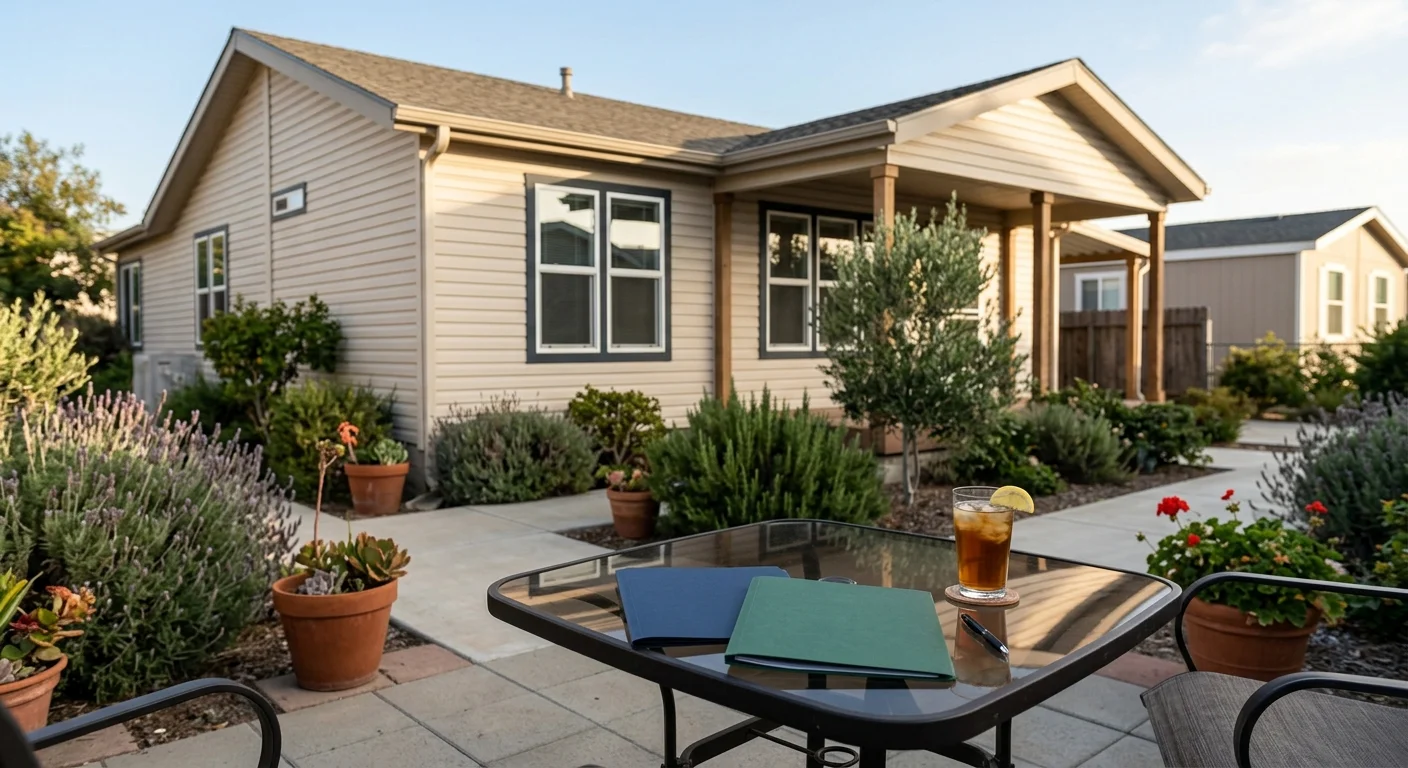
Confirm whether a HUD or FHA path even applies
HUD, in this search, usually means two different things. One is the federal construction code. The other is a loan program. Mix them up and you shop the wrong homes.
Under California law, a manufactured home is a structure built on or after June 15, 1976, on a permanent chassis, and designed as a single-family dwelling. A mobilehome is the same kind of structure built before that date. Those definitions live in California Health and Safety Code sections 18007 and 18008. The date is the split that matters for HUD-code talk.
Federal law lets HUD set manufactured-home construction and safety standards. California Health and Safety Code section 18025 requires post-June 15, 1976 manufactured homes to meet that federal act. Pre-1976 mobilehomes are not built to the HUD Code. Modular homes sit in a different bucket. California treats them as factory-built housing under Health and Safety Code section 19971, not as HUD-code manufactured homes.
So “is this a HUD home” is first a construction question. It is not a promise that a HUD or FHA loan will fund.
On the loan side, HUD Title I can finance a manufactured home unit, a lot, or both. HUD states the home may be classified as personal property or as real estate. Borrowers may lease the lot, including a site in a manufactured home community or mobile home park. HUD’s published lease conditions for that path include a required initial lease term of three years, and at least 180 days’ advance written notice if the lease will be terminated. That is the Title I fact we can stand on. It is not an approval, a rate, or a payoff date.
FHA is a separate insurance path that some lenders use on manufactured homes. Current FHA down payments, credit cutoffs, loan limits, and 2026 rule changes are not in our verified ledger. We will not invent them. A page that quotes a down-payment percent from memory is guessing. Ask an FHA-approved lender for the figure that applies to this file this week.
Housing Choice Voucher (Section 8) rules for manufactured homes are also not in that ledger. We could not confirm a county-wide yes or no. The housing authority that issues the voucher sets what it will pay. In the city of San Diego, start with the San Diego Housing Commission. Other cities and the county have their own agencies. Ask that office in writing before you treat a voucher as part of the purchase.
A HUD-code label on a 1988 double-wide in a Chula Vista park does not, by itself, mean Title I, FHA, or any other program will close. Park rules, city zoning, title status, and the lender’s overlay all still have a vote. Walk the construction question first, then the loan question. Our manufactured home financing page is the service path for that split. For a wider California map of loan types, see how to finance a manufactured home in California. If the question is a VA loan, that is a different lender conversation: VA loans on manufactured homes in California.
Land & Home SD does not make loans, approve borrowers, or insure files. We explain the questions, then connect you with licensed independent local pros.
Match the home’s title and land status to the loan
The loan follows the paperwork, not the listing photo. In California, manufactured-home registration and titling run through the Department of Housing and Community Development, not DMV. Start at HCD’s manufactured and mobilehome pages and the registration and titling guidance. Those pages are the public desk. They are not a substitute for a title professional on this file.
For a new manufactured home, California Health and Safety Code section 18035 requires the original manufacturer’s certificate of origin to go into escrow. For a used home, escrow instructions must include the current registration card, junior-lienholder copies, and the certificate of title. Legal owners and junior lienholders either release the security interest on payment or approve a formal assumption. If the used home is on the local property-tax roll, the escrow officer may request a tax clearance or conditional tax clearance from the county tax collector.
That statute is about transfer, not about which lender will say yes. A clean HCD record still has to match the home on the ground.
Foundation status changes the record. HCD consumer guidance says a manufactured or multifamily manufactured home installed on a foundation system is no longer registered by HCD. Owners follow the agency’s process to cancel registration and confirm the individual property record was completed. That guidance does not prove a lender will treat the home as real estate. It also does not prove a particular home’s record is current. A title company or escrow officer reads the actual file.
Land status is the other half. A space in an El Cajon or Santee park is not the same file as a private lot in Lakeside or unincorporated East County. Title I can follow the home, the lot, or both, and HUD allows a leased lot when the lease meets the published term and notice conditions above. A real-estate style mortgage, if a lender will even offer one, is a different conversation. We cover that split in mortgage on a manufactured home in San Diego. Do not assume a park home and a land-home package use the same program.
Unincorporated county lots have their own placement rules. San Diego County Planning & Development Services publishes PDS 103 for eligible manufactured homes on private lots in county jurisdiction. That handout is not a city rule. Encinitas, Oceanside, Chula Vista, and El Cajon run their own building departments. Confirm the jurisdiction before anyone talks foundation plans. County PDS is at sandiegocounty.gov/pds.
Coastal north county lots bring salt air, older parks, and tight streets. Inland valleys bring heat, different soil, and more private acreage. South Bay files often sit in denser parks with older title chains. East County is where private-land placements show up more often. None of that is a loan overlay. It is why a one-page “HUD loan” pitch fails in this county.
If the seller’s name, the HCD record, and the home’s serials do not match, stop. Fix the record before you apply. Land & Home SD does not issue titles. The dealer, escrow officer, and HCD handle that paper. Our role is to help you see the mismatch early in the buying and placement process.
Gather the same file for every lender
Do not rebuild a packet for each call. Build one folder and reuse it. Lenders still set their own lists. A shared core stops you from hunting labels the week of appraisal.
Put these in the folder, even if a given lender later skips an item:
Photos of every factory label, data plate, or serial plate you can find, inside and out. Section identifiers if it is a multi-section home. The current HCD title or registration, plus any lien releases. Land deed or park lease, including term and termination notice. Tax bills or a tax-clearance request if escrow will need one. The seller’s name as it appears on title, and your ID. Income and asset papers the lender names in writing.
We could not confirm a single federal checklist of required HUD tags or data-plate language from our verified claims ledger. Some lenders and appraisers ask for those identifiers. Some files stall when a label is missing after a remodel or a re-side. Photograph what is there. Ask the lender, in writing, what they will accept if a plate is gone. Do not treat a Texas, Florida, or generic “FHA tags” article as California underwriting.
Serial numbers on the title have to match the home. That is a common fail in used park purchases from Vista to National City. If the paper describes a different home than the one you toured, the file is not ready.
Dealer and salesperson licensing in this trade is HCD occupational licensing, not CSLB. If a seller is acting as a dealer, HCD’s occupational licensing page is where you verify the license. We cannot publish application steps or lookup tricks beyond pointing at that office. Unlicensed dealer activity is a real enforcement subject under the Health and Safety Code. It is not a shortcut to a cheaper HUD loan. The buyer checklist is HCD dealer license checks.
Keep the folder boring and labeled. One PDF for labels. One for title. One for land. Lenders work faster when they are not guessing which photo is section A.
Land & Home SD does not underwrite. We can help you see which documents are missing before you tour a third home you cannot fund.
Compare conditions without chasing advertised rates
Advertised rates on manufactured-home loans move, and they often describe a different property than yours. A rate for a site-built house in Carmel Valley is not a rate for a 1990s park home in Escondido. We do not publish rates, points, or payment examples. Compare the conditions that actually decide the file.
Ask each lender, in writing, which program they would use: HUD Title I for the unit, the lot, or both, an FHA-insured mortgage if they offer one, a chattel-style loan, or something else. Ask whether they will treat this home as personal property or as real estate on this site. Ask whether a park lease is acceptable, and what lease language they require on top of HUD’s published Title I conditions. Ask whether they lend in this park or on this private lot at all. Some lenders simply do not.
Then ask what would stop the file. Missing title. An old lien. A home built before June 15, 1976. A modular unit they will not call a manufactured home. A space-rent increase the underwriter will not swallow. Occupancy rules. Those answers matter more than a teaser APR on a banner.
Get the conditions in writing. Oral “we do HUD loans” is not a product. Two lenders can both say FHA and mean two different overlays. One may want the home and land together. One may only do the unit. One may refuse leased land even when Title I allows a lease on HUD’s terms.
Do not shop five parks and three lenders in the same weekend without a property type. Decide park versus private land first. Coastal parks, inland parks, and East County lots are different collateral. Then bring the same folder to two or three lenders who actually originate that type.
If a quote arrives without naming the program, the title theory, and the land status, it is not a quote you can use.
Confirm current terms before you apply
Apply after the current terms are in writing, not after a weekend open house. Program rules change. A 2026 FHA roundup on a national blog is not your lender’s overlay, and it is not in our claims ledger. Confirm the live terms with the lender who will take the application.
Confirm construction status against the home, not the flyer. Built on or after June 15, 1976 is the California manufactured-home line and the HUD Code line. Built before that date is a mobilehome under state law and is not a HUD-code home. Modular is a different code path. If the seller cannot show the year and the identifiers, you do not have a financeable description yet.
Confirm title with HCD records and the escrow officer. Confirm land with the park, the city or county, and the lease or deed. For unincorporated private lots, read the county PDS materials for that jurisdiction. For a city lot, call that city’s building department. Do not import county roof-pitch or eave notes onto an Oceanside infill site.
Confirm the loan with the lender: program name, property classification, lease rules if any, occupancy, and every condition they will list. HUD Title I can cover the home, the lot, or both, including a leased park space when HUD’s lease conditions are met. That still is not a yes on your credit, your income, or this park’s private rules.
Land & Home SD will not tell you that you are approved. We will not quote a payment. We offer a free buyer consultation by phone or email, then connect you with licensed independent dealers and the rest of the local file. You contract with those pros directly.
If the home, the land, and the lender’s written conditions do not line up, wait. A rushed application on the wrong path costs time you do not get back on a hot listing in a San Diego County park.
When to call us
Call before you write a deposit on a “HUD loan” listing, and before you tour a third home whose title you have not seen. If the park lease, the HCD record, and the lender’s program do not already agree, that conversation is worth having first. Call us at (858) 400-4608 and we’ll walk through your options and connect you with a licensed local dealer.