If you’re comparing mobile homes for sale in Escondido, start by separating park listings from properties that include private land. Then confirm jurisdiction, title documents, lender conditions, and inspection access before making an offer. Land & Home SD doesn’t sell homes or hold inventory. We guide buyers and connect them with licensed independent local professionals.
Choose between a park home and private land
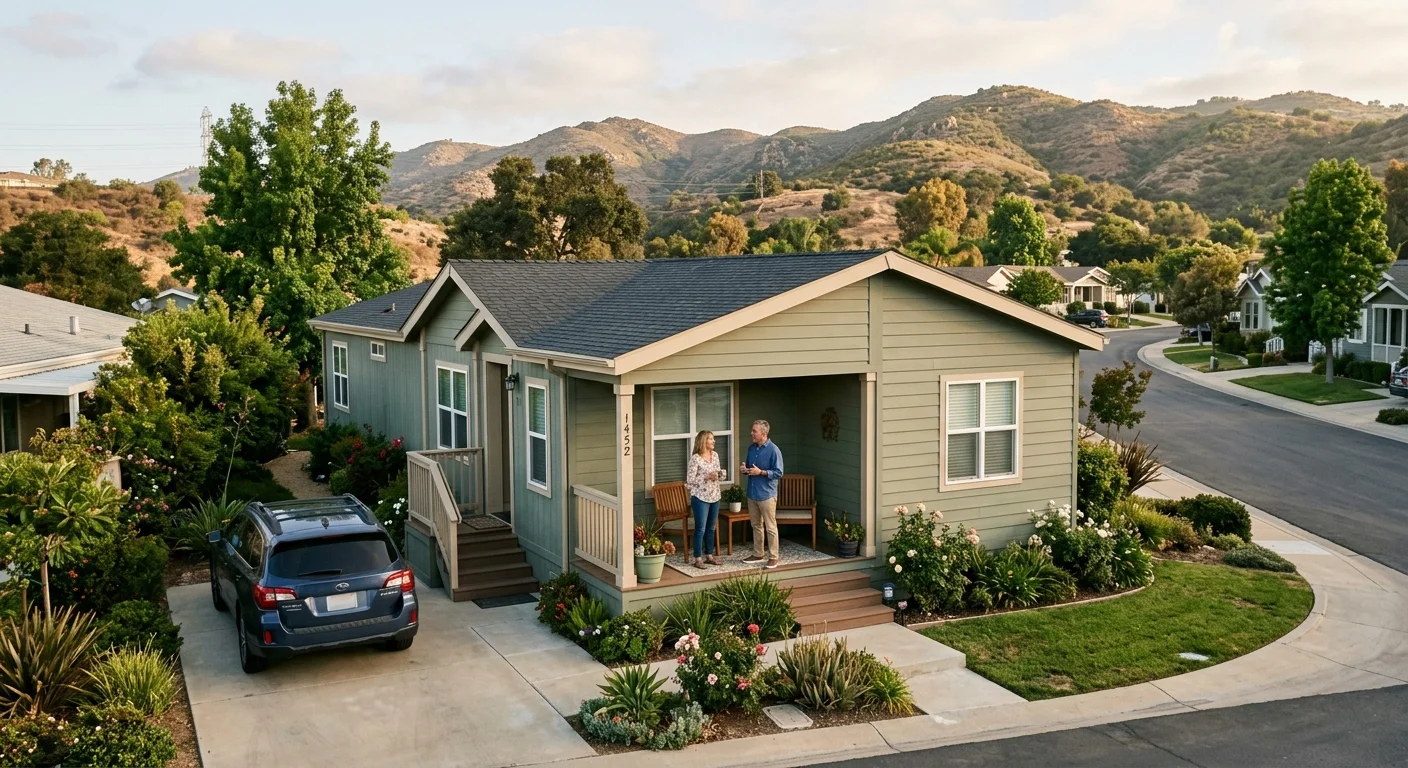
Begin by putting each listing into one of two working groups. The first is a home located inside a mobilehome park. The second is a home offered with private land.
Don’t rely on the listing headline to make that distinction. Ask the seller to state exactly what the sale includes. You need a clear answer about the home, the parcel, and any right to occupy a park space.
For a park listing, request the current documents governing that specific purchase. Ask what approval the buyer needs, which ongoing charges apply, and what occupancy conditions the buyer must meet. Get those answers from the park and seller before comparing the listing with another home.
For a private-land listing, confirm whether the land is part of the sale. Ask how the home is titled and whether it has been installed as a permanent fixture. Request the permit and recorded documents that support the seller’s answer.
California’s legal terms can help you read those records. A structure built before June 15, 1976, may meet the state’s definition of a mobilehome. A qualifying structure built on or after that date is called a manufactured home. Use a listing’s wording as a starting point, not proof of legal status.
California law also requires a building permit and approved foundation information before a manufactured home is installed as a permanent fixture. That statewide rule doesn’t confirm whether a particular Escondido parcel qualifies.
Our overview of manufactured and mobile homes for sale explains the broader shopping path. Buyers comparing factory orders with resales can also review used versus new manufactured homes.
Verify city and county jurisdiction before relying on rules
Treat jurisdiction as an unanswered question until the correct authority confirms it. The words “Escondido, CA” on a listing aren’t enough for permit decisions about an exact parcel.
Ask the seller for the parcel information and permitting records. Those records should identify the authority that handled prior work. If the documents point to unincorporated San Diego County, take the exact parcel question to San Diego County Planning & Development Services. If they identify city jurisdiction, ask the appropriate city counter to confirm its current process.
Keep the questions tied to the property:
- Which authority has jurisdiction over this parcel?
- What records exist for the home’s placement or foundation?
- Were later additions included in those records?
- Which authority should review a proposed replacement or alteration?
- Is written confirmation available before the offer becomes binding?
Don’t accept an unsourced figure from a listing description. Ask the responsible authority to confirm its current requirements and charges.
This check matters even when the home already occupies the site. A past installation record and a new project are different questions. If you’re planning a replacement, addition, or new private-land placement, describe that exact proposal to the authority.
The buying and placement process can help you organize the sequence. A licensed dealer or installer can address the work within their professional scope. Land & Home SD provides guidance and referrals, but doesn’t apply for permits or perform installation work.
Compare locations around I-15 and SR 78
Use I-15 and SR 78 as practical route-planning anchors. Don’t treat “near the freeway” as enough information. Start from the exact park entrance or private driveway.
Drive the routes you expect to use. Check the trip toward work, medical appointments, shopping, and family. For an east-west trip, test the property’s connection to SR 78. For a north-south trip, test its connection to I-15. Repeat the drive when you normally expect to travel.
Pay attention to the full route, not only map distance. Record the turns between the property and the main road. Note where you must cross traffic, enter the park, or approach a hillside driveway. These observations are specific to the listing and don’t require a seller’s estimate.
Visit the address more than once if your decision allows it. Compare what you can directly observe during daylight and after dark. Listen from the home itself rather than a nearby street. Confirm the assigned parking and guest access with the seller or park in writing.
If a purchase involves replacing the existing home, route access needs a separate professional review. Ask the licensed installer to examine the actual approach. Don’t assume that ordinary vehicle access answers questions about transporting and placing a home.
Keep a location sheet for every Escondido property. Use the same destinations, route notes, and access questions each time. That makes comparisons clearer when listings differ in price, title status, or park conditions.
Check title, financing, and park conditions
Title status deserves its own document review. California’s Department of Housing and Community Development handles manufactured-home registration and titling, not the Department of Motor Vehicles.
For a used manufactured-home resale, California law requires escrow instructions to address the current registration card, title, and registration copies held by junior lienholders. Legal owners and junior lienholders must provide the release or approval described by the statute. An escrow officer may also request tax clearance for a home subject to local property taxation.
Ask the seller or escrow professional to identify every document expected for your transaction. Compare the owner’s name, home description, and lien information across the available records. If anything conflicts, pause and ask the responsible professional or HCD what must be resolved.
HCD publishes its registration and titling resources. Check the current requirements directly with HCD and escrow.
Financing should be checked against the exact property. Give a lender the home’s title status, construction date, foundation information, and whether land is included. Ask the lender to state its conditions in writing before you depend on that financing.
For a park home, request the current documents directly connected to the space. Ask about buyer approval, occupancy limits, pets, vehicles, improvements, recurring charges, and any pending change affecting your agreement. Don’t rely on a former listing or verbal summary.
California has a Mobilehome Residency Law that applies to park residency. Buyers who need an interpretation should consult the current law or an appropriate legal professional.
Manufactured-home dealer and salesperson licensing is enforced by HCD. This article can’t confirm anyone’s current license status. Use HCD’s occupational licensing page and ask the department how to confirm current standing before signing.
Inspect the home before making an offer
A clean listing photo isn’t a property inspection. Ask for enough access to examine the home, its additions, and the documents tied to them.
Start with your own walk-through. Record what you can see without removing materials or entering restricted areas. Note stains, soft flooring, damaged finishes, doors that bind, windows that don’t operate, and visible changes from room to room. Photograph observations with the seller’s permission.
Outside, compare the home with the documents you’ve received. Ask who installed porches, rooms, ramps, sheds, awnings, or other additions. Request available permits and approvals. Don’t assume an addition was approved because it appears finished.
Ask an independent inspector about the proposed scope before hiring them. A useful scope may need to address the roof, exterior, interior, supports, accessible under-home areas, plumbing, electrical components, heating, cooling, moisture, and visible alterations. Confirm what the inspector will and won’t evaluate.
You can use our manufactured-home inspection checklist to organize questions. The checklist doesn’t replace an inspector, title review, lender approval, park approval, or jurisdiction confirmation.
Ask the seller how utilities can be tested during the inspection. If any system can’t be operated, have the inspector record that limitation. Don’t treat an untested component as a confirmed working component.
Review the final report alongside your title, park, and financing notes. One file may reveal a physical concern while another reveals a documentation gap. Keep those issues separate so the right person can answer each one.
The seller or dealer should answer questions about the home and transaction. The park should answer questions about its current documents. HCD or the local authority should address matters within its jurisdiction. Your lender should confirm financing conditions for that exact purchase.
When to call us
A conversation is useful before you commit to a park home, private-land property, or purchase with unclear title records. Land & Home SD can help you sort the questions and identify the right local professional.
Call us at (858) 400-4608 and we’ll walk through your options and connect you with a licensed local dealer.