Buyers searching for used manufactured homes for sale in San Diego, CA need to compare more than listing prices. Start with title status and whether land transfers. Then weigh condition, total site costs, financing, and seller credentials.
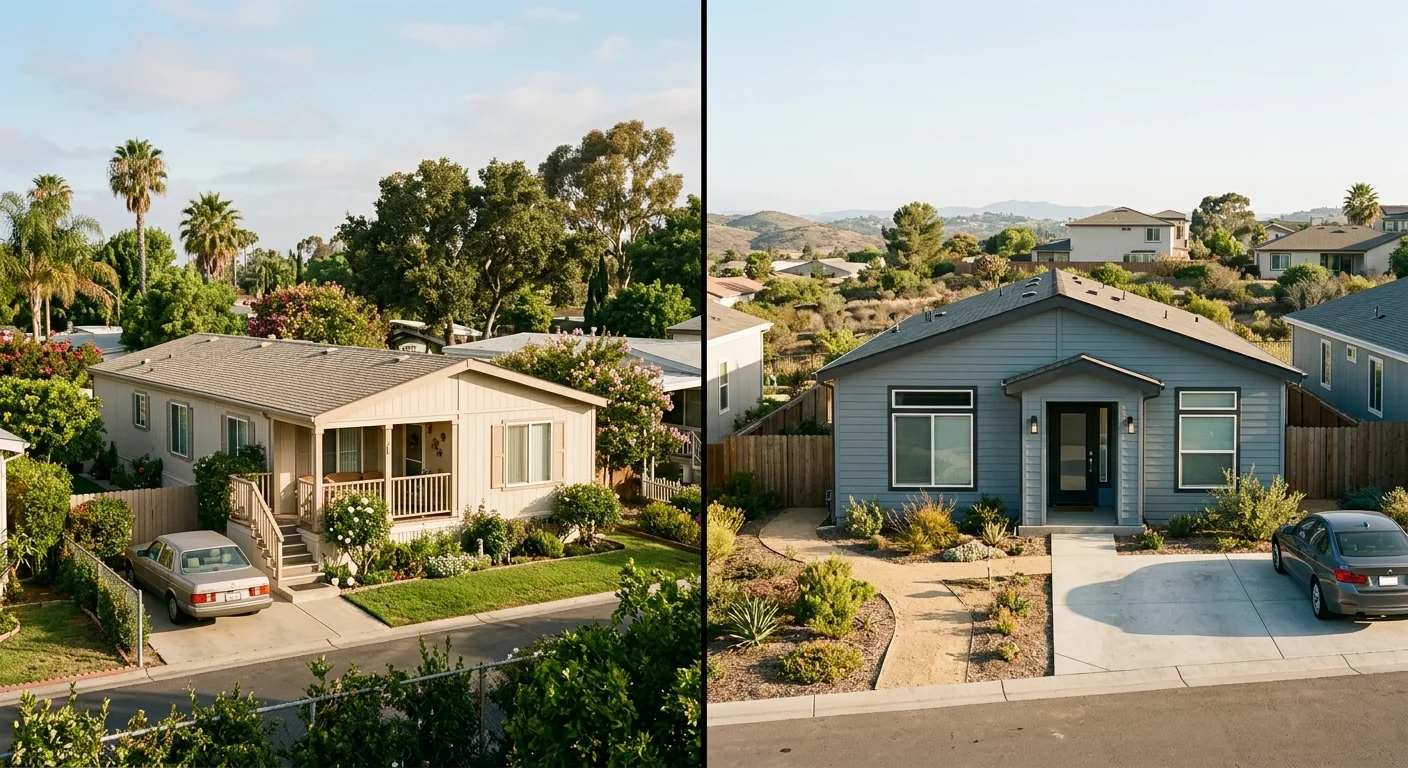
Start with the home’s title and land arrangement
A listing headline doesn’t explain what the buyer will own. The sale might cover only the home. It might include land, or the home may sit on a rented park space. Ask the seller or dealer to identify that arrangement in writing.
California HCD, not the DMV, handles manufactured-home registration and titling. For a used-home resale, California law requires escrow instructions to address the current registration card, title certificate, and registration cards held by junior lienholders. Legal owners and junior lienholders must also provide the required release or approve an assumption of the debt.
Start by reviewing the home’s available documents through the lens of HCD registration and titling. Ask who appears as the registered owner, what liens remain, and what documents will enter escrow. If the home is subject to local property taxation, an escrow officer may request a tax clearance or conditional tax clearance certificate.
Next, separate the home from its site. If land transfers, identify the exact property included. For a park home, request the current space agreement and all charges directly from the park. California’s Mobilehome Residency Law applies to park residency, not manufactured homes on private land.
A private-land proposal needs a separate site review. Ask the appropriate city or county office about the address before assuming a home can be placed there. Don’t treat a listing photo as zoning or permit confirmation.
Online portals may also blur land, title, and park details. Our guide to Zillow listings versus a manufactured-home specialist explains what to verify before relying on a search result.
Compare age, condition, and inspection findings
California law uses a specific date to distinguish two common terms. A manufactured home was built on or after June 15, 1976. A mobilehome was built before that date. Both descriptions refer to structures built on a permanent chassis, but the construction standards aren’t identical.
Manufactured homes built on or after that date fall under federal manufactured-home construction and safety standards. Pre-1976 mobilehomes aren’t covered by those HUD Code standards. The California HCD manufactured-home overview is the right starting point for state information.
That legal classification doesn’t reveal the home’s present condition. An older home may have careful maintenance or unresolved defects. A newer home still needs document and condition review. Compare evidence, not assumptions based on the model year.
For a used home, ask an inspector you choose to examine accessible areas. The review should cover the roof, exterior, floors, visible supports, plumbing, electrical components, heating, cooling, windows, and signs of moisture. Ask the inspector to identify inaccessible areas and recommend any further evaluation. Our manufactured-home inspection checklist can help organize that conversation.
Then match each finding to a written next step. Identify which repairs the seller will complete, which conditions the buyer accepts, and who will verify completed work. Fresh paint and new flooring shouldn’t replace a detailed inspection.
When comparing new manufactured homes for sale in San Diego, request the exact model, specifications, included work, and delivery scope. If anyone offers a warranty, get the provider, coverage, exclusions, and claim process in writing. A factory warranty, when offered, comes from its stated provider. Land & Home SD doesn’t provide a warranty.
Search results for used mobile homes for sale in San Diego, CA may include both pre-1976 mobilehomes and later manufactured homes. Confirm the construction date and legal classification before comparing them.
Separate home price from space rent and site costs
Don’t rely on an uncited range. Request current written amounts from the seller, park, dealer, installer, lender, insurer, and permitting authority involved.
Build a comparison sheet with separate rows:
-
Home amount: Record the seller’s or dealer’s stated price. Note the exact home, options, appliances, and work included.
-
Land or park space: Record whether land transfers with the home. For a park listing, request the current space terms and charges directly from the park.
-
Site work: Ask whether delivery, setup, foundation work, utility connections, grading, permits, and inspections apply. Get each applicable item in writing from the responsible provider.
-
Transaction and ownership costs: List every documented escrow, title, tax, insurance, inspection, or repair amount presented for that home. Mark anything that remains unconfirmed.
This breakdown matters when one listing is already placed and another isn’t. A new-home quote may or may not include site work. A used park listing may or may not include items shown in advertising. Ask what each number covers instead of filling gaps with assumptions.
California law requires a building permit and supporting documents before a manufactured home is installed as a permanent fixture. The process includes foundation plans and manufacturer installation instructions. Land and lien documentation also applies. Confirm the current requirements for the actual site with the responsible enforcement agency.
Compare one-time amounts separately from continuing obligations. Keep park charges apart from a land purchase. Keep immediate repairs apart from the sale amount. This gives you a cleaner comparison without pretending every home follows the same cost structure.
Check financing paths before comparing listings
Financing should be checked against the exact home and land arrangement. Don’t assume one lender’s program fits every used home, new model, park property, or private-land purchase.
Current rates, down payments, approval standards, and other loan terms should come from the lender in a written proposal for the specific home and buyer.
Give each prospective lender the same basic information:
- The home’s construction date and identifying documents
- The current title and registration information
- Whether land transfers with the home
- Whether the home is in a park or proposed for private land
- The seller’s or dealer’s written amount
- Any site work included in the transaction
Then ask the lender to state whether that exact property fits its program. Request the interest rate, annual percentage rate, term, required cash, fees, payment structure, and funding conditions in writing. Ask how a change in title status, land arrangement, inspection findings, or site scope would affect the proposal.
Compare written terms from the same time period. A rate shown on a general webpage isn’t a commitment for a particular home. A verbal summary also leaves too much room for confusion.
Title and registration still matter when financing isn’t involved. California’s used-home resale process calls for title and registration documents to move through escrow. Cash doesn’t remove the need to confirm the seller’s authority, liens, land arrangement, or required transfer documents.
Financing should help define the search, not arrive after a favorite listing has been chosen. Early confirmation can show which homes deserve a closer review and which questions remain unanswered.
Decide when a dealer referral can help
A referral can help when listing documents conflict, the land arrangement is unclear, or a new-home quote leaves out part of the site scope. It’s also useful when you need to compare a used listing with a dealer-supplied model using the same checklist.
California HCD enforces occupational licensing for manufactured-home dealers and salespeople. HCD may suspend or revoke a license for violations. Its occupational licensing page is the place to start, but confirm current status directly with HCD before relying on it.
Land & Home SD is a buyer’s guide and referral service. It doesn’t sell homes, hold inventory, operate a showroom, perform installation work, or hold a trade license. The independent professional handles the sale or installation work within the scope of the buyer’s agreement.
The pros Land & Home SD connects you with are licensed independent local manufactured-home professionals. The buyer contracts with and pays the professional directly. That professional’s written terms control the transaction, pricing, work, and any offered warranty.
Use our manufactured and mobile homes for sale guide to frame your search. Bring the title documents, land details, inspection findings, written costs, and financing proposals into the same conversation. That makes it easier to identify missing information before you commit.
A referral doesn’t replace your review of escrow, lender, park, or permit documents. It gives you a clearer path to a qualified local professional who can address the home and transaction in front of you.
When to call us
This decision is worth a conversation when title, land, condition, and financing don’t line up cleanly. Land & Home SD offers buyers a free, no-obligation referral option before they commit. Call us at (858) 400-4608 and we’ll walk through your options and connect you with a licensed local dealer.