
Buying a used manufactured home isn’t the same as buying a used house, and a standard home inspector will miss the parts that matter most. Before you make an offer, check five things a general inspection skips: the HUD certification tag, whether the title is personal property or real property, the roof and skirting, the park approval terms if the home is staying put, and the permit history if it’s on private land. Miss any of these and you can end up with a home that won’t qualify for financing, no matter how good it looks inside.
What should you check before buying a used manufactured home in San Diego?
Start with the HUD tag and the title status before you look at anything else, since both can disqualify the home from financing before you’ve spent a dollar on an inspector. From there, walk the physical condition yourself: roof, skirting and underbelly, plumbing, electrical panel, and subfloor. If the home sits in a park, pull the space rent history and the remaining lease term. If it’s on private land, ask for the permit file and the foundation certification. Only after all of that clears does it make sense to pay for a professional inspection.
| Check | What you’re looking for | Red flag |
|---|---|---|
| HUD tag | Red metal certification label on the exterior, plus the data plate inside a cabinet or closet | No tag, or a build date before June 15, 1976 |
| Title status | Personal property (HCD title) or real property (HCD Form 433A recorded) | Seller unsure which one applies |
| Roof | Age, seam condition, ponding water, signs of past patch jobs | Soft spots, active leaks, mismatched patch materials |
| Skirting and underbelly | Intact vapor barrier, no pest entry, dry insulation | Sagging belly wrap, visible moisture, pest damage |
| Plumbing | Pipe material and age, water pressure at every fixture | Polybutylene pipe, low pressure at multiple fixtures |
| Electrical panel | Panel brand and amperage, breaker condition | Federal Pacific or Zinsco panels, double-tapped breakers |
| Subfloor | Firm underfoot throughout, no give near tubs or water heaters | Soft or bouncy spots, especially in wet-area rooms |
How do you confirm the HUD tag and the home’s age?
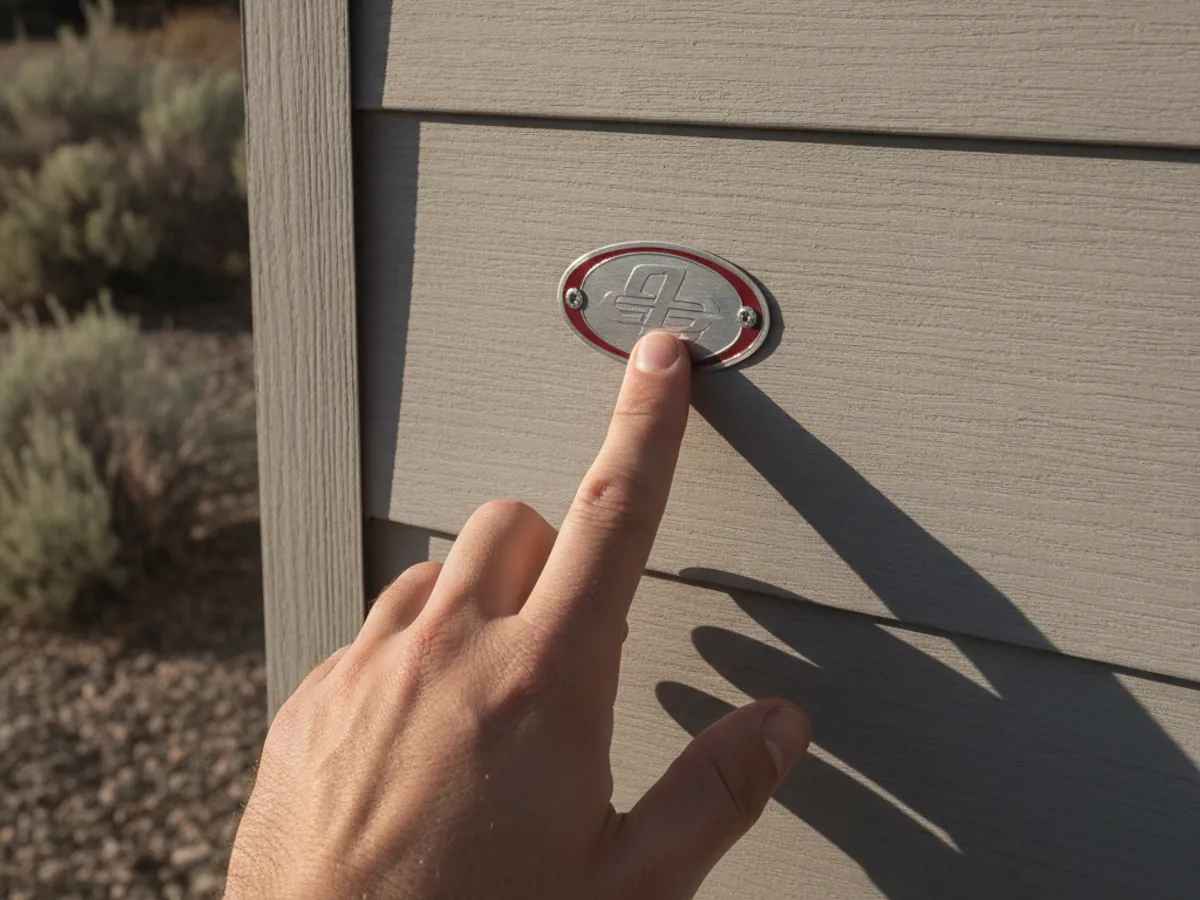
Every manufactured home built for sale in California carries a red metal HUD certification label riveted to the exterior of each section, usually near the rear. A matching HUD data plate, a paper document with the home’s specifications, is posted inside a cabinet, closet, or the electrical panel door. No tag means the home predates the June 15, 1976 federal construction standards, which makes it a “mobile home” in the technical sense, not a manufactured home, and pre-1976 homes are extremely difficult to finance or legally place on private land in San Diego County.
Write down the HUD label number and the build date before you go further. Lenders and insurers will both ask for it, and you want to know the home’s real age before you fall for a listing that rounds down.
Is the home personal property or real property, and why does it matter before you buy?
This is the single biggest fork in the road, and it decides which loan products you can even apply for. A home in a land-lease park, or one on private land that hasn’t been through the foundation conversion, is personal property under California law and financed with a chattel loan. A home permanently installed on a foundation on land the seller owns, with HCD Form 433A recorded, is real property and eligible for a traditional mortgage.
Ask the seller directly, then confirm it yourself. Personal property homes are billed an annual registration fee through California’s Department of Housing and Community Development. Real property homes show up on the county’s property tax roll as a real estate improvement. If the seller’s last tax bill doesn’t match what they told you, that’s worth resolving before you write an offer. Our guide to getting a mortgage on a manufactured home in San Diego walks through how the two paths differ for a buyer.
What actually fails first on a manufactured home?
The failure points on a manufactured home are different from a site-built house, and a generalist inspector who mostly works stick-built homes can miss them.
Roof. Most manufactured homes use a low-slope roof, either a rubber membrane or a metal panel system, and both rely on the seams staying sealed. Look for ponding water, cracked or lifted seam tape, and patch jobs that don’t match the surrounding material. A roof that’s been re-coated more than once in a short window usually means an active leak someone’s been managing instead of fixing.
Skirting and underbelly. The skirting isn’t just cosmetic. It protects the belly wrap, the vapor barrier that keeps moisture and pests out of the floor insulation. Pull back a section if the seller allows it, or ask directly whether it’s ever been opened for plumbing or pest work. Coastal parks from Oceanside down through Chula Vista deal with more marine-layer moisture against the underbelly than inland communities like Escondido or El Cajon, so a coastal-park home with a compromised belly wrap is a bigger red flag than the same issue inland.
Plumbing. Homes built and sometimes used polybutylene pipe, a plastic supply line with a well-documented failure history. It’s not automatically disqualifying, but it changes your insurance and inspection priorities. Test water pressure at every fixture and check the water heater’s age and condition while you’re at it.
Electrical panel. Older homes sometimes carry Federal Pacific or Zinsco panels, both associated with breaker failures that don’t trip when they should. An electrician can confirm the panel brand in a few minutes, and it’s worth doing before you’re under contract, not after.
Subfloor. Walk every room, paying close attention near tubs, showers, and the water heater closet. Soft or bouncy flooring almost always traces back to a past or ongoing leak, and manufactured home subfloor repairs are more involved than a typical house repair because of how the floor system is built.
If the home is staying in a park, what should you check in the space rent and lease?
Space rent changes what the home actually costs you every month, and it varies more than most buyers expect across San Diego County. Ask for the park’s rent history for at least the past three years, not just the current number, so you can see how fast it’s been climbing. Our breakdown of mobile home space rent in San Diego covers which cities cap increases and which don’t.
Also check the park’s remaining ground lease term against how long you plan to finance the home. Some lenders require the park’s lease to outlast the loan term, and a short remaining lease can eliminate financing options you were counting on. Ask park management directly, in writing, rather than relying on what the seller remembers.
If the home is on private land, what permit and foundation history should you check?
A manufactured home on private land should have a permit file with San Diego County Planning and Development Services covering the foundation, utility connections, and final inspection sign-off. Ask the seller for copies, or pull the parcel’s permit history yourself through the county.
If the home sits in a high or very-high fire hazard severity zone, which covers significant parts of unincorporated San Diego County, confirm the siding and roofing materials meet the county’s ignition-resistant requirements. Our guide to placing a manufactured home on private land in San Diego County covers the full permit sequence, including what HCD Form 433A and 433B actually change once they’re recorded.
Do you need a professional inspector, and how do you pick one who knows manufactured homes?
Yes, once the HUD tag, title status, and your own walkthrough have checked out. A general home inspector can still do the job, but not every one of them has real experience with manufactured housing’s specific systems, particularly the belly wrap, the pier-and-anchor foundation, and the crossover connections between multi-section homes. Ask directly how many manufactured home inspections they’ve done in the past year, and ask for a sample report before you hire them.
Budget for a specialist if you can find one. A manufactured-home-specific inspector will know what a normal amount of settling looks like versus a structural problem, and that distinction is easy for a generalist to get wrong in either direction.
Frequently asked questions
What is the most important thing to check before buying a used manufactured home?
The HUD certification tag. It confirms the home was built after June 15, 1976 to federal safety standards, and without it the home is nearly impossible to finance or legally place on private land in San Diego County. Check it before anything else.
How do I know if a manufactured home is personal property or real property?
Ask the seller for their most recent tax bill. An annual registration fee paid to California’s Department of Housing and Community Development means personal property. A charge on the county property tax roll as a real estate improvement means real property, which requires HCD Form 433A to have been recorded.
Do manufactured homes need a different home inspector than a regular house?
Not always required, but it’s worth finding one with real experience. The skirting, underbelly, pier-and-anchor foundation, and crossover connections between sections are specific to manufactured housing, and a generalist inspector who mostly works site-built homes can miss problems in those areas.
What should I check if the home is staying in its current park?
Get the park’s space rent history for at least three years and the remaining term on the ground lease. Rising space rent changes your real monthly cost, and a short remaining lease term can eliminate financing options with some lenders.
Is polybutylene plumbing a dealbreaker in a manufactured home?
Not automatically, but it changes your priorities. Polybutylene pipe, common in homes built through the 1980s and early 1990s, has a documented failure history. Test water pressure at every fixture and factor the cost of new pipe into your offer if the home has it.
What permits should a manufactured home on private land in San Diego County have?
A complete file with San Diego County Planning and Development Services covering the foundation, utility connections, and final inspection, plus HCD Form 433A recorded if the home is claimed as real property. No permit file on a home supposedly on a permanent foundation is a red flag.
Get a second set of eyes before you make an offer
Every manufactured home carries its own history: how it was financed, whether the foundation was ever certified, what a park’s rent has actually done over time. Land & Home SD isn’t a dealer and doesn’t sell homes. We’re a local guide who’ll walk through what you’re looking at before you commit to anything.
Call (858) 400-4608 or visit our buying process guide to see the full sequence from HUD tag to closing. We help buyers evaluate manufactured homes for sale and understand financing eligibility across San Diego County, including parks in Chula Vista and Escondido.