A listing can say Alpine and still sit in Harbison Canyon, Flinn Springs, or farther east toward Descanso. Pin the parcel, the park-versus-land split, and the water and sewer setup before you tour manufactured homes for sale in Alpine CA. Those three checks change financing, permits, and what you actually own.
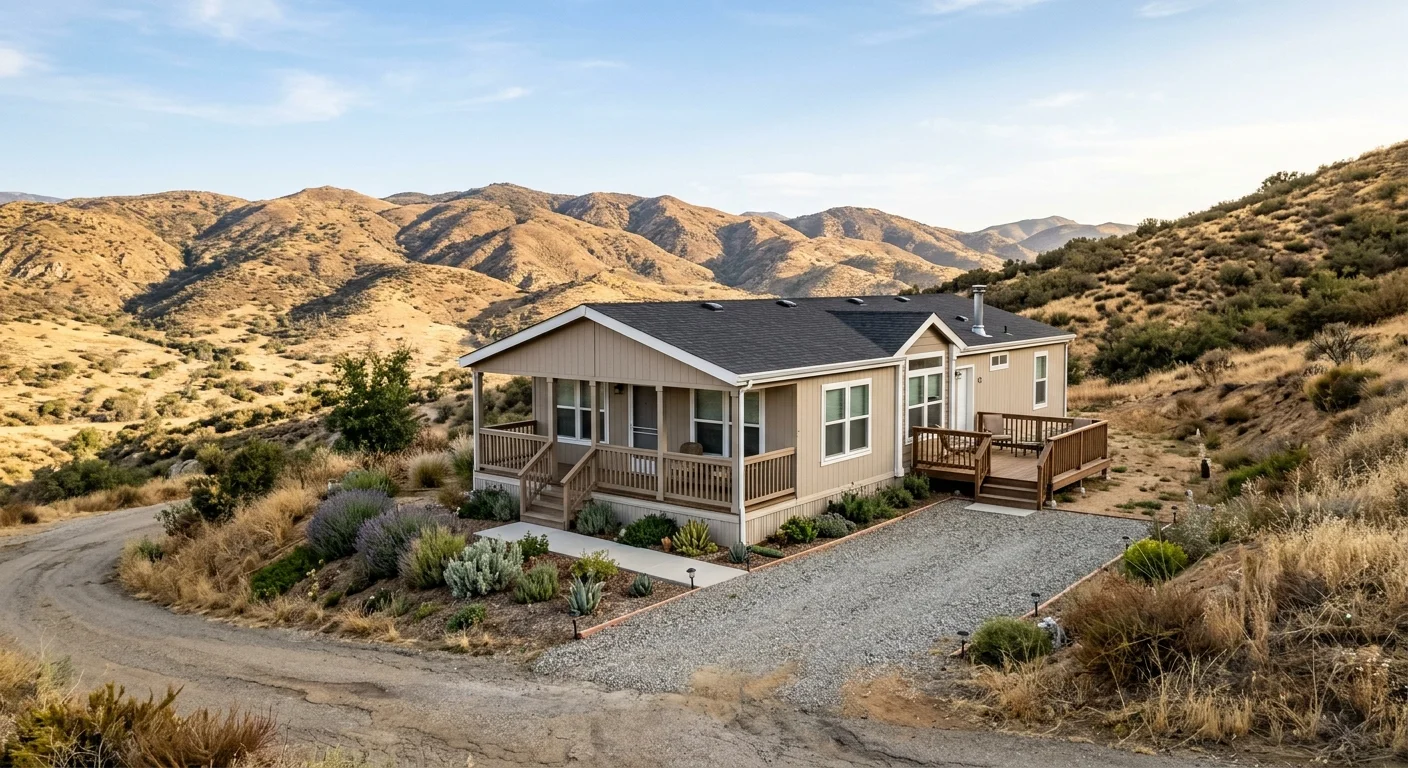
Confirm whether the address is in Alpine
Alpine is an unincorporated community in eastern San Diego County. It sits along Interstate 8, east of El Cajon and above the Lakeside valley floor. The 91901 ZIP covers a wide foothill belt. Mail that says Alpine does not always mean the town core around Alpine Boulevard.
El Cajon is an incorporated city. Its building department signs off on city lots. Alpine parcels are typically in County jurisdiction. San Diego County Planning & Development Services is the office to ask about zoning and placement. Confirm that on the specific assessor parcel. A nearby city-limit lot uses a different counter.
Lakeside is also unincorporated East County. It sits lower, closer to the river corridor and the El Cajon rim. Alpine is drier foothill country. I-8 is the commute spine. Cleveland National Forest land sits not far to the east. Descanso sits farther into the mountains. A Descanso or Japatul Valley pin is a different drive, a different site, and often a different utility story than a space on Alpine Boulevard.
Search results mix names. Alpine Oaks Estates and Alpine Mobile Home Estates both appear when people look for alpine mobile homes. Treat those labels as a prompt to verify, not as proof they are the same community. Ask for the legal park name on the lease or park documents, the space number, and the street. Do that before you compare two listings.
If you are also looking at El Cajon or Lakeside inventory, read our East County touring comparison first. Alpine is the mountain-east stop on that I-8 run. It is not a swap-in name for a valley-floor park. Julian is a different mountain file, with its own well, septic, and access checks on Julian buyer checks.
Bring the assessor parcel number to County PDS and to the listing agent. Ask which agency holds building authority. Ask whether the pin is in a mapped community, on private acreage, or in a park. That answer belongs in your notes before you book a tour.
Compare park homes with land-owned listings
Park listings and land-owned listings are different products that share photos. In a park, you usually buy the home and rent the space. On private land, you buy the home and the dirt, or you place a home on land you already own. The monthly bill, the loan type, and the resale path all follow that split.
California’s Mobilehome Residency Law exists in Civil Code section 798 and the rest of that chapter. It applies to mobilehome park residency, not to a manufactured home on private land. Confirm current park rules, space-rent terms, and any age policy with park management. Do not assume a Lakeside or El Cajon park rule set applies in Alpine.
For a home on a leased park space, federal HUD Title I guidance says a manufactured home may be classified as personal property or as real estate. HUD Title I can finance the home, the lot, or both. HUD also states that borrowers may lease the lot, including a site in a manufactured home community. The required initial lease term is three years. HUD also requires at least 180 days’ advance written notice if the lease will be terminated. That is HUD’s published structure. It is not an approval, a rate, or a promise on a given Alpine space.
Private-lot work in County jurisdiction is a different file. County PDS 103 (revision 09/18/2025) covers eligible manufactured homes on private lots in County jurisdiction. Eligibility includes qualifying mobilehomes built September 15, 1971 through June 14, 1976, and manufactured homes built from June 15, 1976, with the stated approval or certification. Roof-pitch and eave rules in that bulletin have exceptions and Director-waiver language. Do not treat those County rules as El Cajon city rules. Do not read roof pitch as a snow-load rating.
If the plan is a home on acreage, start with our guide to putting a home on private land. If you are shopping existing inventory, start with manufactured homes for sale and tell the licensed dealer whether the pin is a park space or a parcel.
Dealers and salespeople in this trade are licensed by California’s Department of Housing and Community Development. You can check a license on HCD’s occupational licensing page. Land & Home SD is a referral service. We match you with licensed independent local pros. We do not sell homes, hold inventory, or install.
Check well, septic, access, and inland site conditions
Many Alpine foothill parcels sit off municipal sewer and city water. El Cajon lots more often tie to city systems. Lakeside is mixed. Alpine acreage is where well and septic questions show up in the first week of due diligence. A park space may still bill water, sewer, or trash through the park. Ask. Do not guess from listing photos.
We could not confirm a single countywide well or septic fee, tank size, or setback from a primary source that belongs on this page. San Diego County Planning & Development Services is the starting desk for land-use questions. The seller, the park, or the licensed installer should produce current well and septic records for that pin. Walk those records with our rural well and septic checks before you write an offer.
Access is its own Alpine issue. I-8 gets you to town. Local roads then climb, bend, and narrow. A multi-section home still has to reach the pad. Confirm truck path, overhead lines, driveway grade, and turnaround with the licensed dealer or installer who would move the home. County PDS can tell you what they review on a private-lot placement. Park management controls what can enter a community.
Inland East County is dry hill country. Summers run hotter than the coast. Wind moves through the passes off I-8. We are not publishing fire-code, brush-clearance, or insurance figures here. Those maps and dollar amounts were not in the verified claims ledger. Ask County PDS what the parcel’s current land-use file shows. Ask the park what it requires for skirting, awnings, and vegetation. Ask an insurer what they will write on this address. Get those answers in writing for this pin, not for East County as a blob.
Utility letters matter as much as the house. Who bills electric. Who owns the tank. Who pumped the septic last, and what that report said. Who holds the well log. If nobody can produce those papers, slow down. Alpine land is not a valley-floor hookup by default.
Review title, financing, and inspection records
Under California Health and Safety Code section 18007, a manufactured home is a structure built on or after June 15, 1976, on a permanent chassis, transportable in sections, and designed as a single-family dwelling. A mobilehome under section 18008 is the pre-June 15, 1976 version of that same idea. Factory-built housing, the modular path, is a different statute (HSC 19971) and a different inspection system. Match the label on the data plate to the statute before you shop loans.
Homes built on or after June 15, 1976 must meet the federal HUD Code. Pre-1976 mobilehomes are not HUD Code homes. Modular homes follow California building standards, not the HUD Code. HCD’s manufactured and mobilehome page is the state regulator’s front door.
Title and registration run through HCD, not DMV. For a new home, California HSC 18035 requires the original manufacturer’s certificate of origin to go into escrow. For a used home, escrow needs the current registration card, junior-lienholder copies, and the certificate of title. Legal owners and junior lienholders must release the security interest or approve a formal assumption. On a used home subject to local property tax, the escrow officer may request a tax clearance or conditional tax clearance from the county tax collector. Follow HCD registration and titling for the current consumer process.
HCD also states that a manufactured or multifamily manufactured home installed on a foundation system is no longer registered by HCD. Consumer guidance is to cancel registration and confirm the individual property record was completed. That does not prove a lender will treat the Alpine home as real property. Ask the lender and the title company to show you the current classification for this unit.
Permanent-foundation work has its own state process under HSC 18551. Before installation as a permanent fixture, the owner must obtain a building permit. The file must include proof of ownership or a long-term lease (35+ years or mutually agreed terms), evidence the home is lien-free or written lienholder consent, department-approved foundation plans, the manufacturer’s installation instructions, and an $11 fee per transportable section as stated in the statute. That statutory fee may be subject to adjustment, so confirm the live amount with the agency that will issue the permit. Within five business days of a certificate of occupancy, the enforcement agency records a document naming the owner of the real property. Local agencies cannot require a permanent foundation for homes already on private property or in mobilehome parks, with limited exceptions for park conversions.
Finance only after title is clear enough to describe. HUD Title I can finance a unit, a lot, or both. Do not treat that as a lock on your Alpine deal. A licensed dealer, a lender that actually books manufactured-home loans, and a third-party inspector should each put eyes on the home. Inspection findings belong in the offer, not in a handshake.
Confirm current terms before you offer
Listings go stale. Park rules change. A well that tested last year is not this year’s test. Before you offer, ask the seller or park office for the documents that are in force today.
For a park home, that means the current space-rent amount, what the rent includes, the remaining lease term, any age policy, and the park’s written rules. Confirm the legal community name so you are not mixing Alpine Oaks Estates with a different Alpine Boulevard park. Get the space number on the same page as the serial numbers from the data plate.
For land, that means the assessor parcel, access, well and septic records, and whether County PDS has an open permit on the pin. If a replacement home is the plan, ask the licensed installer what that parcel can actually take. Slope, setbacks, and truck access decide more than a floor-plan PDF.
Do not offer from a screenshot. Walk the home. Photograph the data plate, the title packet, and the utility setup. Have a licensed inspector who knows HUD-code homes write a report. If the dealer cannot show HCD licensing, stop. If the park cannot name the rent that starts next month, stop.
Land & Home SD can walk those papers with you at no obligation. We do not set prices, hold homes, or sign your contract. The licensed dealer or installer you are matched with does the licensed work. You contract and pay that professional directly.
When to call us
Call before you treat two Alpine listings as comparable, and before you write an offer on a foothill parcel with a well, a septic tank, or a park lease you have not read. Call us at (858) 400-4608 and we’ll walk through your options and connect you with a licensed local dealer.