When searching for mobile homes for sale in San Ysidro CA, verify each result before treating it as a real option. Confirm the address, land arrangement, title documents, park terms, financing, and condition before making an offer. A listing starts the conversation, but written records should guide the decision.
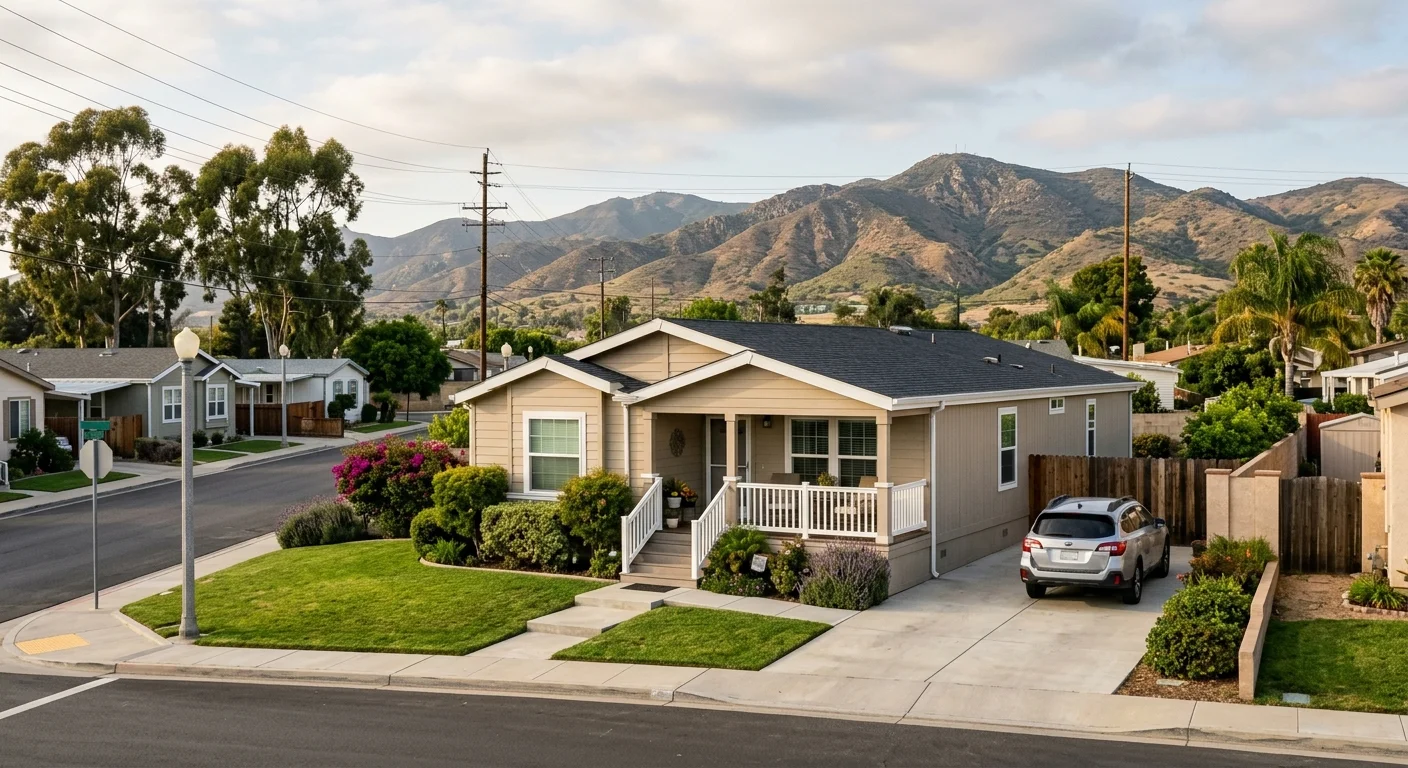
Start with the address and jurisdiction
Begin with the complete address shown in the seller’s records. Get any unit or space identifier that applies. The same information should appear consistently across the listing, purchase paperwork, title records, and park documents.
Don’t rely only on the place name shown online. Ask the seller or dealer to identify the government office responsible for the property. Then confirm that answer directly before discussing placement, replacement, additions, utility work, or a permanent foundation.
A community name or search label doesn’t confirm an individual property’s jurisdiction. Verify each address instead of applying one general answer across the area.
If someone identifies San Diego County as the governing authority, check that claim with San Diego County Planning & Development Services. That page is a starting point for county information, not proof that the county governs a specific address. Ask the named office to confirm whether it handles the property and proposed work.
For every candidate, create a simple address record containing:
- The complete address and any space number
- The seller or dealer’s name
- Whether land is represented as part of the sale
- The government office identified by the seller
- The title or registration identifier shown in the documents
- The source and date for every answer
Don’t fill missing fields with assumptions. If the seller can’t confirm an address, title detail, or governing office, mark it as unconfirmed. Resolve that gap before spending money on inspections, applications, or financing.
Our guide to the buying and placement process gives you a broader sequence for organizing those checks.
Separate park homes from homes sold with land
A San Ysidro search can’t tell you what property interest is included. Ask whether the recorded land parcel transfers with the home. If land isn’t included, ask what written agreement governs the home’s site and who controls that agreement.
Avoid relying on labels such as “land owned,” “park home,” or “on its own lot” without documents. Request records that support the description. If a listing includes land, ask the seller to identify the parcel in writing. If it doesn’t, request the current park or site documents before comparing the home with land-based options.
For a park-based home, ask management directly about:
- Whether buyer approval is required
- Which current application materials apply
- The charges payable to park management
- Rules affecting occupancy, pets, parking, alterations, or resale
- The agreement that applies to the site
- Any deadlines tied to the proposed purchase
San Ysidro parks can have different processes, space rents, application fees, and availability. Get those details from the specific park in dated written form. Our San Diego County mobile home park guide explains how to organize a park-focused search without assuming that every community works alike.
Terminology also matters. Under California law, a “mobilehome” was constructed before June 15, 1976. A “manufactured home” was constructed on or after that date and meets the state definition. Modular homes fall under California’s separate factory-built housing definition.
A seller’s casual wording may not establish the home’s legal classification. Compare the construction date and documents with information from California HCD’s manufactured and mobilehomes division. If the records remain unclear, ask the dealer or HCD for the current classification before proceeding.
Check title, park approval, and financing
Title review should happen before an offer becomes difficult to unwind. Ask for the current registration card and certificate of title for a used home. Compare the owner names, home description, identifiers, and address information against the proposed purchase paperwork.
California law requires escrow instructions for a used manufactured-home resale to include the current registration card, registration cards held by junior lienholders, and the certificate of title. Legal owners and junior lienholders must provide the applicable release or assumption statement described by state law.
Registration and titling are handled by California HCD, not the Department of Motor Vehicles. Use HCD’s registration and titling page to find the regulator’s current materials. Don’t rely on an old form, an undated seller summary, or a verbal description of title status.
Ask these questions in writing:
- Does the seller’s name match the ownership records?
- Does any legal owner or junior lienholder appear?
- Are the home identifiers consistent across every document?
- Is the home represented as personal property or affixed to land?
- If it’s represented as affixed, which recorded document supports that statement?
- Who will handle the transfer documents through escrow?
Park approval is a separate verification. Ask management whether approval applies and obtain its current instructions. Don’t assume seller acceptance also means park acceptance.
Financing needs its own written review. Ask each lender for its current rates, down payment requirements, eligibility conditions, and other terms for the exact home, title status, site arrangement, construction date, buyer, and proposed transaction.
Compare lender answers using the same facts. Don’t accept a general prequalification as confirmation that a specific home qualifies. Our guide to manufactured homes for sale can help you organize dealer and home options while keeping these checks separate.
Inspect the home before making an offer
A clean listing page doesn’t establish a home’s condition. Tour the exact home and record what you see. Arrange an independent inspection before committing, and make sure the inspector knows the home’s documented classification and construction date.
Use the visit to compare the physical home against the seller’s paperwork. Confirm that the address and visible identifiers match. Ask before opening panels, entering enclosed areas, or moving seller property. Leave technical and invasive checks to a qualified professional.
Your inspection plan should cover visible areas such as:
- Roof surfaces that can be viewed safely
- Ceilings and walls
- Floors near doors, fixtures, and exterior walls
- Windows and exterior doors
- Plumbing fixtures and accessible supply areas
- Heating and cooling equipment
- Electrical fixtures and accessible panels
- Exterior siding, trim, steps, rails, and skirting
- Support, foundation, or anchoring components visible to the inspector
- Additions, porches, storage structures, and enclosed spaces
Document stains, damage, soft areas, uneven surfaces, odors, missing components, and recent cosmetic work. These observations don’t establish the cause. Ask the inspector what further review is needed and get repair findings in writing.
Don’t treat skirting or a concrete surface as proof of permanent-foundation status. California’s permanent-foundation process includes permits, approved plans, manufacturer instructions, and a recorded document after the certificate of occupancy. If the seller represents the home as permanently affixed, request the supporting records and have the appropriate authority confirm them.
Use our manufactured home inspection checklist for San Diego to prepare questions before the tour. Keep inspection findings separate from title, park, and financing approvals. A positive answer in one category doesn’t resolve missing information in another.
Confirm every current term in writing
Before comparing San Ysidro homes, build one worksheet for each property. Use only figures and terms supplied by a named current source. Record who provided each item and when it was received.
Get the sale price from the seller or dealer, site charges from park management, loan terms from the lender, and government charges from the office handling the property.
Ask for written confirmation of:
- The home’s purchase price
- Every item represented as included
- Any excluded fixtures, structures, or services
- The land or site arrangement
- Current park charges and approval terms, if applicable
- Deposit terms and refund conditions
- Lender terms for that exact property
- Inspection findings and requested repairs
- Escrow and title-transfer responsibilities
- Permit or recorded-document claims
- The deadline attached to each term
Don’t combine figures from different listings. A charge from one park doesn’t establish another park’s terms. A lender’s answer for one home doesn’t confirm another home. An older seller document also doesn’t prove that a current rule or charge remains unchanged.
Read the proposed agreement against your worksheet. Flag missing attachments, conflicting identifiers, blank amounts, verbal promises, and unexplained changes. Ask the responsible party to correct or explain them before you sign.
Land & Home SD doesn’t sell homes, set prices, hold inventory, or perform installation work. We guide buyers and connect them with licensed, independent local manufactured-home professionals. The consultation is free to buyers and carries no obligation, but the buyer contracts with and pays the selected professional directly.
When to call us
This decision is worth a conversation when the address, title, park arrangement, financing, or written terms don’t line up. Call us at (858) 400-4608 and we’ll walk through your options and connect you with a licensed local dealer.