When manufactured homes for sale in San Diego, CA all look possible, narrow the search by ownership path first. Decide whether you want a park home, a home sold with land, or a new home that needs a placement site. That choice tells you which listings deserve a call and which documents to request.
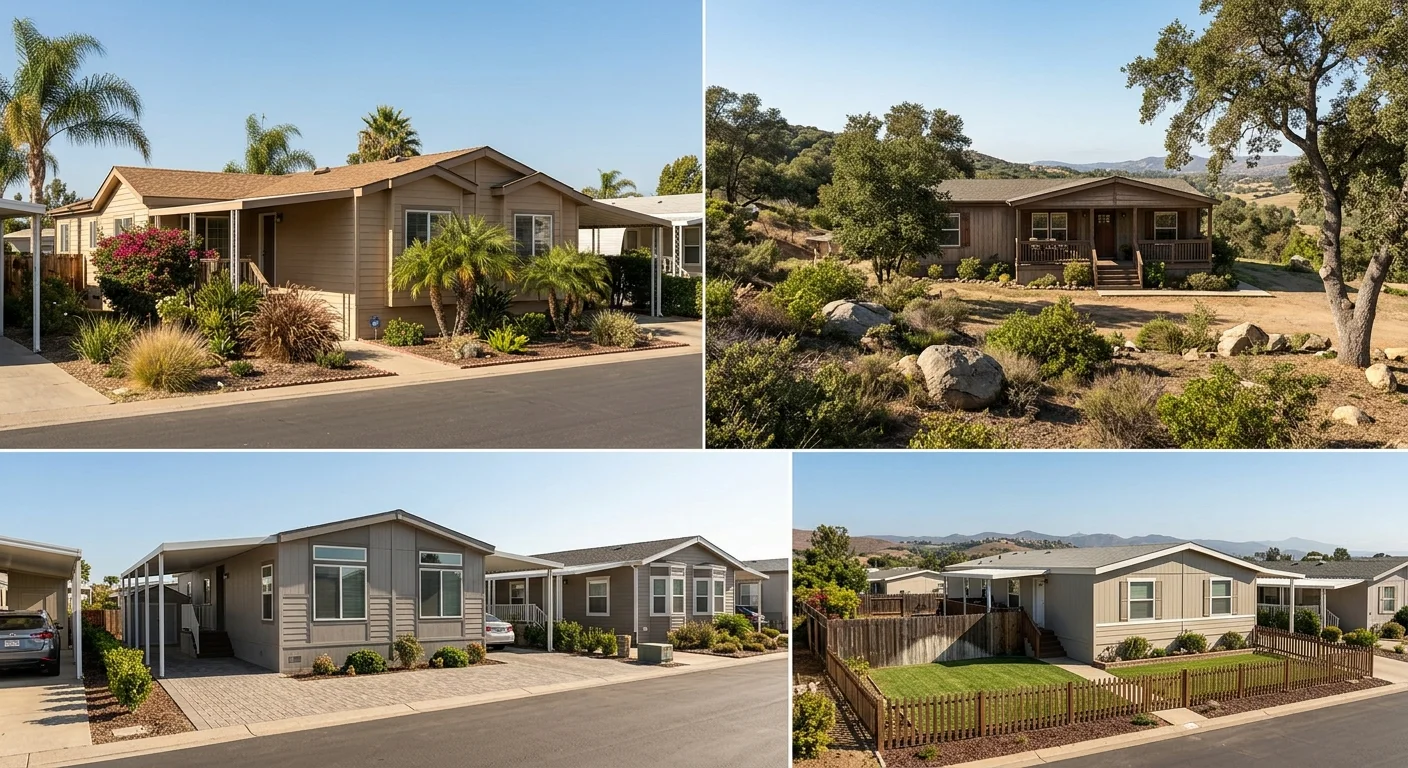
Decide whether you’re shopping for a park home or land
Start by putting every candidate into one of three groups. Use park home, home with land, or new-home placement. Don’t compare listings across those groups until you’ve confirmed what each sale includes.
For a park home, ask whether the land is included. If it isn’t, request the current space terms directly from park management. Ask about every recurring charge, residency condition, application step, parking rule, pet rule, and home-improvement restriction. Get current answers in writing before making an offer.
For a home advertised with land, ask the seller to identify the parcel included in the sale. Confirm that answer through the title and escrow process. Don’t rely on phrases such as “land-owned” without supporting documents.
New-home placement is a different search. Treat the home, parcel, installation, utilities, foundation, and site work as separate decisions. A dealer can explain what its proposal includes. The authority responsible for the address can confirm current permit and placement requirements.
California also distinguishes between mobilehomes and manufactured homes by construction date. Under state law, a mobilehome was constructed before June 15, 1976. A manufactured home was constructed on or after that date and meets the applicable definition. Modular housing falls under a different state definition.
Use our manufactured and mobile homes for sale guide to compare the three buying paths. Land & Home SD guides buyers and connects them with licensed independent local professionals. Land & Home SD doesn’t sell homes or hold inventory.
Set a total budget before opening listings
A listing price shouldn’t be your whole budget. Create one worksheet that shows every amount you still need to confirm. Unknown costs stay marked as unknown until the responsible party provides them.
For a park candidate, request the purchase amount and all current park charges separately. Ask what each charge covers and whether any changes are pending. Park management sets the terms for that property, so confirm them before you commit.
For a home sold with land, ask the seller and escrow professional which property interests transfer. Have the lender explain the proposed financing in writing. Ask the insurer what information is needed for that exact home and parcel. Don’t apply numbers from another listing.
For new-home placement, separate the dealer’s home proposal from possible delivery, installation, foundation, utility, permit, grading, access, and site-preparation items. Ask who prices each item and who performs it. A blank line is safer than an assumed allowance.
Your worksheet can include these categories:
- Home or purchase amount
- Land or park-related amount
- Financing and escrow items
- Taxes or registration questions
- Insurance
- Inspection and repair questions
- Placement and site work
- Utility-related work
- Items excluded from written proposals
The buying and placement process can help you organize those conversations. Don’t compare two totals unless they cover the same items. If one proposal leaves something unanswered, keep that amount open.
Choose regions before scheduling tours
San Diego County is too broad for one undivided search. Build separate saved searches for coastal north county, inland north county, central San Diego, East County, and the South Bay. Then narrow each group to places that fit your daily life.
A practical worksheet might separate Oceanside, Carlsbad, and Encinitas from Escondido, San Marcos, and Poway. Keep San Diego city results in another group. Use separate searches for El Cajon and Santee, then National City, Chula Vista, Imperial Beach, and San Ysidro.
These aren’t claims about current inventory. They’re search boundaries. Dealers and sellers must confirm which homes are actually available.
Next, place your regular destinations on the same worksheet. Include work, caregiving, medical appointments, schools, and other frequent trips. A home that fits on paper may leave the shortlist once you compare its location with your routine.
Don’t schedule countywide tours from an unfiltered results page. Pick one region, confirm the buying path, and verify the basic listing details first. Our guide to touring mobile homes across San Diego County provides a separate tour-day process after you’ve built the shortlist.
A private parcel needs an address-specific authority check. Ask the seller or dealer which agency controls planning for that address. If they identify the county, use San Diego County Planning & Development Services to find current county information. If another authority controls the address, contact that authority directly. Get the permit process for the exact parcel and proposed work.
Verify title, park, and listing details
Treat every listing as a lead, not proof. Before an offer, compare its claims with documents from the seller, park, dealer, escrow professional, and responsible agency.
Start with the home itself. Request the construction date, seller’s name, location, identifying information, and documents showing the ownership being offered. The construction date matters because California’s legal definitions separate pre-June 15, 1976 mobilehomes from manufactured homes built on or after that date.
California HCD, not the DMV, handles manufactured-home registration and titling. For a used-home resale, state law addresses placing the current registration card and certificate of title into escrow. It also addresses registration copies held by junior lienholders. Ask the escrow professional how those documents will be handled for your transaction.
For a new manufactured home, state law requires the original manufacturer’s certificate of origin to be placed in escrow. Ask the dealer and escrow professional to identify the documents expected for that sale. Current guidance is available through HCD registration and titling.
When local property taxation applies, an escrow officer may request a tax clearance or conditional clearance from the county tax collector. Don’t assume whether that applies. Ask escrow to confirm the status for the specific home.
For a park listing, request current terms from park management. Ask whether the seller’s description matches the park’s records. Confirm charges, occupancy conditions, included items, parking, pets, and any proposed changes directly with the responsible party.
HCD has authority over manufactured-home dealer and salesperson licensing. Check HCD occupational licensing, then ask HCD how to confirm current status.
Use one checklist for every home
A standard checklist stops an attractive listing from changing your rules. Use the same fields for every candidate. Mark each answer confirmed, pending, or excluded.
Your checklist should record:
- Search region and exact location
- Park, land, or new-home placement path
- Whether land is included
- Seller or dealer identity
- Construction date
- Registration and title documents requested
- Park terms requested, when applicable
- Written purchase amount
- Other budget categories still unconfirmed
- Financing and insurance questions
- Inspection and repair questions
- Items included and excluded
- Permit authority for placement work
- Source and date for every confirmed answer
- Reason the home stays or leaves the shortlist
Keep photographs and listing descriptions in the same folder as your notes. Label seller statements separately from verified documents. If an answer changes, preserve the new answer and its source.
Don’t score an unknown answer as favorable. Mark it pending and ask who can confirm it. If the seller can’t identify the proper source, that uncertainty belongs in your comparison.
Used and new homes raise different questions. Review our used versus new manufactured home guide before comparing them. A used-home file may focus more on existing documents and condition questions. A new-home file should separate the factory home from placement and site proposals.
After each call or tour, update the checklist immediately. Remove homes that don’t match your chosen path, region, or written budget. The remaining group becomes a focused shortlist instead of another page of search results.
When to call us
Call before an offer when the park, land, title, or placement path remains unclear. Land & Home SD offers a free, no-obligation buyer consultation before you commit. Call us at (858) 400-4608 and we’ll walk through your options and connect you with a licensed local dealer.