For manufactured ADU financing in San Diego, start with a written lender checklist, not a rate search. The financing must match the proposed home, site-work plan, parcel, and title approach before you commit to a dealer.
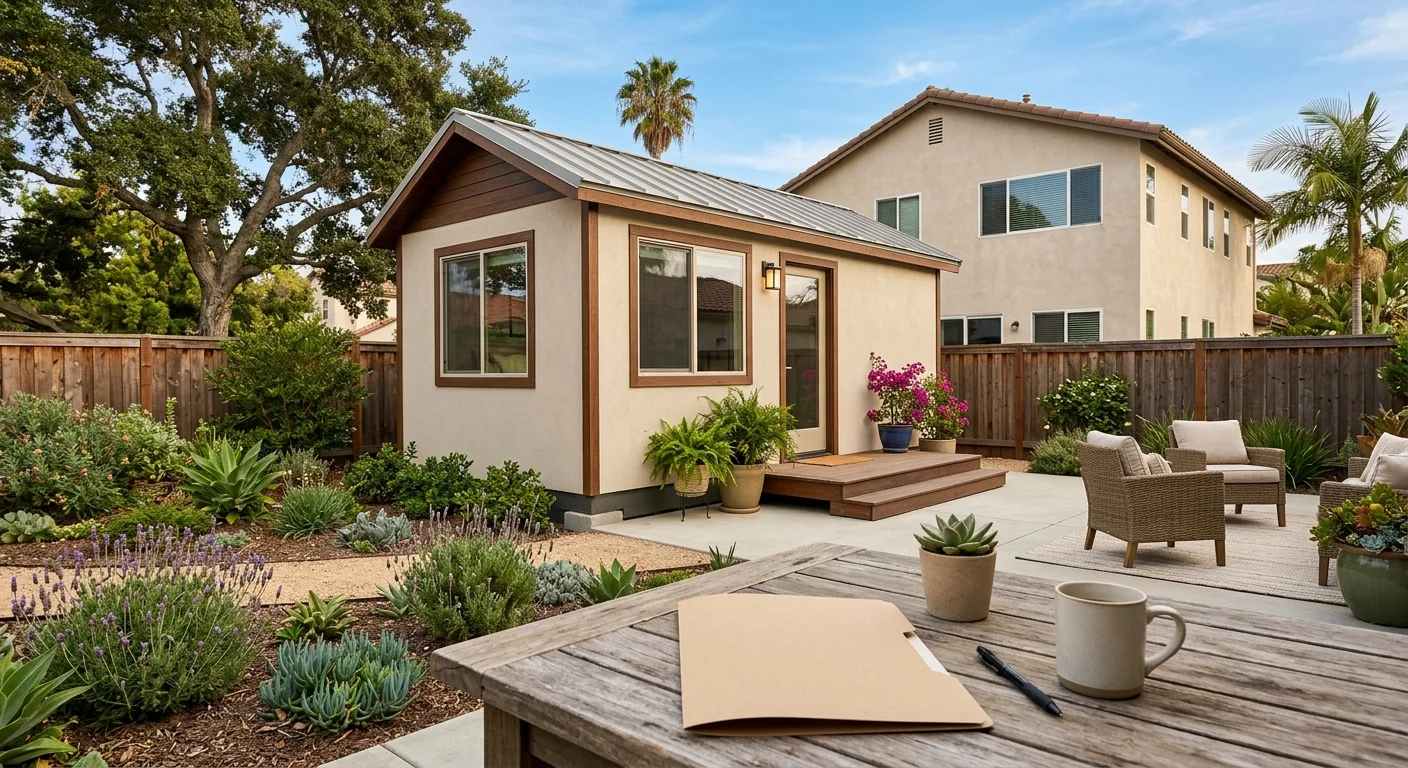
Separate home financing from site-work costs
Begin with two columns: the manufactured home and everything required at the property. Don’t assume a lender treats both columns the same way. Ask which items it will consider and which items need another payment source.
The home column can identify the proposed model, selected options, and dealer quote. The site-work column should leave room for the foundation, delivery, installation, utility connections, grading, access preparation, permits, and final site finishes. These are planning headings, not promised inclusions. The dealer, installer, local agency, and lender must confirm the actual scope.
Ask the dealer to mark each quoted item as included, excluded, or undecided. If one company’s proposal combines several items, request a separate description of each part. That makes it easier to show the same project to competing lenders.
Our factory-built ADU quote checklist can help you organize those conversations. The manufactured home ADU service guide explains how Land & Home SD helps buyers prepare and connect with licensed independent professionals.
Keep allowances and unconfirmed work out of your committed total. Instead, label them clearly and ask who will establish each amount. A placeholder from a homeowner spreadsheet isn’t a dealer quote, installer proposal, agency fee notice, or lender commitment.
This separation also exposes scope gaps. If the dealer’s paperwork ends at the factory product, find out who defines the remaining work. If an installer prepares the site scope, confirm that it refers to the same home and parcel. Your financing discussion should use those current documents, not a rough total assembled from unrelated examples.
Ask which documents each lender needs
There isn’t a verified universal document list for financing a manufactured home ADU. Each lender should provide its current requirements in writing. Until that happens, treat every checklist as an organizing tool, not an approval standard.
Start by asking whether the lender wants documents covering these subjects:
- The exact parcel address and recorded ownership
- The proposed use of the new structure
- The manufactured home description and current dealer quote
- The installer and site-work scope
- The proposed foundation approach
- Utility and property-access plans
- Correspondence from the reviewing local agency
- The expected registration and title treatment
- Any changes that would require a new review
Send one consistent project summary to every lender. Identify the property as being in a specific city or in San Diego County. Don’t use “San Diego” alone when the parcel could be in Encinitas, El Cajon, Chula Vista, or an unincorporated area.
California HCD handles manufactured-home registration and titling rather than the DMV. Use the HCD registration and titling page as an authority destination. Ask HCD what applies to your proposed transaction, then ask the lender which resulting records it needs.
Land & Home SD also maintains a manufactured home financing overview for buyers preparing these conversations. It doesn’t replace lender instructions. It helps you organize the property, home, dealer, and site-work details before seeking an answer.
Ask what the lender has actually reviewed. A response about you as a borrower may not answer questions about the parcel, home, installation, or title plan. Request separate written answers for each part.
Match the parcel, title, and ADU plan
The project description must stay consistent across the lender, dealer, installer, and reviewing agency. A lender shouldn’t receive one home type while the local inquiry describes another. The parcel address, proposed use, foundation concept, and home description should match throughout your file.
California law treats manufactured homes and factory-built modular housing as different categories. Don’t use those labels interchangeably. Ask the dealer to identify the proposed product, then have the lender confirm which category it is evaluating.
Confirm the current ADU path for your address through California HCD’s ADU resources and the local department reviewing the property. For County permit and zoning questions, start with San Diego County Planning & Development Services. If that office doesn’t handle the address, ask which city department does.
Our existing guide to a manufactured home ADU in San Diego can help frame the initial project. Still, the agency responsible for your parcel must confirm its current requirements.
Title and foundation questions deserve the same care. If the plan involves installing the home as a permanent fixture, California’s verified process calls for a building permit. It also calls for ownership or qualifying lease evidence, lien information or consent, approved foundation plans, and manufacturer instructions. Foundation and property classification choices may affect financing, taxation, and resale.
Ask the lender how it expects the proposed title and foundation path to be documented. Don’t describe the home as real property, personal property, or converted property unless the appropriate authority and lender confirm that description for this project.
A friend’s ADU financing in City Heights doesn’t establish the answer for a parcel in East County. Likewise, paperwork from coastal North County shouldn’t replace current review for a South Bay address. Keep every answer attached to the exact parcel.
Compare conditions before choosing a dealer
Compare lender conditions while the dealer and home selection can still change. A lender’s written response should refer to the same model, seller, installer, site scope, parcel, and title approach you’re considering.
Give each lender the same questions:
- Which project costs will you consider?
- Which costs are excluded?
- What property and title category are you reviewing?
- Which documents are needed before a project decision?
- Must the dealer or installer meet lender-specific conditions?
- Who may receive funds under the proposed arrangement?
- What changes would trigger another review?
- Does the written response expire?
- Which statements are preliminary rather than committed terms?
Record the lender’s exact words, contact name, and response date. Don’t convert a vague answer into a yes. “Possibly eligible” and “approved for this parcel and project” don’t communicate the same result.
Then compare dealer proposals using the same discipline. Check whether each quote identifies the exact home and options. Ask whether delivery, installation, foundation work, permits, utility work, and property preparation are included, excluded, or handled by another party.
Dealers sell manufactured homes. Installers perform installation work. Land & Home SD guides buyers and provides referrals, but it doesn’t sell homes, hold inventory, install units, set lender terms, or guarantee approval.
Ask HCD how to verify the current occupational-license status of a dealer or salesperson. The existence of a proposal or lender conversation doesn’t replace that check. If separate companies will sell and install the home, confirm each role independently.
Don’t choose a dealer only because one preliminary total looks simpler. Choose after you can trace each important line to a responsible party and show the same package to the lender. Unassigned work should remain visible until somebody provides a written scope.
Confirm current terms with each lender
Land & Home SD won’t fill those gaps with estimates. Confirm every current term directly with each lender before signing a home purchase or financing agreement.
Ask for a dated written summary that identifies:
- The exact financing product being discussed
- The home and property classification used
- The rate and other current borrowing terms
- Every lender fee disclosed for the proposed transaction
- The project costs being considered
- The project costs being excluded
- Conditions that remain before a final decision
- Required dealer, installer, title, or agency documents
- Any deadline or expiration attached to the terms
- The lender contact responsible for later questions
Treat that summary as lender-specific and time-specific. Don’t carry one lender’s language into another application. Don’t assume a dealer’s explanation changes or expands what the lender wrote.
If the home model, parcel plan, installer, foundation, title approach, or site-work quote changes, send the updated information back to the lender. Ask whether its earlier answer still applies. Keep the revised response with the new project documents.
This is also the point to compare unresolved conditions. One proposal may leave the site scope unanswered. Another may depend on title treatment that hasn’t been confirmed. A third may refer to an older dealer quote. Those aren’t small paperwork issues. They show that the financing conversation and actual project aren’t aligned yet.
The safest decision file is easy to follow. It names one parcel, one proposed home, one current scope, and one clearly identified set of lender terms. If an answer is missing, mark it “not confirmed” and contact the party who sets it.
When to call us
Call before choosing a dealer when the lender, title plan, and site-work scope don’t match. It’s also a good time to talk when you have a parcel and ADU idea but don’t know which licensed local professional should review the home proposal.
Call us at (858) 400-4608 and we’ll walk through your options and connect you with a licensed local dealer.