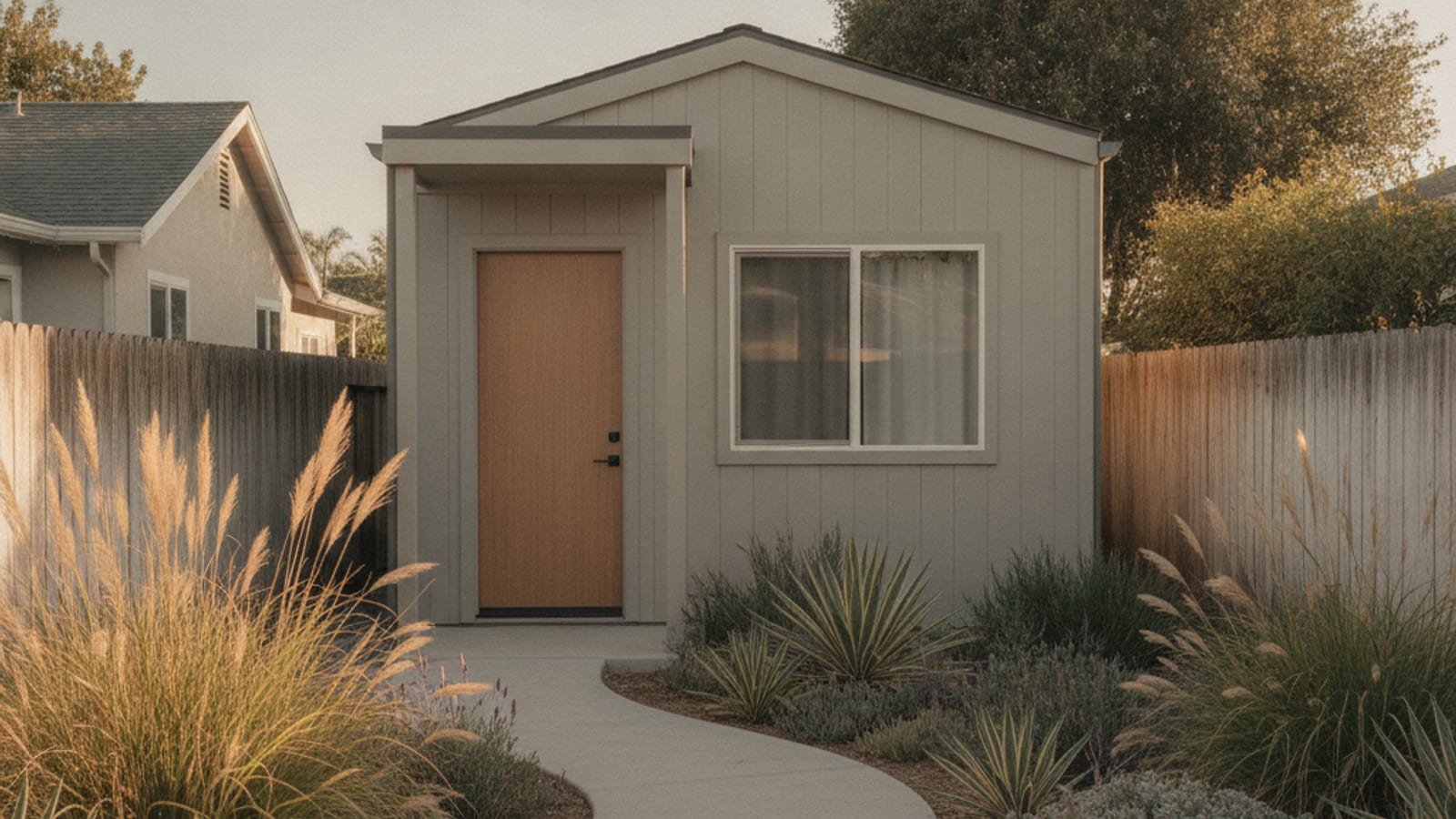
A factory built ADU quote should separate the home from every site-specific cost. Compare the unit, delivery, setup, foundation, utilities, permits, finish work, exclusions, and financing. If two dealers group those items differently, their totals aren’t comparable. Ask each dealer to rewrite the scope under the same headings before you choose.
Confirm what type of home you’re pricing
“Factory built” can describe more than one construction type. California law defines a manufactured home as a qualifying dwelling constructed on or after June 15, 1976. It also defines factory-built housing, commonly called modular housing, separately.
Those categories follow different regulatory paths. A dealer’s quote should identify the proposed unit clearly. Ask for the construction category, manufacturer, model, floor plan, dimensions, number of transportable sections, and included specifications.
The quote should also identify every selected option. That includes exterior finishes, appliances, heating and cooling equipment, windows, cabinets, flooring, and accessibility features. Don’t rely on a model name or showroom conversation. Put the exact package in writing.
Our manufactured home ADU guide explains the broader planning questions. This checklist focuses on what the dealer’s written scope actually includes.
What every factory built ADU quote should itemize
A complete quote gives each major part of the project its own line. That makes missing work easier to spot and change orders easier to evaluate.
Ask each bidder to itemize:
- The unit: Base model, floor plan, selected options, appliances, finishes, and factory-installed systems.
- Factory charges: Any design, engineering, document, storage, or production charges included in the total.
- Delivery: The delivery destination, number of sections, route review, escorts, permits, and access assumptions.
- Unloading and setup: Placement, joining sections, weatherproofing the marriage line, leveling, and temporary protection.
- Foundation: Foundation type, plans, engineering, excavation, concrete work, inspections, and closeout documents.
- Site preparation: Clearing, grading, drainage work, access preparation, retaining work, and restoration.
- Utilities: The exact start and end points for water, sewer, electrical, gas, and communications work.
- Permit coordination: Who prepares plans, submits documents, answers corrections, schedules inspections, and pays each agency charge.
- Finish work: Steps, landings, skirting, walkways, exterior connections, paint touchups, and interior completion.
- Exclusions and allowances: Every item that isn’t included, plus anything priced with an allowance instead of a fixed scope.
- Project changes: How changes are approved, priced, and documented before additional work begins.
- Payment terms: Deposits, milestones, financing conditions, cancellation terms, and the party receiving each payment.
- Written warranty terms: Which party covers the home, transportation, installation, foundation, utilities, and site work.
Ask for a responsibility matrix when several companies are involved. It should name who handles the factory order, transportation, foundation, utilities, permits, inspections, and final corrections.
Compare each quote on the same worksheet
The lowest total can hide the largest unfinished scope. Use a simple worksheet instead of comparing only the bottom line.
| Scope | Quote A | Quote B | What to confirm |
|---|---|---|---|
| Home and factory options | Included or excluded | Included or excluded | Same model and specifications |
| Delivery and site access | Included or excluded | Included or excluded | Route, equipment, and access assumptions |
| Foundation | Included or excluded | Included or excluded | Type, plans, labor, inspections, and documents |
| Utility connections | Included or excluded | Included or excluded | Connection points and trenching |
| Permit coordination | Included or excluded | Included or excluded | Submittals, corrections, fees, and inspections |
| Exterior completion | Included or excluded | Included or excluded | Steps, landings, drainage, and restoration |
| Financing charges | Separate or bundled | Separate or bundled | Cash scope compared with financed scope |
| Allowances | Listed or missing | Listed or missing | Amount and what happens if costs exceed it |
Once each factory built ADU quote follows this structure, compare exclusions first. A missing foundation, utility connection, or permit task matters more than a small difference in the advertised home price.
Get specific about the permanent foundation
“Foundation included” isn’t enough. Ask which foundation system is proposed and which site assumptions support it. The scope should say who prepares the plans, provides the manufacturer’s installation instructions, completes the work, and responds to inspection corrections.
California Health and Safety Code Section 18551 requires a building permit before a manufactured home is installed as a permanent fixture. The permit materials include property-interest evidence, lien information or consent, approved foundation plans, and the manufacturer’s installation instructions.
The statute also states a fee of $11 per transportable section. Confirm the amount currently collected with the enforcing agency before budgeting around it. After a certificate of occupancy, the statute gives the enforcement agency five business days to record the required ownership document.
If a dealer calls the package “433A-ready,” ask for a written definition. Have the quote identify the foundation work, documents, inspections, and recording support included under that label. Don’t assume another contractor will finish an unnamed step.
For an unincorporated San Diego County parcel, ask who handles any County Planning & Development Services submission. For a city parcel, have the bidder name the governing department. Confirm the jurisdiction from current parcel records instead of relying only on the mailing address.
Fire-hazard review deserves its own line. Ask the permitting authority whether the parcel has a fire-hazard designation and what written specifications apply. Then require the dealer to price those specifications. A generic factory package shouldn’t substitute for parcel-specific direction.
The San Diego manufactured homes page provides a starting point for local placement questions.
Address title and separate-sale plans early
Future ownership plans can change the questions you ask today. If selling the ADU separately from the main house is part of your plan, tell the dealer, lender, attorney, and permitting professional before finalizing the scope.
Ask each professional to explain their part of the title, foundation, permitting, and recording sequence. Have them identify any step outside their responsibility. Confirm current eligibility and procedures with the governing jurisdiction and a California real-estate attorney.
Don’t let a sales presentation turn a future separate sale into an assumed outcome. Your written quote should price the project you’re approving now. Legal and title planning should remain clearly identified as separate professional work.
Separate the construction scope from financing
A bundled payment can make two different projects look similar. Request a cash-price scope even if you expect to finance the project. Then review the financing proposal separately.
Compare the amount financed, rate, fees, payment schedule, collateral, and conditions with an independent lender’s proposal. Make sure both financing options cover the same unit and project scope. A smaller payment isn’t a useful comparison when one package excludes foundation or utility work.
Red flags include unlabeled allowances, missing exclusions, blank permit responsibilities, and financing paperwork that doesn’t match the construction scope. Another warning is pressure to approve a deposit before receiving the complete written specifications.
Read how to finance a manufactured home in California before reviewing a bundled offer. Land & Home SD doesn’t lend money or set loan terms. Our manufactured home financing page can help you prepare for conversations with independent professionals.
Before you sign
Review this final checklist with every bidder:
- The home category, manufacturer, model, dimensions, and selected options match.
- Delivery assumptions describe the actual property and access route.
- Foundation work is defined beyond “included” or “433A-ready.”
- Every utility has a clear connection point and responsible party.
- Permit preparation, submissions, corrections, fees, and inspections are assigned.
- Fire-hazard and other parcel-specific requirements come from the governing authority.
- Allowances, exclusions, and owner-supplied work are easy to find.
- Change orders require written scope and pricing.
- Cash pricing and financing terms are shown separately.
- Warranty responsibilities are provided in writing by the responsible parties.
- Your title or separate-sale plan has been reviewed outside the sales conversation.
Land & Home SD is a referral service. We connect San Diego County customers with licensed, independent manufactured-home professionals. Call (858) 400-4608 or visit our manufactured home ADU service page to discuss the professionals your project may need.
Frequently asked questions
What should a factory built ADU quote include?
It should identify the unit, factory options, delivery, setup, foundation, utilities, permits, finish work, exclusions, change orders, and payment terms. It should also assign each task to a named party.
Is factory-built housing the same as a manufactured home?
No. California law defines manufactured homes and factory-built housing separately. Ask the dealer to identify the legal construction category and provide the model’s supporting documents.
What does “433A-ready” mean in a dealer quote?
Treat it as an undefined sales label until the dealer explains it in writing. Ask which foundation tasks, inspections, documents, and recording support are included. Confirm the required process with the governing agency.
Who should handle the ADU permits?
The quote should name the responsible party for plans, submissions, correction responses, inspections, and fees. Confirm that assignment with the governing city or county department before signing.
Should I accept dealer financing with the home quote?
Compare it with an independent financing proposal first. Keep the construction scope and financing terms separate so both lenders price the same project.
Can I plan to sell the ADU separately later?
Don’t assume separate sale eligibility from a dealer’s proposal. Confirm current local procedures with the governing jurisdiction and a California real-estate attorney before structuring the project around that plan.