To replace a mobile home in a mobile home park, start with written confirmation from that park before ordering anything. The biggest risk is treating removal, park acceptance, site work, and installation as one approved project. Each party needs to confirm its own scope.
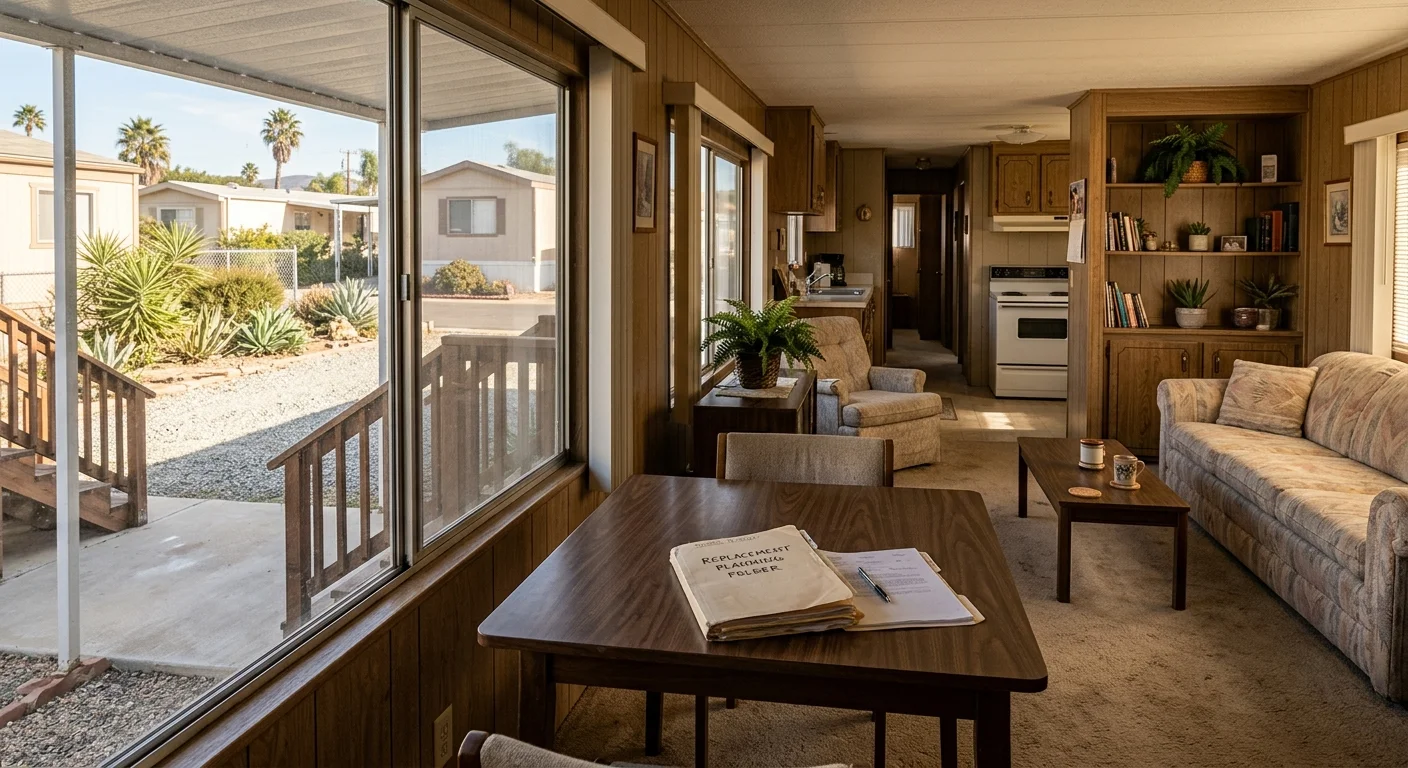
Start with the written park documents
Begin with the documents governing your specific space. Don’t rely on a neighbor’s project, an old community packet, or a verbal summary. A park in Oceanside may provide different documents than one in Chula Vista or El Cajon. Ask management for the current versions that apply to your address.
Park management must explain its current requirements. The governing agency must confirm any public approval questions that fall outside the park’s documents.
Ask park management for written answers covering:
- Whether replacement is considered for your space
- Which home details management wants before reviewing the project
- Whether size, placement, appearance, or access conditions are documented
- Which drawings, specifications, or contractor details should accompany a request
- Whether removal and replacement receive separate reviews
- Who provides the final written response
Keep the packet’s date and record who supplied it. If two documents conflict, ask management which version controls. Don’t resolve the conflict by choosing the easier version yourself.
Terminology can also create confusion. For qualifying structures, California definitions distinguish a mobilehome from a manufactured home partly by construction date. A mobilehome was constructed before June 15, 1976. A manufactured home was constructed on or after that date. Confirm how the park identifies the existing unit and proposed replacement.
Park paperwork isn’t the same as every government determination. Ask which governing agency handles questions for that location. If the address may fall under county jurisdiction, San Diego County Planning & Development Services is a starting point for current permit and zoning contacts.
Our mobile home replacement guide can help you organize the decision before comparing homes.
Separate removal from replacement approval
Treat the old home’s removal and the new home’s placement as separate scopes. That keeps an unclear answer about one stage from being mistaken for approval of both.
Start with the existing home. Ask park management what written notice or review applies before removal. Ask the removal contractor what work it proposes, what it excludes, and which conditions another party must confirm. Then identify who will answer questions about the space after the home leaves.
Your removal notes should cover practical handoffs. Who disconnects each service? Who confirms the space’s condition? Who handles material that isn’t part of the home? Who coordinates access through the community? Don’t assign those tasks based on a sales conversation. Put each answer beside the name of the responsible party.
Registration and title questions need their own check. California HCD, not the DMV, handles manufactured-home registration and titling. Use the HCD registration and titling page to find current guidance and contacts. Ask HCD or the appropriate professional before work begins.
Next, create a separate replacement file. Put the proposed home’s information, park correspondence, site notes, dealer scope, and installer scope there. A park’s response about removal shouldn’t be read as acceptance of the replacement home unless the written response says so.
The broader same-lot replacement guide covers planning beyond a park setting. If you’re still choosing among repair, sale, and replacement, review the older mobile home decision guide first.
Match dealer and installer scopes
A dealer’s proposal and an installer’s proposal may describe different parts of the same project. Compare them line by line before committing to the home.
Create a simple scope table. Give each task one named owner. Use separate rows for the home order, delivery coordination, removal, site preparation, installation, utility coordination, inspections, and requested park documents. Add an “unconfirmed” label wherever responsibility remains unclear.
Then ask each company three direct questions:
- Is this task included in your written scope?
- If not, who normally handles it?
- What must another party complete before your work can proceed?
These questions don’t assume one standard arrangement. They expose gaps between proposals. If the dealer points to the installer, ask the installer to confirm in writing. If both point to park management or a utility provider, take that question to the named party.
Check the identity of every business shown on your documents. California HCD has authority over manufactured-home dealer and salesperson licensing.
Land & Home SD is a referral service. We don’t sell homes, remove existing units, perform installation, or issue project approvals. We connect buyers with licensed, independent manufactured-home professionals. The customer contracts with and pays the selected professional directly.
A clean scope comparison matters more than matching labels. “Site work” on one proposal may not describe the same work elsewhere. Ask each company to define its terms, exclusions, and required handoffs in plain language.
Plan utility and site coordination
Utility and site questions should be settled by the parties controlling those details. Don’t assume the existing home’s arrangement can be reused for the replacement.
Begin with a written inventory. List every service connected to the current home. Beside each one, note the park contact, provider contact, dealer contact, and installer contact. Ask who can authorize disconnection, reconnection, inspection, or changes.
Next, document the physical space without interpreting the rules yourself. Record the proposed home’s dimensions supplied by the dealer. Photograph the space, nearby structures, community roads, gates, turns, and overhead conditions. Ask the dealer, installer, removal contractor, and park management what measurements or access details they need.
Write down the route from the public street to the space. Don’t assume an access plan used in a San Marcos park answers the same questions in San Ysidro. The responsible professionals should review the actual route and proposed home.
The support or foundation arrangement also needs a named decision-maker. Ask the dealer which installation information comes with the proposed home. Ask the installer what site information is still missing. Then ask park management and the governing agency what they need to review. Don’t describe the system as accepted until the responsible party confirms it.
Utility notes should stay separate from assumptions about site readiness. A visible connection doesn’t confirm whether it can serve the proposed home. Ask the appropriate provider or responsible party to state what applies at that space.
Our guide to the buying and placement process shows how these conversations fit into the larger purchase.
Confirm unresolved conditions before ordering
Before ordering, turn every open issue into a written condition. An unresolved item isn’t automatically a rejection. It means the person with authority hasn’t confirmed the answer yet.
Use a final review sheet with four columns: question, responsible party, written answer, and supporting document. Include the proposed home’s identity, park response, removal scope, dealer scope, installer scope, site details, utility coordination, title questions, and governing-agency contacts.
Pay close attention to conditional language. “Subject to review,” “not included,” and “owner to arrange” all point to unfinished coordination. Ask what document closes the condition and who supplies it. Keep the answer with the related proposal or park correspondence.
Your final check should answer these points:
- Has park management responded to the proposed replacement in writing?
- Is removal addressed separately from the new home’s placement?
- Does each task have one responsible party?
- Have dealer and installer exclusions been compared?
- Has each utility question reached the party that sets the condition?
- Has the governing agency for the address been identified?
- Are registration or title questions directed to HCD?
- Are any dimensions, access details, or site conditions still unconfirmed?
Don’t fill a gap with a rule from another park. Don’t treat a salesperson’s summary as the park’s written response. Don’t accept an estimated fee or schedule unless the party setting it confirms the current terms.
Approval checklists, permit sequences, utility procedures, prices, and schedules can differ by park and project. Collect current written answers from park management, the dealer, installer, removal contractor, utility providers, and the governing agency before ordering the replacement home.
When to call us
A conversation helps when park documents, dealer scope, and installer scope don’t line up. It’s also useful when you’re comparing replacement against repairing or selling the older home. Call us at (858) 400-4608 and we’ll walk through your options and connect you with a licensed local dealer.