Major condition concerns leave an owner with three paths: repair, sell, or replace. The right choice comes from comparing written findings, complete scopes, and workable site terms. Don’t commit based on one verbal opinion or one incomplete price.
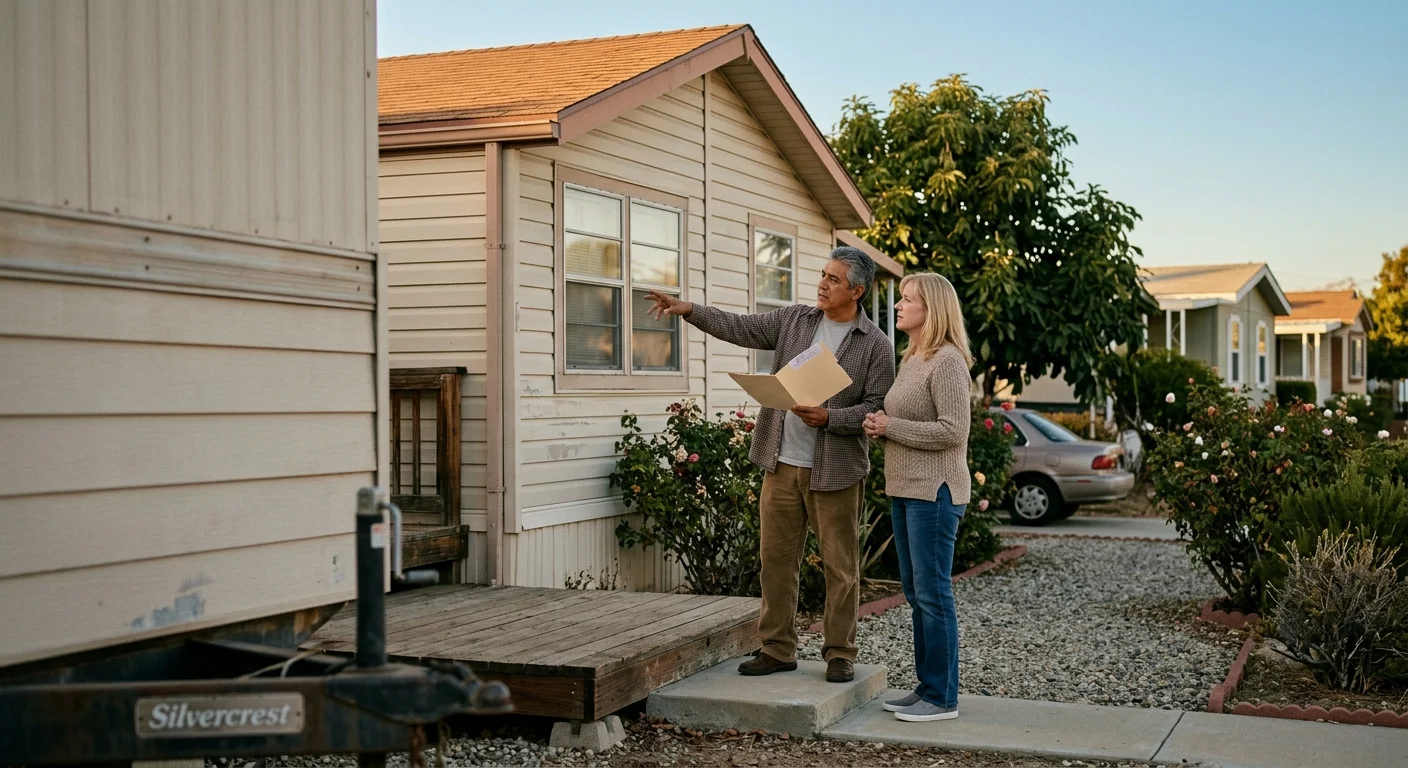
Start with an independent condition review
Start by separating visible concerns from a professional diagnosis. Stains, soft areas, uneven surfaces, and damaged finishes may raise questions. They don’t establish the cause, affected area, or correct repair.
Hire a qualified inspector who isn’t competing for the replacement sale. Ask for written findings, photographs, and clear limits on what was reviewed. The report should identify inaccessible areas and items needing specialist evaluation. Our manufactured home inspection checklist can help organize the questions.
Ask the inspector to distinguish observed conditions from possible causes. You also need to know which findings need prompt professional attention. Don’t ask an unqualified salesperson to settle structural, electrical, plumbing, or moisture questions.
Location belongs in the review file. Record whether the home sits in a park or on private land. Include the exact San Diego County address and the home’s identifying documents. A park space in National City and private land near Ramona need separate site files. A broad countywide answer won’t settle either property’s terms.
Land & Home SD doesn’t inspect homes or diagnose damage. We help owners organize the decision and find licensed independent professionals. Keep the inspector’s report unchanged, then share the same copy with each bidder. That gives repair, sale, and replacement proposals a common starting point.
Compare repair scope with full replacement
The choice to replace or repair a mobile home isn’t a single-price comparison. Compare the complete written scope for each path. A repair proposal should identify the areas covered, materials, exclusions, and unresolved conditions. It should also explain how changes will be approved.
A replacement proposal needs the same discipline. Ask whether it covers the home, removal of the existing unit, site preparation, utility work, installation, and documentation. Don’t assume a home-only figure includes any other item. Get each inclusion and exclusion in writing.
An online average may describe a different wall, home, or market. Ask qualified professionals to inspect the affected area and provide an itemized scope.
Create two columns for comparison. Put confirmed repair items in one column. Put every requested replacement item in the other. Mark unknowns instead of assigning guessed amounts. Then request current written terms from the party responsible for each unknown.
Our mobile home replacement service explains how Land & Home SD helps owners connect with licensed local professionals. If the existing site remains under consideration, review the separate guide to replacing a mobile home on the same lot. That article covers the site-planning conversation without replacing a property-specific review.
Check title, park, and lot constraints
A sound physical plan can still fail at the paperwork stage. Confirm the home’s title and registration status before comparing final options. California HCD, not the DMV, handles manufactured-home registration and titling. Start with the HCD registration and titling page, then confirm the current record directly with HCD.
Ask who appears as the registered owner and legal owner. Have the appropriate professional review any liens, missing documents, or ownership conflicts. Don’t promise a buyer, dealer, or installer that paperwork can be corrected until the responsible authority confirms the path.
For a park home, request current written terms from park management. Ask what applies to a sale, repair project, removal, and proposed replacement. Request answers for the specific space and proposed home. Don’t carry terms from another park into this decision.
For private land, identify the governing authority for the address. Ask for current answers about the proposed work and site. The San Diego County Planning & Development Services site publishes county permit and zoning information. Confirm which authority governs your property before relying on that material.
Keep separate files for the home and site. Label every answer with its source and date. This matters across San Diego County, from coastal North County to East County and the South Bay. The exact address, ownership structure, and proposed work should drive each inquiry.
Compare financing, sale, and replacement paths
Build a one-page comparison after collecting the condition and site files. Use three columns: repair, sell, and replace. Each column should show the written amount offered or proposed, excluded items, financing conditions, and unresolved questions.
For repairs, ask whether financing is needed and available for that scope. Get current terms directly from a lender. Don’t treat a monthly payment discussion as a complete offer. Review the total written terms and conditions before committing.
For a sale, compare the written offer with the seller’s remaining obligations. Ask who handles unresolved title issues, personal property, removal, and site matters. If the offer depends on inspection or another approval, that condition belongs in the comparison.
For replacement, separate the home proposal from all other requested work. Ask a lender which items can be included under its current product. Confirm required documents directly with the lender and relevant authority. Our guide to the buying and placement process can help you organize those conversations.
Don’t force every path into one deadline. Instead, note when each proposal or offer expires. Record what must happen before it becomes binding. If a term is unclear, request a written explanation from the party setting it.
The strongest option is the one you can document and carry through. That may be repair, sale, or replacement. The paperwork should make the tradeoffs visible without guessed costs or assumed approvals.
Put dealer and installer responsibilities in writing
Before signing, assign every task to a named party. Use a simple responsibility sheet with columns for the task, responsible party, document, amount, and conditions. Blank cells expose assumptions before they become disputes.
Ask the dealer to identify exactly what its proposal includes. Ask the installer to describe its own scope and exclusions. If removal, site work, utility connections, permits, inspections, or closeout documents are discussed, identify who handles each item. Don’t assign responsibility based on a verbal conversation.
The same rule applies to repair work. The professional should describe the affected area, planned work, exclusions, and change process. The inspector’s findings and the repair proposal serve different purposes. Keep both documents.
If a dealer or salesperson is involved, use the California HCD occupational licensing page as a starting point. Confirm current license status directly with HCD before signing. Also verify the installer or other professional through the authority responsible for that work.
Land & Home SD is a referral service. We don’t inspect, repair, sell, remove, or install homes. We connect customers with licensed independent manufactured-home professionals. The customer contracts with and pays the selected professional directly.
Before committing, read every document together. Make sure the home, site, and proposed work match across them. Send conflicts back to the responsible parties for written correction.
When to call us
Call Land & Home SD before accepting a repair scope, sale offer, or replacement proposal. A conversation is especially useful when title, park, land, or installation questions remain unresolved.
Call us at (858) 400-4608 and we’ll walk through your options and connect you with a licensed local dealer.