Buyers searching for new manufactured homes for sale in San Diego often receive quotes with very different scopes. The totals can’t be compared until every dealer identifies what’s included, excluded, optional, or still unknown. A clear comparison protects the decision before anyone signs or pays.
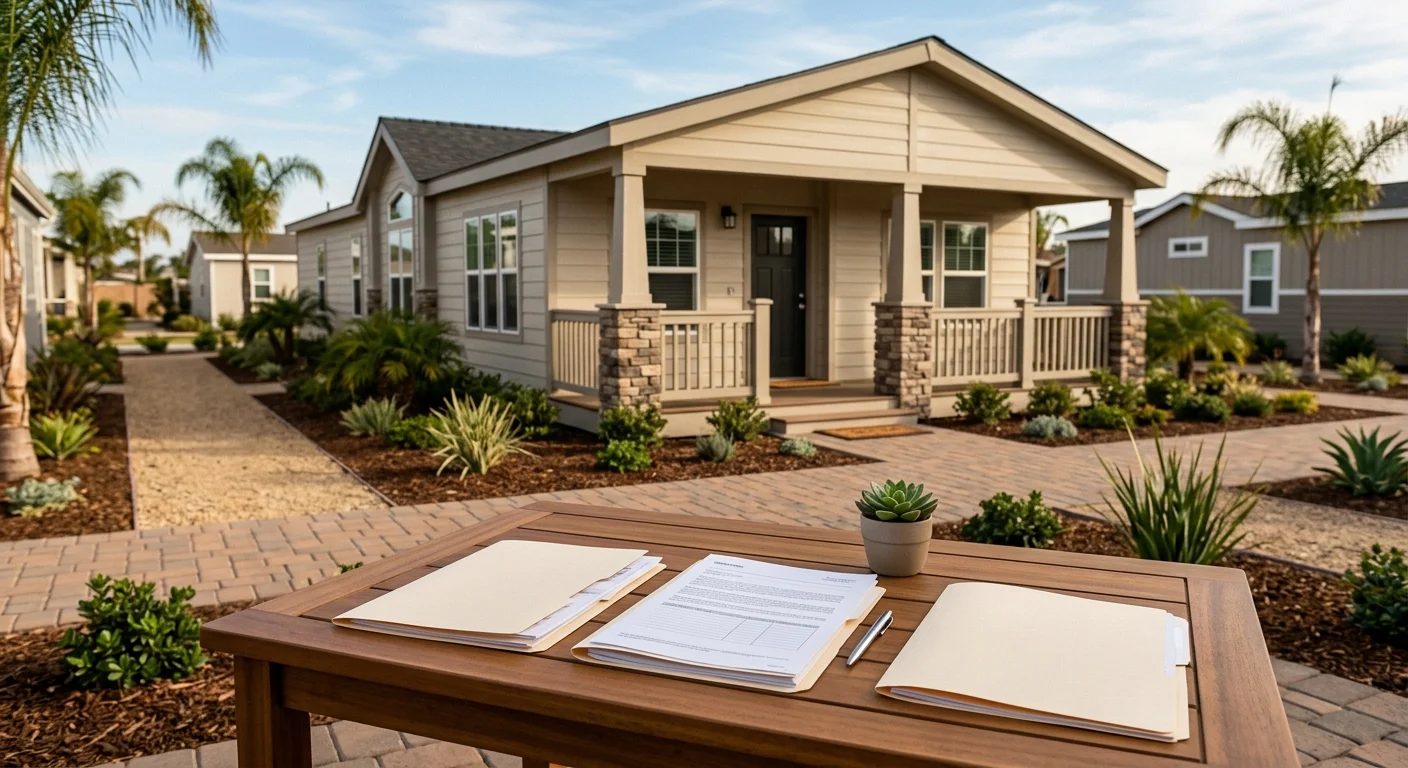
Put every dealer quote on the same scope
Start by comparing scope, not the bottom-line total. Two proposals may show the same floor plan while assigning delivery, site work, permits, and finish work differently.
Ask each dealer to prepare its proposal for the same home and destination. “San Diego” isn’t a precise destination. The quote should identify the proposed address, park space, or private parcel. It should also say whether the home will replace an existing unit or enter a new placement process.
Build one comparison sheet with these rows:
- Manufacturer, model, floor plan, and home sections
- Standard factory specifications and selected options
- Proposed delivery destination
- Park placement or private-land placement
- Delivery, installation, and finish responsibilities
- Permit and inspection coordination
- Site preparation and utility responsibilities
- Allowances, exclusions, and unresolved items
- Payment conditions and written warranty documents
Record the responsible company beside every row. Don’t accept “included” without knowing who supplies or performs that item. The dealer, transporter, installer, manufacturer, and site contractor may have separate responsibilities. The proposal should name the relevant party instead of grouping everyone under “dealer.”
Land & Home SD doesn’t sell homes, hold inventory, or perform installations. We help buyers review their needs and connect with licensed, independent local professionals. Buyers beginning their search can review our guide to manufactured and mobile homes for sale.
There isn’t a verified universal inclusion list for San Diego County dealer quotes. Each seller sets its own scope. If a line isn’t clear, mark it “not confirmed” and request a written answer.
Separate factory options from site work
A home specification and a completed placement aren’t the same scope. Separate factory-supplied items from everything required at the destination.
For the factory portion, ask the dealer to identify the exact model and revision. The proposal should distinguish standard features from selected options. Ask for the written specification behind each label. Color selections, exterior finishes, cabinets, appliances, windows, heating, air-conditioning, and other choices should appear in the correct column. If an item doesn’t apply, mark it that way.
Then create a separate site-work column. Possible comparison categories include access review, site preparation, support or foundation work, utility connections, drainage work, steps, decks, skirting, and final cleanup. This isn’t a claim that every project needs every item. It’s a prompt to ask which items apply to the proposed address.
Don’t assume the factory, dealer, or installer handles site work. Ask who evaluates the location, prepares plans, coordinates with the permitting authority, answers correction requests, and attends required inspections. Put each answer in writing.
For a San Diego County address, use Planning & Development Services as an authority starting point. Confirm the current jurisdiction and requirements for the exact parcel. Don’t transfer assumptions from a park address to private land, or from one city to another.
Our manufactured home cost and pricing guide explains the main categories buyers should separate. The related article on manufactured home costs in San Diego adds context without replacing a project-specific written quote.
Identify delivery, installation, and finish exclusions
Delivery, installation, and finish work deserve separate lines. A single phrase such as “delivery and setup” doesn’t show where one company’s responsibility ends.
For delivery, ask the proposal to identify the starting point, destination, and responsible transporter. It should state who confirms site access and any transport conditions. If transport approvals, route review, temporary access work, or storage aren’t confirmed, the quote should say so plainly.
For installation, ask which company handles each applicable task. Comparison rows might include receiving the home, positioning sections, joining sections, completing support or foundation work, and coordinating required inspections. Utility connections should have their own rows. Never infer that an installation label includes every connection or inspection.
Finish work also needs detail. Ask whether the proposal addresses interior seams, trim, floor transitions, paint touchups, appliance connections, exterior finishes, steps, decks, skirting, debris removal, and site cleanup. Some items won’t apply. The useful answer is a written inclusion, exclusion, or “not confirmed.”
Pay close attention to third-party work. If the dealer expects another company to quote part of the project later, record that fact. Ask whether the dealer’s total includes that company’s work or merely references it. Also ask who coordinates scheduling and who accepts the finished work.
A new home can still arrive with an incomplete project scope. “New” describes the home being offered. It doesn’t prove that delivery, placement, permits, utilities, or finish work appear in the quoted total. Buyers comparing factory condition can also review used versus new manufactured homes in San Diego.
Check allowances, changes, and payment conditions
An allowance isn’t the same as a fixed inclusion. It’s a placeholder tied to stated conditions. Ask the dealer to label every allowance and identify what it covers.
For each allowance, request these details:
- The exact item or work category
- The company expected to supply the final figure
- What happens if the final figure differs
- Whether an unused portion changes the total
- Which selections or site conditions can change it
- When the allowance becomes a confirmed amount
Don’t treat an unlabeled estimate as settled scope. If site access, utility work, finish selections, or permit-related work remains unconfirmed, keep it visible in the comparison. A blank line shouldn’t quietly become the buyer’s responsibility.
Review the change process before signing. Ask what creates a written change, who may approve it, and what documentation the buyer receives. The proposal should explain how revised selections, unavailable options, or newly identified site conditions affect the agreement. Don’t rely on a verbal description.
Payment conditions also belong in the comparison. Record who receives each payment and what documented condition comes first. Ask what paperwork accompanies a payment request. Review cancellation, revision, and refund language exactly as written by the seller.
Finally, check the quote’s effective date and acceptance conditions. If those details aren’t stated, ask the dealer to confirm them. Land & Home SD doesn’t set dealer prices or payment terms. The buyer contracts with and pays the selected professional directly.
Verify warranties with the company issuing them
Don’t compare warranties by a salesperson’s summary. Request the actual written documents and identify the company issuing each one.
A quote may mention the manufacturer, dealer, installer, or product supplier. That mention alone doesn’t confirm warranty coverage. Ask each named company to state whether it issues a warranty for the proposed purchase or work. If it does, request the controlling document before committing.
Review these points directly with the issuer:
- The legal name of the issuing company
- The product or work described
- The coverage start condition
- The claim submission process
- Required buyer records or registrations
- Exclusions and buyer responsibilities
- The contact listed for warranty questions
Don’t combine separate documents into one assumed promise. A factory document may address different items than an installer’s document. If coverage, duration, or claim handling can’t be confirmed, write “not confirmed” on the comparison sheet.
California HCD regulates manufactured and mobilehomes. HCD also has enforcement authority over manufactured-home dealer and salesperson licensing. Review its occupational licensing information as a starting point, then confirm current status directly with HCD. Ask an installer to identify its exact credential and the authority responsible for it.
Land & Home SD holds no trade license and gives no warranty. We connect buyers with licensed, independent local professionals. Buyers contract with those professionals directly, so their written agreements and the issuer’s warranty documents control.
When to call us
A conversation can help when two quotes use different scopes or leave site work unresolved. It’s also useful before choosing between a park home and a private-land project. Call us at (858) 400-4608 and we’ll walk through your options and connect you with a licensed local dealer.