Manufactured home delivery access should be checked before you buy rural San Diego County land or order a home. The answer depends on the full route, not only the driveway at the property line. Get the dealer, transporter, installer, land professional, and governing agency to confirm their parts in writing.
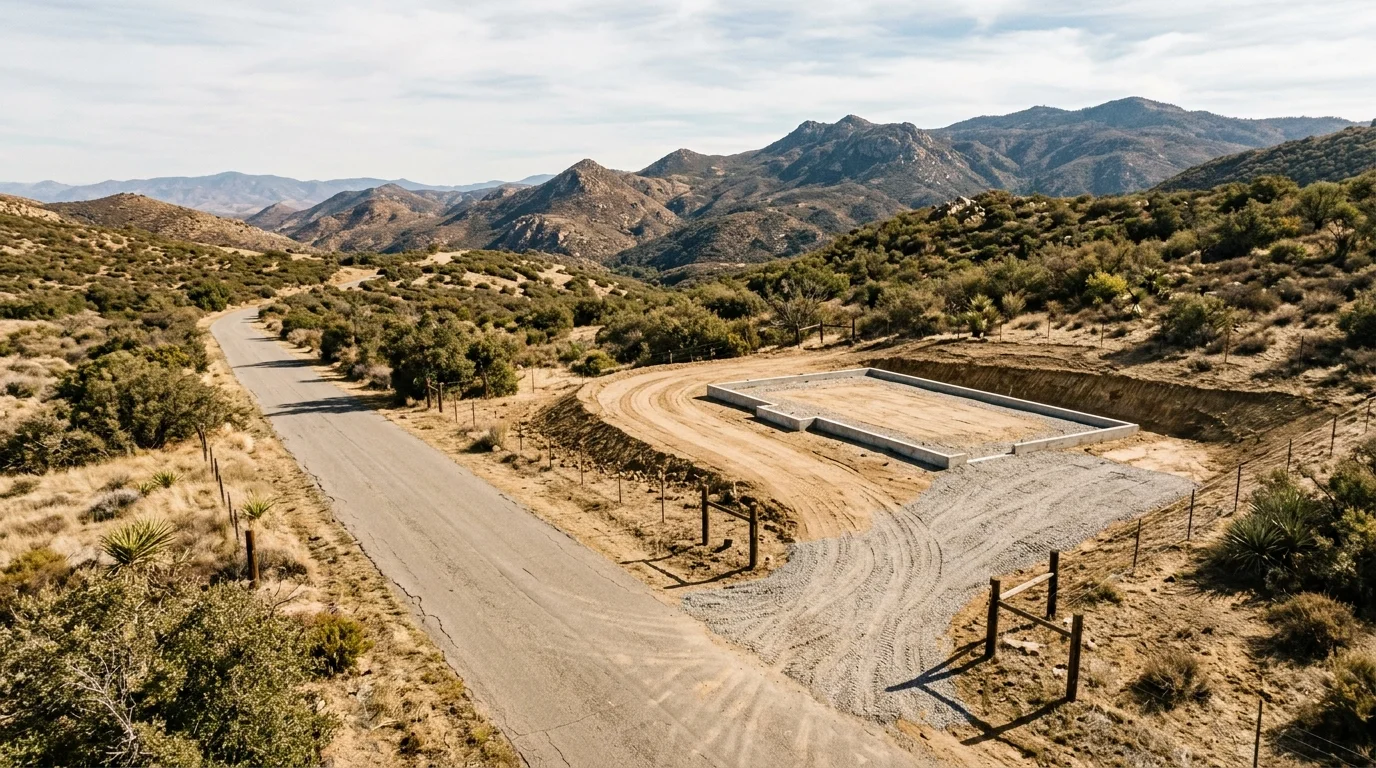
Check whether the route reaches the parcel
Start with the entire proposed route. A map pin at the parcel doesn’t confirm that a manufactured home can reach it. Ask the prospective dealer and transporter to identify the route they would review.
Trace that route from the public-road approach to the planned placement area. Mark every turn, gate, private lane, intersection, and change in road ownership. Keep the parcel entrance separate from the final home location. Reaching the property line and reaching the placement area are different questions.
Online directions can help organize the review. They shouldn’t replace field confirmation. Ask the transporter which route details must be checked in person. If the preferred route doesn’t work, request a written response about possible alternatives. Don’t assume a longer road is a usable backup.
This matters across San Diego County’s rural areas. A parcel in East County needs its own review, just as one in inland North County does. Street names, photographs, and parcel listings can’t settle route feasibility by themselves.
Before moving forward, ask these questions:
- Which exact route is being reviewed?
- Has the transporter seen the full approach?
- Does the review cover the parcel entrance and placement area?
- Are any route segments still unconfirmed?
- Who must approve or authorize access on those segments?
Access is only one part of putting a manufactured home on private land. Keep it connected to the broader land review, but don’t let it disappear inside a general parcel checklist.
Review turns, grades, gates, and overhead clearance
Walk or drive the proposed route with the right professionals. Take photographs and map each point that needs a decision. Include turns, slopes, gates, narrow areas, overhead objects, roadside features, and the transition into the parcel.
Don’t apply a clearance number or grade limit found on an unrelated website. That doesn’t mean no requirement applies. It means the transporter and governing agency must provide the current answer for the actual route and home.
Ask the transporter what measurements and observations are needed. Then record who collected them and when. If a gate, branch, wire, sign, or other feature raises concern, identify who controls it. Don’t assume it can be moved, opened, removed, or changed.
The dealer should confirm the proposed home’s actual delivery configuration. The transporter can then evaluate that configuration against the route. A general conversation about “a manufactured home” isn’t enough when the selected home hasn’t been identified.
Ask the installer to review the final approach as well. The route assessment should continue past the entrance and into the intended work area. Any temporary access proposal should be reviewed by the property owner, installer, transporter, land professional, and appropriate agency before anyone relies on it.
Treat online lists of manufactured home delivery road requirements as discussion prompts. The useful answer is a written, site-specific review tied to the selected parcel, route, and home.
Separate public roads from private access
Mark where the proposed route leaves a public road and enters private access. Then identify every segment whose status remains unclear. A road appearing on a map doesn’t confirm who controls it or what access a buyer may have.
Ask a qualified land professional to review the parcel documents and explain the recorded access information. If an easement, shared lane, or road agreement appears, don’t interpret its scope yourself. Ask the professional whether it addresses the planned delivery and whether another party must be consulted.
For public segments, ask which governing agency can answer route questions. Find out whether any current review, authorization, or permit applies. This page doesn’t state that a particular permit is required because no parcel-specific route has been reviewed.
San Diego County Planning & Development Services is a starting point for zoning and permit questions on parcels under county jurisdiction. Ask the department whether it handles the specific issue or whether another agency does. Don’t assume one office controls the complete route.
For private segments, collect written answers from the relevant owner or professional. A casual statement that trucks have used the road doesn’t resolve manufactured home delivery access. Ask what was authorized, which route was used, and whether that information applies to the proposed delivery.
The private-land placement guide can help frame the wider parcel decision. Keep access ownership, physical route review, land use, and installation planning as separate checks.
Coordinate dealer, transporter, and installer reviews
Delivery access crosses several professional roles. Put everyone on the same route map and parcel plan. If their answers conflict, stop and resolve the conflict before treating the route as workable.
Ask the dealer to identify the home being considered and its delivery configuration. Ask the transporter to state what remains unverified along the route. Ask the installer to review the transition from delivery access to the planned placement area. A qualified land professional should address parcel boundaries and access documents. The governing agency should answer questions within its authority.
California HCD has enforcement authority over manufactured home dealer and salesperson licensing. Review the HCD occupational licensing page and ask HCD how to confirm the current status of a dealer or salesperson. Don’t rely only on a logo, advertisement, or verbal claim.
Use one shared list for open items. Each entry should name the location, question, responsible party, and current status. Avoid vague notes such as “road looks fine.” A useful note says which professional reviewed which segment and what still needs confirmation.
Land & Home SD is a buyer’s guide and referral service. It doesn’t transport, place, or install homes. We help buyers organize their questions and connect with licensed independent local professionals.
Delivery is also different from the full cost of relocating a home. The mobile home moving cost guide explains which cost questions to take to the professionals involved. Any route-related price remains unconfirmed until the appropriate provider gives the buyer a current quote.
Document unresolved access risks before buying
Create a route file before signing for land or ordering a home. Include the proposed route map, photographs, parcel entrance, intended placement area, and every written response. Date each item so later changes don’t get mixed with earlier assumptions.
Keep a separate unresolved-access list. It might include a turn awaiting transporter review, a private segment awaiting document review, or an agency question without a written answer. State the gap plainly. “Not confirmed” is better than a guess.
For every open item, record:
- The exact location or route segment
- The question that still needs an answer
- The professional or agency expected to answer it
- The supporting document, photograph, or map
- The decision that depends on that answer
Ask your real estate or legal professional how unresolved access should be handled before you commit. Don’t write your own contract language from a general checklist. The professional advising your transaction should address the actual parcel and documents.
Keep verbal comments in the file, but seek written confirmation where the decision matters. If the dealer, transporter, and installer give different answers, document the disagreement. Don’t choose the most convenient answer without resolving the reason for the difference.
Buyers comparing a coordinated land purchase can also review manufactured home and land packages in San Diego. A package doesn’t remove the need for route due diligence. Ask who reviewed access, what was reviewed, and which questions remain open.
When to call us
If a rural parcel looks workable but the route still has unanswered access questions, it’s worth talking before you commit to land or a home. Land & Home SD can help organize the next conversations, but it doesn’t transport or set homes. Call us at (858) 400-4608 and we’ll walk through your options and connect you with a licensed local dealer.