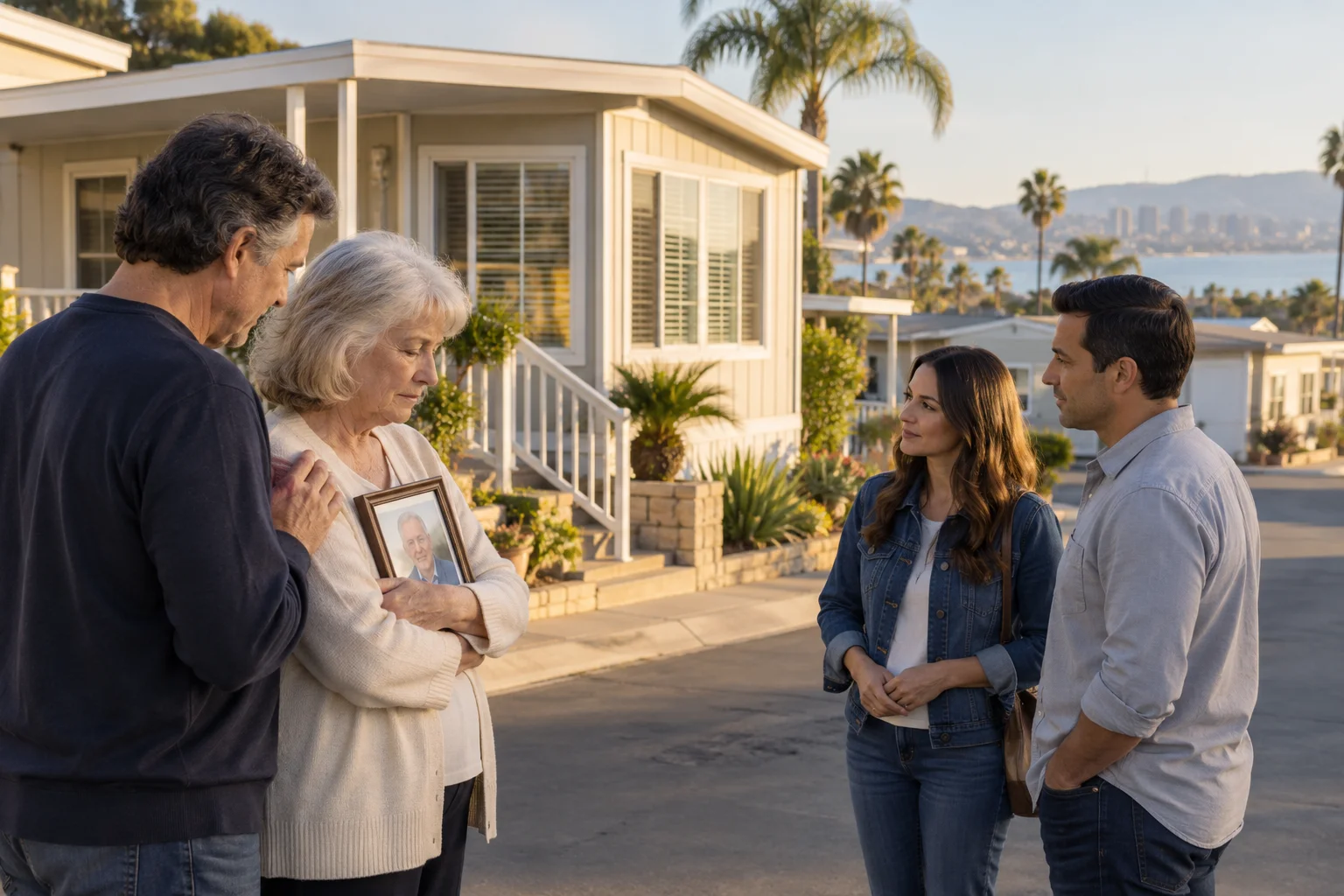
A parent has died and left you a mobile home in an El Cajon park. Before accepting an offer, separate three issues: estate authority, the HCD title record, and the park’s requirements.
Start with authority to handle the home
First, determine who has legal authority to act for the estate. A family relationship alone doesn’t confirm that authority. The answer may depend on the estate plan, court documents, ownership record, and other assets.
Gather the documents already available. Look for the death certificate, trust or will, HCD registration card, certificate of title, and any lien records. Keep the original documents safe. Copies can help a dealer, escrow officer, or attorney understand the situation without risking the originals.
Don’t assume the person named in a will automatically appears on the HCD record. Those are separate questions. One concerns the estate. The other concerns the state registration and title for the home.
It also helps to identify every name shown on the title. Note whether any listed owner is still living. Record any legal owner or lienholder shown on the documents. Don’t promise a buyer clear title until those entries have been reviewed.
If the paperwork is missing, begin with California HCD’s registration and titling office. HCD, not the DMV, handles registration and titling for manufactured and mobile homes that remain registered with the agency.
A home installed on a foundation system may no longer be registered by HCD. HCD advises owners to check whether registration was canceled and whether the individual property record was completed. That distinction can change which records must be examined before a sale.
Verify the HCD record and transfer path
Ask HCD which current procedure applies when a registered owner has died. The approved source record for this page doesn’t confirm the current transfer-on-death forms, supporting documents, or fees. Those details should come directly from HCD before anything is signed.
Give HCD the identifying information available on the home’s documents. Ask what it needs to confirm the registered owner, legal owner, lien status, and current registration status. If a document contains conflicting names or an outdated address, flag that issue rather than trying to interpret it yourself.
For a resale handled through escrow, California law requires certain title documents to enter escrow. These include the current registration card and certificate of title. Registration cards held by junior lienholders are also included when applicable.
A legal owner or junior lienholder must address its security interest during the transfer. That can involve releasing the interest after payment or approving an assumption. Don’t treat a paid debt as a cleared title entry without confirming the required release.
The title review should happen before pricing becomes the main conversation. A buyer can like the home, yet the transaction can still stall if the seller’s authority or ownership record remains unresolved.
For background, our California manufactured-home title guide explains why buyers inspect the title record. An inherited sale adds another layer because the estate documents and HCD record must point toward a lawful transfer.
Confirm whether the estate needs probate
Some California estates may have a transfer route outside a full probate proceeding. However, the current Probate Code requirements weren’t verified in the approved source record for this page. That includes the current dollar limit, timing rules, eligibility tests, and required declarations.
Don’t rely on an old article or a blank form found online. Ask a California probate attorney or the appropriate court resource to review the current Probate Code 13100-range provisions. The reviewer should consider the entire estate, not only the mobile home.
Bring a short, organized summary to that conversation. Include the names on the HCD title, whether a trust exists, any court papers, known liens, and whether another owner survives. Also list other estate assets that could affect the available procedure.
Ask for a clear answer on two separate points. First, who may sign documents concerning the home? Second, what proof of that authority will HCD, escrow, and the buyer require?
Land & Home SD doesn’t provide legal advice or decide whether probate is required. We can help you organize the mobile-home side of the transaction and connect you with an independent local professional. Estate authority should be confirmed by someone qualified to assess the family’s documents.
This step matters before accepting money or signing a sale agreement. A clean offer can’t cure missing authority. Resolving that question early gives every participant the same understanding of who can act for the estate.
Treat the park approval as a separate track
An El Cajon park sale involves more than transferring the home’s title. The home sits in a community governed by park documents, while California’s Mobilehome Residency Law applies to mobilehome park residency.
The exact current protections for heirs under Civil Code section 798.78 weren’t confirmed in the approved source record. Don’t publish or rely on a paraphrase of that section without checking its current text. A California attorney familiar with mobilehome park matters can explain how it applies to your facts.
Contact the park office and request its current written process for an inherited home. Ask what documents it needs from the estate and what information it provides to prospective buyers. Keep the request focused on written requirements rather than informal assurances.
Also ask how the park handles a proposed sale with the home remaining in place. Don’t assume estate authority, HCD transfer approval, and the buyer’s park application are the same approval. Track each item separately.
El Cajon is part of inland East County, but park rules can differ even between nearby communities. A rule followed at one park shouldn’t be applied to another without confirmation. Use the specific park’s current documents for the home you inherited.
A buyer may also examine title and financing issues before making an offer. Our El Cajon title-check guide shows the questions buyers often bring to that review. Seeing the transaction from their side can help you prepare a clearer sale file.
Address taxes, liens, and the closing file
Tax clearance may become part of the transfer. For a used manufactured home subject to local property taxation, the escrow officer may request a tax clearance or conditional tax clearance certificate from the county tax collector. That request checks for outstanding tax liabilities.
Don’t assume the home is taxed one particular way. Give escrow the home’s documents and let the responsible agencies confirm its status. Ask which office sets the amount, which period it covers, and what written clearance is needed for this transfer.
Land & Home SD doesn’t set taxes, HCD fees, park charges, escrow costs, or sale prices. Current amounts should be confirmed with the agency or professional responsible for each item.
Build one working file for the transaction. Include the death certificate, estate-authority documents, HCD title and registration records, lien releases, tax-clearance correspondence, and the park’s written instructions. Add a simple checklist showing which party is reviewing each item.
Keep estimates and buyer discussions separate from confirmed obligations. If a fee or document hasn’t been verified, label it pending. That’s better than giving the family or buyer a number that later changes.
Once authority and title status are clearer, a licensed independent professional can discuss the home’s condition and possible sale approach. Land & Home SD is a referral service. We don’t own inventory, list homes ourselves, set prices, or perform physical work.
When to call us
Call before accepting an offer if the estate documents, HCD record, or park process doesn’t line up. Land & Home SD can help you organize the questions before you speak with the relevant agencies and professionals.
Call us at (858) 400-4608 and we’ll walk through your options and connect you with a licensed local dealer.