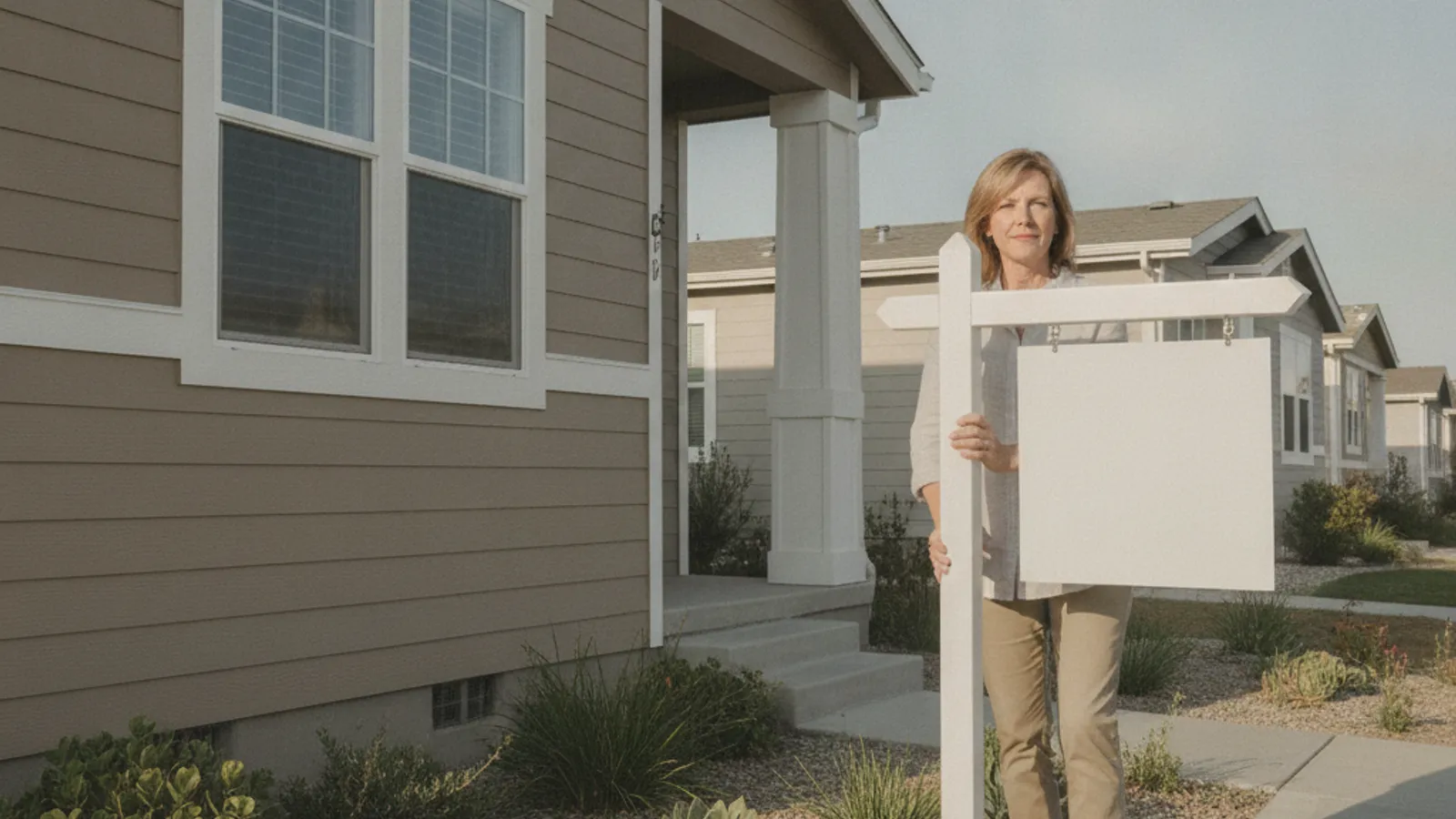
Selling a mobile home in San Diego takes four steps: price it against other homes in your park rather than against houses, confirm whether the home is personal property or real property, get your buyer through park approval if the home is staying put, then transfer the HCD title or record a deed. Most park homes are personal property, which means HCD handles the title, not the DMV and not the county recorder.
Selling a mobile home in San Diego isn’t the same process as selling a regular house, and most of what you’ll find online skips straight to a lowball cash offer. The real path runs through four things: pricing it correctly, confirming whether it’s personal property or real property, clearing park approval if it’s staying put, and transferring the title or deed the right way. None of it is complicated once you know the order.
Listing sites such as Zillow, Realtor.com, and dealer roundups often occupy the top results for “sell mobile home San Diego.” Those pages show current ads. They do not tell you whether the home is personal property or real property, whether the park will approve your buyer, or how HCD title transfer works. Use the listings to study asking prices in the same park, then run the four steps on this page before you accept an offer.
A cash-for-home pitch can close fast. It is not the only path, and it is rarely the only number available. Compare any offer against recent in-park resales, remaining loan payoff, space-rent terms, and the cost of preparing the home for a conventional buyer.
How do you sell a mobile home in San Diego?
At a high level, selling breaks into four moves. First, get a real number on what the home is worth, not a guess based on what you paid for it. Second, confirm whether the home is personal property (most park homes) or real property (homes permanently installed on land you own). Third, if the home is staying in its current park, your buyer has to clear park approval before anything closes. Fourth, transfer ownership, either an HCD title transfer for personal property or a deed transfer through escrow for real property. Skip a step and you’ll stall your own sale.
What’s my mobile home actually worth?
Pricing a mobile home starts with knowing which market you’re actually in. A home in a land-lease park is priced against other resales in that same park, or nearby parks with similar space rent, not against site-built houses down the street. Space rent matters more than most sellers expect. A home at a low monthly space rent draws a bigger buyer pool than the identical home at a much higher space rent, because the buyer is financing the space rent along with the loan payment.
Age, section count, and condition set the baseline from there. A double-wide in good shape onward holds value and financing options that a pre-1990 single-wide doesn’t. Upgrades move the number, but rarely dollar for dollar with what they cost to install.
Pricing has its own article, and it goes deeper than this section can: see how much your mobile home is worth in San Diego for book value, appraisals, and comps side by side. If the home sits on land you own, the comparison shifts toward similar manufactured or site-built homes on comparable lots. For what buyers are already paying across the county, our manufactured home cost breakdown covers park and private-land numbers, and it’s worth checking what’s currently for sale nearby before you set a price. A local valuation beats an online estimate, since no online tool knows your park’s space rent or what’s listed two doors down.
I want to sell my mobile home. Where do I actually start?
Start by finding out which property class your home is in, because that single answer decides who transfers the title, whether escrow is involved, and what your buyer can borrow. Check your last tax bill: an annual registration fee to HCD means personal property, and a county property tax bill means real property. Everything else in this article branches off that answer.
If you are selling a mobile home in San Diego and the home is staying in its park, start the park-approval conversation early. Ask management for its current written approval standards and timeline. Buyers often stall there while a seller assumes the sale is nearly done.
Personal property or real property? It decides your whole process
This is the single biggest fork in the road, and most sellers don’t think about it until a buyer’s lender asks. A manufactured home that isn’t permanently affixed to land you own, which covers most park homes, is personal property (chattel) in California’s eyes. Selling it means transferring an HCD title, similar in spirit to selling a car.
A manufactured home permanently installed on a foundation on land you own, with HCD Form 433A recorded, is real property. It sits on the county’s real estate tax roll, and you sell it like a house: through escrow, with a grant deed recorded at the county recorder’s office. It’s the same classification your buyer’s own buying process has to sort out, just in reverse.
Not sure which applies to you? Check your last tax bill. Paying an annual registration fee to HCD instead of a property tax bill means personal property. A title company or your county assessor’s office can confirm it in one call.
If your home stays in the park: getting your buyer approved
If your home is staying in its current park, park management gets a say before your sale can close, and that isn’t optional. Under California’s Mobilehome Residency Law (Civil Code Section 798.74), you or your agent must notify park management of the pending sale before closing. Within 15 days of that notice, management has to give you and your buyer its written approval standards, things like minimum credit score and income requirements, plus the full list of documentation it needs.
Once your buyer submits everything requested, the park has 15 business days to approve or reject the application in writing. Miss that window and the buyer is automatically deemed approved. Parks can reject a buyer who can’t show the financial ability to cover space rent, but they can’t invent new standards on the fly or drag the process out.
Build this into your timeline early. A buyer with weak credit or incomplete income documentation can stall a sale for weeks even after you’ve agreed on price, so have your buyer pre-qualify against the park’s standards before you accept an offer.
Transferring the HCD title, or the deed if it’s real property
For personal property, California’s Department of Housing and Community Development, not the DMV and not your county recorder, handles the title transfer. HCD’s Registration and Titling Program uses different forms depending on how your home is taxed, and the exact form matters, since the wrong one gets rejected and sent back.
Before HCD will move title into your buyer’s name, you’ll need a Tax Clearance Certificate from your county’s Treasurer-Tax Collector confirming every dollar of tax owed on the home has been paid. No certificate, no transfer. Whether that tax is an HCD in-lieu fee or a county property tax bill depends on the home’s registration date, which our guide to how manufactured homes are taxed in California explains.

For real property, there’s no HCD step at all. The sale runs through a title company or attorney like any other real estate closing: a grant deed transfers ownership, it’s recorded with the county recorder, and escrow handles payoffs and prorations. Either way, don’t hand over keys before the paperwork is actually moving. A buyer with cash but no clear title path can leave you holding a home that still shows your name.
What about property taxes when you sell?
Every county Treasurer-Tax Collector in California runs the same basic check before releasing a mobile home for title transfer: are the taxes current? If you’re behind, the unpaid balance gets settled at closing, similar to how back taxes get cleared in a house sale.
The tax type you’ve been paying depends on your home’s status. Homes on the local secured or unsecured property tax roll get billed like real estate. Homes on HCD’s annual registration system pay a yearly fee instead. Either way, your county’s Treasurer-Tax Collector office can tell you what’s owed and issue the clearance your buyer’s escrow will need. Get this number early. An unexpected tax bill mid-sale is one of the more common reasons a mobile home sale slips past when everyone expected it to close.
Real estate agent, FSBO, or a cash-offer company?
You have three real paths, and each trades speed against price differently.
A real estate agent makes the most sense for real property, homes permanently installed on land you own, since it’s a standard real estate transaction. For personal property park homes, you’d work with a licensed manufactured home dealer or broker instead, since park-home sales fall under HCD’s occupational licensing rules, not the state’s real estate license.
Selling it yourself is legal in California. You don’t need any special license to sell your own home as a private party, only businesses that buy and sell homes for profit need an HCD dealer license. You handle marketing, showings, and negotiating, and you keep what would’ve gone to a commission.
Then there are the “we buy mobile homes” cash-offer companies that dominate search results for this exact topic. They’re fast, and they’ll take a home in rough shape as-is, but that convenience is priced in. Their business model depends on buying under market value, since they need room to resell at a profit. If speed matters more than maximizing price, that’s a fair trade to make with your eyes open. If it doesn’t, get a real valuation first so you know what you’d be giving up.
How long does selling actually take?
There’s no single timeline that fits every mobile home sale, but the pieces stack up predictably. A cash sale of a park home with a well-qualified buyer can move through park approval, title transfer, and tax clearance faster than most sellers expect. A financed sale adds lender underwriting time on top. A private-land sale with a mortgage-financed buyer runs on standard real estate closing timelines once you’re under contract, plus however long it takes to find that buyer.
The two steps that most often slow things down are park approval, since the 15-business-day clock doesn’t start until your buyer’s paperwork is complete, and tax clearance, since any back taxes have to be resolved before HCD will transfer title. Handle both early and the rest moves close to as fast as any other home sale in San Diego County.
Frequently asked questions
Do I need a real estate agent to sell my mobile home in San Diego?
Only if it’s real property, permanently installed on land you own. Personal property park homes are sold through a licensed manufactured home dealer or broker, or on your own as a private party. You don’t need any license to sell your own home.
What’s the difference between selling a park home and a home on private land?
A park home is personal property and transfers through an HCD title transfer, with park management approving your buyer first. A home on owned land with a recorded HCD Form 433A is real property and sells through standard escrow and a deed transfer, with no park approval and no HCD title step involved.
How does the park approve my buyer?
You notify park management of the pending sale before closing. Management has 15 days to give you and your buyer its written approval standards and required documents, then 15 business days after receiving everything to approve or reject in writing. No response in that window counts as automatic approval.
What is a tax clearance certificate and why do I need one?
It’s proof from your county’s Treasurer-Tax Collector that all taxes owed on the home are paid. HCD won’t transfer the title without it, so any unpaid balance has to be settled before closing.
Should I sell to a “we buy mobile homes” cash-offer company?
Only if speed and convenience matter more to you than price. These companies buy fast and as-is, but they need room to resell at a profit, so their offers typically come in under market value. Get a real local valuation first so you know what you’d be giving up.
How long does it take to sell a mobile home in San Diego County?
It depends on your buyer’s financing, how complete their park application is, and whether any back taxes turn up during the tax clearance check. Handle park approval and tax clearance early and the timeline moves close to any other local home sale.
Get a real number on your home
Every sale looks different once you factor in your park’s approval standards, whether your home is personal or real property, and what’s actually owed in taxes. Land & Home SD isn’t a cash-buyer service, and we don’t take a cut of your sale. We’re a local guide who’ll tell you what your home is realistically worth and walk you through park approval and title transfer before you list anywhere.
Call (858) 400-4608 or reach out for a free walkthrough of your options. We help buyers and sellers with manufactured and modular homes across San Diego County.