If you’re browsing mobile homes for sale in Chula Vista, CA, the listing is only step one. What decides whether your offer actually closes is what sits underneath it: who owns the land, whether the park has to approve you, and whether the title is clean. Chula Vista has both, older park communities scattered through the South Bay and homes on private land in the eastern part of the city, and the two paths ask for different paperwork before you can call the home yours.
This isn’t a listings page. It’s the checklist for what to verify once you’ve already found a manufactured home for sale you like and you’re ready to write an offer.
Park lot or private land: what changes for mobile homes for sale in Chula Vista, CA
Before price, check ownership. You’re either buying a home that sits on land you’ll also own, or a home that sits on a lot you’ll lease from a park.
Communities like Bayscene and Otay Lakes Lodge sit near the bay and along the Otay corridor. If your offer is on a home in a land-lease park, you’re buying a structure, not a parcel, and your purchase agreement needs a contingency for park approval before you can close. Confirm ownership, space terms, and approval rules with that park’s management.
Further east, toward the unincorporated pockets near Otay and along parts of the Main Street corridor, some manufactured homes sit on land the owner holds outright. That changes almost every step below.
Getting park approval in Chula Vista’s communities
If the home you’re offering on sits in a park, the park doesn’t just cash the check. Management runs its own application process for new residents, and California Civil Code Section 798, the Mobilehome Residency Law, governs how that tenancy works once you’re in.
Ask for the park’s written application and approval timeline before you make your offer, not after. Ask what the current space rent is directly from the park manager rather than trusting the listing, because rent on a resale can be adjusted at turnover. And confirm in writing what happens to your offer if the park declines your application. A clean purchase agreement makes park approval a contingency, so you’re not locked into a deal you can’t actually move into.
Title, registration, and the HCD paperwork trail
Every used manufactured home carries a title, and it moves through escrow the same way a car title would, not the way a house deed would. Under California Health and Safety Code Section 18035, escrow on a used unit has to hold the seller’s current registration card, the certificate of title, and any release paperwork from lienholders before the sale can close. The California Department of Housing and Community Development, HCD, tracks the registration and title on the state side, separate from the county recorder.
If back taxes are a concern, the escrow officer can request a tax clearance certificate from the county tax collector to confirm nothing is owed on the unit before you take title. Ask your escrow company early whether that clearance has been pulled. It’s a small step that catches a real problem before it becomes yours.
If the home sits on land you own or are buying
Homes on private land raise a different question: is the home permanently attached to the property, or is it still registered as personal property the way a park home is? Under HSC 18551, converting a manufactured home to a permanent foundation requires a building permit, department-approved foundation plans, and proof you either own the land or hold a lease of 35 years or longer. Once the work is signed off, the enforcement agency has five business days to record a document naming the property owner, which is what legally attaches the home to the real estate.
That distinction matters for financing and for how the sale is structured, so ask the seller directly whether the home has gone through this process or is still titled separately from the land. If you’re weighing whether to buy land and place a home versus buying a home already sited, our guide on buying vs. financing a manufactured home walks through both paths.
Ask your lender before you write the offer, not after
The park-versus-land question above doesn’t just affect approval and title, it affects financing too, and different lenders treat park-lot homes and land-attached homes differently. Rather than assume how a specific lender will classify the home, ask directly before you submit an offer: whether the loan program covers a home on leased park land the same way it covers one attached to owned land, and how long underwriting typically takes for that specific loan type. Our financing page is a starting point for what San Diego County lenders generally ask buyers to have ready.
Get that answer in writing before your financing contingency deadline. A financing contingency that doesn’t match the actual loan type you need is one of the easiest ways to lose an accepted offer in escrow.
Why a manufactured home inspection is different
A general home inspector who mostly works on stick-built houses in Bonita or Eastlake isn’t automatically the right call here. Manufactured homes built after June 15, 1976 fall under the federal HUD Code, and federal law is written so that preemption “shall be broadly and liberally construed,” meaning HUD Code standards generally override local building code for the structure itself. States keep limited authority over foundations, stabilizing systems, and site work, but the home’s construction is federal.
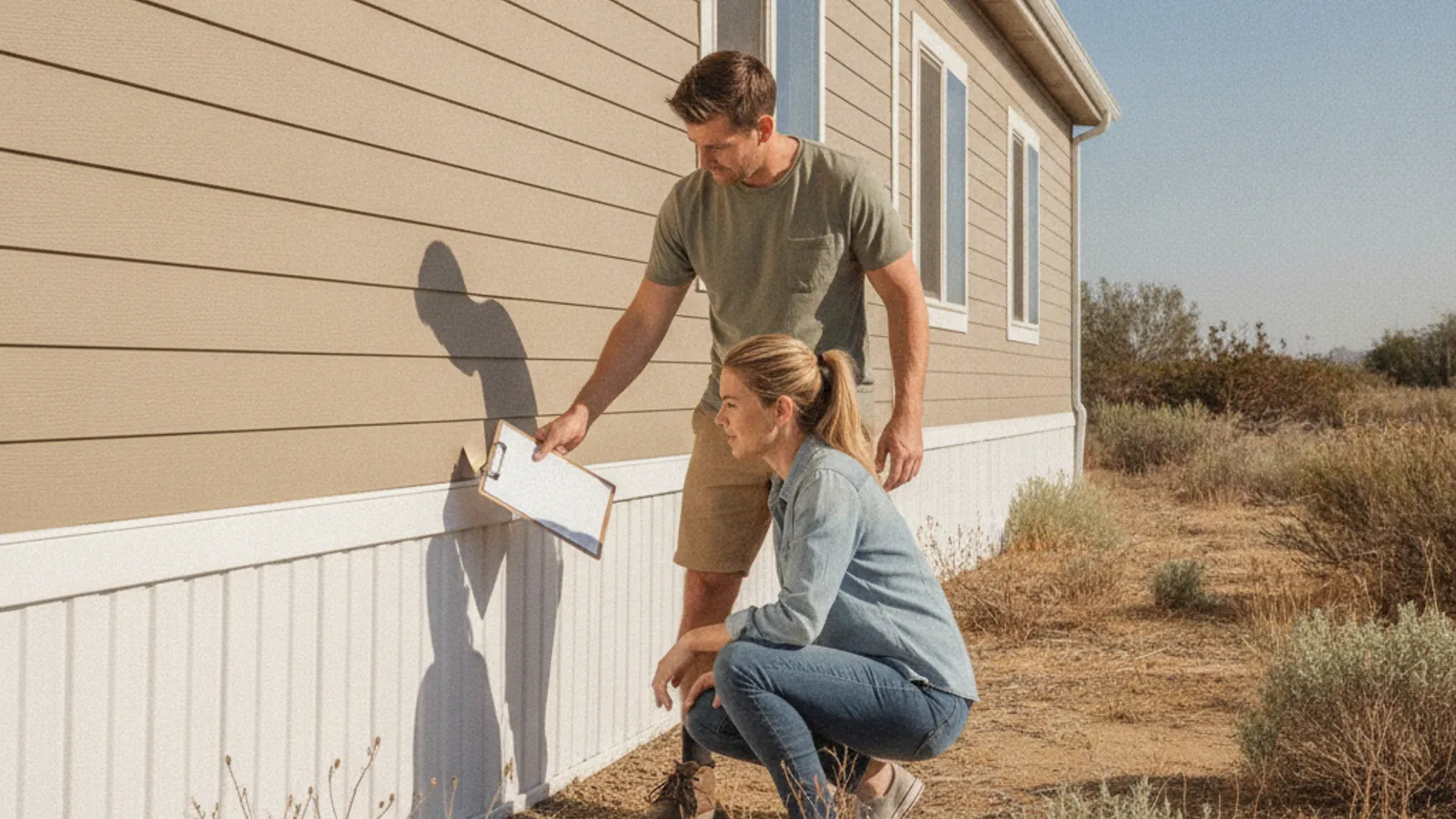
That means your inspector needs to know HUD Code data plates, chassis and stabilizing systems, and how the home’s own manufacturer specs compare to what’s actually installed, not just wiring and roofing. If you’re also comparing whether a used home like this makes more sense than buying new, the inspection findings usually settle that faster than a spec sheet does.
Land & Home SD is a referral service. We connect Chula Vista buyers with independent, licensed manufactured home professionals across San Diego County, we don’t do the inspection, escrow, or park approval work ourselves. Call (858) 400-4608 and we’ll help you find a pro who handles park approvals, title transfers, and HUD Code inspections in the South Bay.
Frequently asked questions
Do all mobile homes for sale in Chula Vista, CA require park approval?
Only if the home sits on a leased lot inside a park community. Homes on private land don’t go through park approval, but they do go through the county’s title and, if applicable, foundation-attachment process instead.
What’s the difference between a mobilehome and a manufactured home in California?
Under state law, a mobilehome was built before June 15, 1976, and a manufactured home was built on or after that date. Manufactured homes fall under the federal HUD Code; older mobilehomes don’t.
Who holds the title on a manufactured home, the county or the state?
The California Department of Housing and Community Development, not the county recorder, tracks registration and title for manufactured homes, similar to how the DMV tracks a vehicle title.
Can I skip a specialized inspection if the home looks new?
We wouldn’t recommend it. HUD Code covers the structure itself, and a general home inspector may not check chassis support, stabilizing systems, or the data plate the way a manufactured-home specialist does.
Where can I get more help with the buying process?
Our FAQ page covers more of the buying and financing questions we hear most, and you can always call (858) 400-4608 to get connected with a local professional for your specific situation.