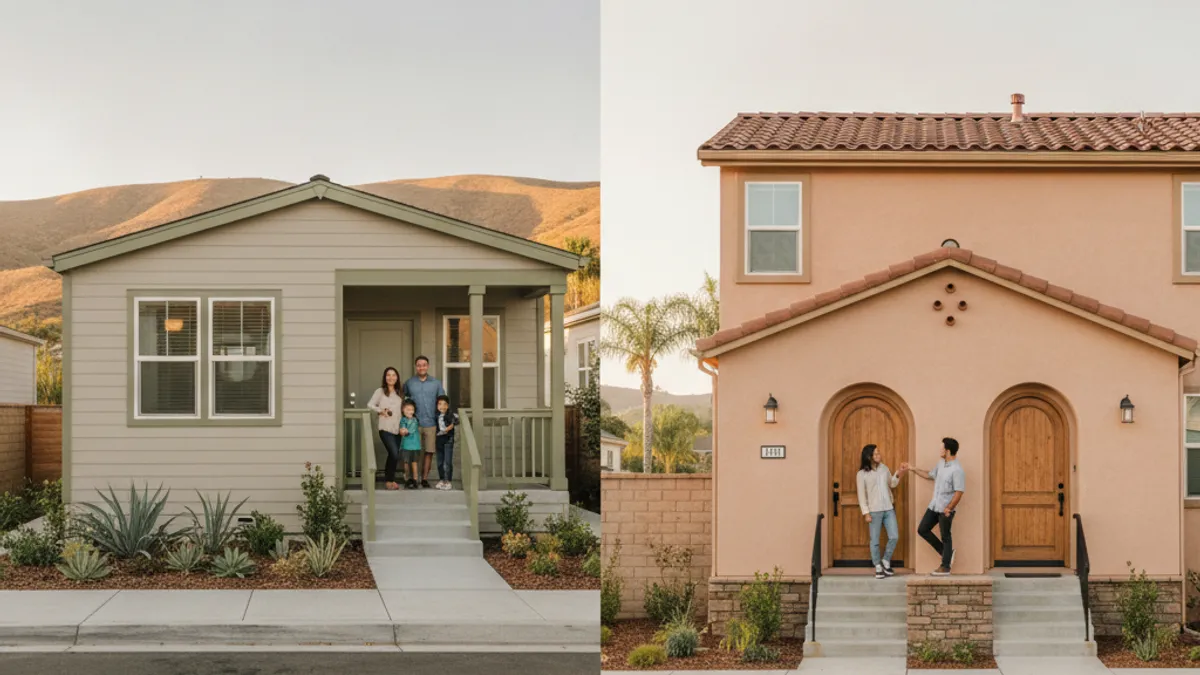
A duplex and a manufactured home solve different problems for different buyers, and the honest comparison depends on whether you’re buying a place to live or an asset that also generates rental income.
The core difference: one unit versus two
A manufactured home is a single dwelling, built for one household. That structural difference is the whole reason these two get compared: a duplex offers a path to rental income a standalone manufactured home simply doesn’t.
Purchase price and financing
Financing also differs: manufactured home loans are their own category, with terms that vary depending on titling status and land ownership, while duplexes are financed more like standard residential real estate, sometimes with additional underwriting consideration if a portion of the rental income is being counted toward loan qualification. A lender who handles the specific property type you’re considering can give you accurate terms rather than a general comparison.
Rental income changes the math entirely
If part of your goal is generating rental income, a duplex has a structural advantage a manufactured home doesn’t offer on its own. That said, rental income comes with its own responsibilities: landlord-tenant law in California covers things like habitability, notice periods, and eviction procedures, and specifics can vary by city ordinance on top of state law. If income property is genuinely part of your plan, working through the landlord obligations with a real estate professional or attorney before you buy is worth doing, rather than assuming rental ownership works the same everywhere in the county.
Manufactured home communities generally don’t allow the same kind of subletting or rental arrangement, since most parks require the buyer to be the resident, not a landlord renting to a tenant.
Maintenance and ongoing costs
A duplex, being conventional construction, generally has different maintenance considerations than a manufactured home: two roofs or one shared roof depending on configuration, two sets of systems if the units aren’t fully shared, and standard homeowner responsibilities for the whole structure and lot. A manufactured home in a community typically has space rent covering some shared maintenance and land costs, while the home itself is the owner’s direct responsibility. Neither is inherently cheaper to maintain; the cost structure is just different.
Owner-occupancy and loan program differences
Some duplex buyers use owner-occupant financing, living in one unit while renting the other, which can open up loan programs with lower down payment requirements than a straight investment property purchase would allow. Whether a specific loan program applies depends on lender guidelines and your own occupancy plans, and it’s a conversation to have directly with a lender rather than assume from general information. Manufactured home financing runs on its own separate track entirely, tied to the home’s titling status rather than an owner-occupancy structure like a duplex.
Property tax treatment also differs. A duplex is typically assessed as real property like any other San Diego County home. A manufactured home’s tax treatment depends on whether it’s titled as real property on owned land or registered as personal property, which can carry a different annual fee structure through HCD rather than a standard county property tax bill. Confirm the specific treatment for a specific home with the county assessor or HCD rather than assuming either way.
Which one fits your actual goal
If your main goal is an affordable place to live with a lower purchase price and simpler ownership structure, a manufactured home is generally the more direct path in San Diego County. The right answer depends on which of those two goals actually matters more to you.
Frequently asked questions
Can I rent out part of a manufactured home community lot?
Most communities require the homeowner to be the resident rather than a landlord subletting to a tenant. Confirm the specific park’s rules before assuming a rental arrangement is allowed.
Is a duplex a better investment than a manufactured home?
It depends on your goals.
Do manufactured homes and duplexes qualify for the same type of financing?
No. Manufactured home financing depends on titling status and land ownership, while duplexes are generally financed more like standard residential real estate. A lender familiar with the specific property type can give you accurate terms.
What landlord responsibilities come with owning a duplex in San Diego County?
California landlord-tenant law covers habitability, notice periods, and eviction procedures, and some cities layer on additional local rules. Review the specifics with a real estate professional or attorney before renting out a unit.
If you’re weighing a manufactured home against a duplex for your goals in San Diego County, call Land & Home SD at (858) 400-4608 and we’ll help you think through which one actually fits.