
Whether a manufactured home is a good investment in California depends mainly on land ownership and title class, not on a generic yes-or-no. A manufactured home installed on an approved foundation on land you own can be recorded as real property. A home you buy in a land-lease park, or one still sitting on personal-property title, is a different asset. A park home can also be relocated, though moving a mobile home carries real transport and setup costs worth factoring into the math. Same three words, “mobile home,” two genuinely different investments.
What actually determines whether a manufactured home is a good investment?
Not the brand, not the floor plan, not even the year it was built. The single biggest factor is legal classification: real property or personal property.
Real property. A manufactured home permanently installed on an approved foundation, on land the owner also owns, gets converted from personal property to real property once HCD Form 433A is recorded with the county. After that filing, the home is added to the property tax roll as a real estate improvement. It qualifies for conventional mortgages, FHA and VA loan programs, and it sells the way any other house sells, as one asset with the land beneath it. Our guide to placing a manufactured home on private land in San Diego County walks through the zoning and permit steps that get a home to this point.
Personal property (chattel). A home in a land-lease park, where you own the structure but rent the ground, stays on a title issued by California’s Department of Housing and Community Development, similar in structure to a vehicle title. It’s financed with a chattel loan rather than a mortgage, at meaningfully higher rates and shorter terms, and it isn’t attached to any land you own. See our breakdown of manufactured home financing in California for how the loan products differ.
That classification, not the home itself, is what decides whether this purchase behaves like real estate or like a depreciating asset.
Why national advice about mobile homes doesn’t apply cleanly here
Most of the “mobile homes lose value” content you’ll find online was written with the national park-home market in mind, where land is cheap, plentiful, and not particularly scarce. In large parts of the country, a home in a park sits on ground that isn’t worth much on its own, so the home’s structure carries almost the entire value, and structures depreciate the way manufactured goods generally do.
San Diego County doesn’t work that way. Buildable land here is constrained by the coastline, the mountains, military bases, and decades of slow-growth zoning. That scarcity is the reason San Diego real estate has held value through cycles that hit other markets much harder. When a manufactured home sits on land you own in this county, it inherits that same scarcity dynamic.
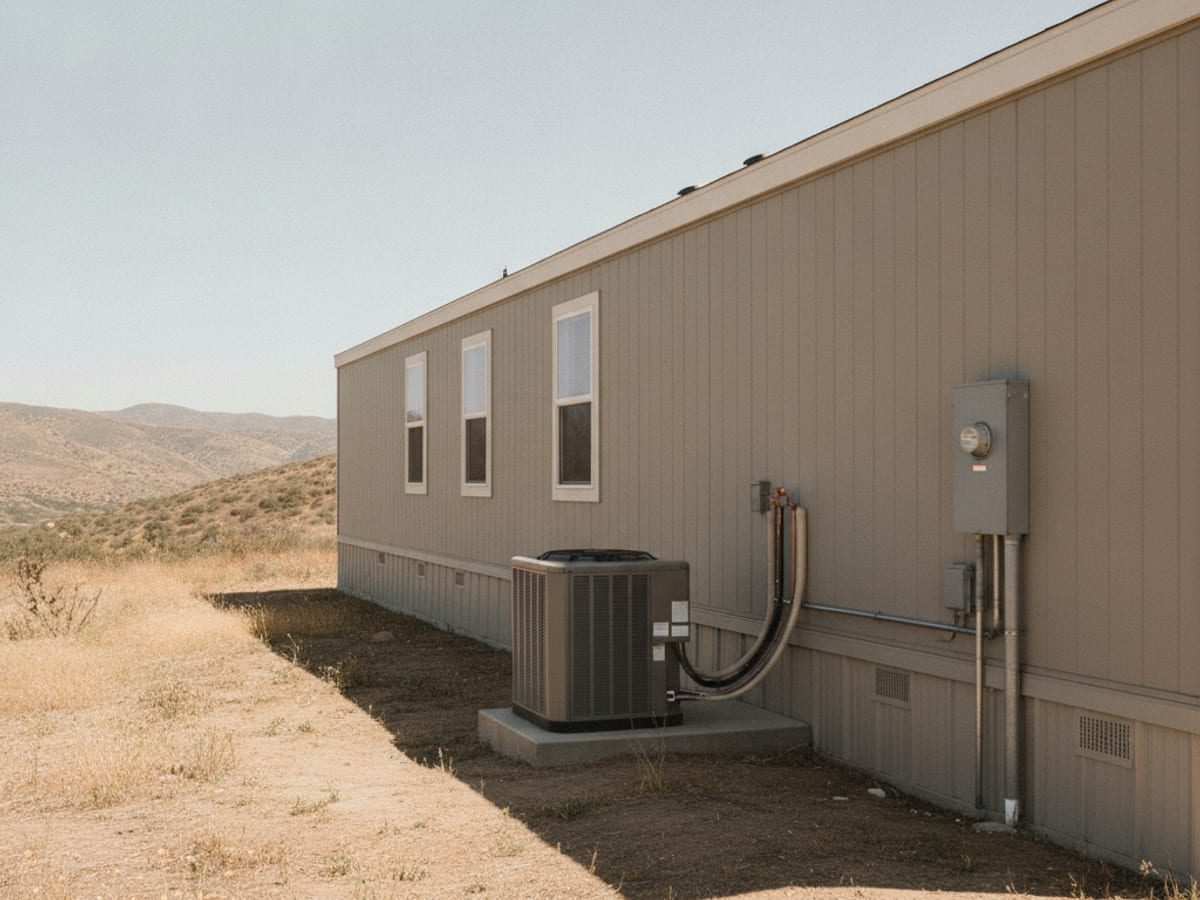
When a manufactured home tends to hold and build value in California
A few conditions line up when a manufactured home purchase behaves like a real estate investment rather than a depreciating one.
You own the land, or you’re buying land and home together. A land-and-home package that closes as one real estate transaction, with the home destined for a permanent foundation and 433A conversion, puts the land’s value to work for you from day one.
The foundation and conversion actually happen. A permanent foundation and a recorded 433A aren’t optional paperwork. Skip that step and the home stays personal property no matter how solid the installation looks.
You’re not planning to flip it in a year. Real estate value compounds over time. A manufactured home on owned land held for several years benefits from the same land appreciation dynamics as any other San Diego property held over that period. A quick flip doesn’t give that dynamic time to work.
You’re using it as a primary residence or a permitted ADU. An ADU manufactured home on a permanent foundation adds usable square footage. Separate sale under AB 1033 exists only where the local ordinance allows it. Ask the reviewing agency for the current written rule before you treat that as an exit.
When a manufactured home is a weaker investment
The honest downside case matters just as much.
Park space rent can also rise over the years you hold the home, which eats into any equity gain from resale, since a rent increase makes the total cost of ownership go up even if the home’s price stays flat.
Pre-1976 mobile homes. Homes built before HUD’s federal construction standards took effect in June 1976 are excluded from most financing programs and most parks. They depreciate faster and sell to a much smaller buyer pool.
Chattel-financed purchases in general. Personal-property loans carry higher rates and shorter terms than a mortgage, which raises the true cost of ownership regardless of what the home is worth on paper.
Any purchase treated as a quick flip. Transaction costs, chattel depreciation curves, and park approval requirements all work against a fast resale. This is a hold, not a trade.
Why San Diego County’s land scarcity matters more than the home
Picture two identical manufactured homes, same floor plan, same finish level, same year built. One sits on a leased pad in an Ohio park where land is inexpensive and abundant. The other sits on a permanent foundation on an acre you own in a North County community like Fallbrook or Ramona. Ten years later, those two homes are not comparable assets. The first one has aged like any factory-built structure. The second one is sitting on San Diego County land that has, historically, moved in the opposite direction. The home is nearly the same. The ground underneath it is not.
This is why the question “is a mobile home a good investment” can’t be answered with a single yes or no. It has to be answered against a specific parcel, in a specific part of the county, under a specific ownership structure.
How to actually run the numbers before you buy
A useful worksheet, before you sign anything:
- What is the home’s classification today, and what will it be after purchase? Real property or personal property.
- If personal property, is there a realistic path to a permanent foundation and 433A conversion, and what does that path cost?
- What is the land itself worth, separate from the home, and how has that specific area trended over the past decade?
- What financing are you actually eligible for, chattel or conventional, and how does that rate difference affect your real cost of ownership?
- How long do you plan to hold this property? Real estate appreciation is a multi-year story, not a multi-month one.
Our manufactured homes for sale guide and our private land placement service both walk through these questions in more depth for buyers who are still deciding which path fits their situation.
Frequently asked questions
Do manufactured homes appreciate in California?
It depends entirely on land ownership. A manufactured home permanently installed on a foundation on land you own, and converted to real property through HCD Form 433A, tends to track the value of the underlying land the way any other San Diego County real estate does. A manufactured home in a leased-land park, still on personal-property title, generally does not appreciate the way real estate does. It’s a different legal asset with a different value curve.
Is a manufactured home on private land a better investment than one in a park?
For most buyers focused on long-term value, yes. Owning the land means you’re building equity in real estate, not just a structure. A park home can still make sense financially, especially for buyers prioritizing lower upfront cost or flexibility, but it should be evaluated as housing with lower ongoing cost rather than as an appreciating asset.
Does a manufactured home ADU add resale value to my property?
A properly permitted ADU on a permanent foundation adds usable living space to a property, which generally supports the property’s overall value the way any legitimate addition would. Separate sale under AB 1033 exists only where the local ordinance allows it. Ask the reviewing agency for the current written rule before you treat that as an exit.
What is HCD Form 433A and why does it matter for resale value?
HCD Form 433A is the document a licensed contractor records after a manufactured home is installed on an approved permanent foundation. Recording it converts the home from personal property to real property, which is what allows the home to be taxed, financed, and sold like a conventional house. Without it, even a beautifully installed home stays on personal-property title.
How long should I plan to own a manufactured home for it to work as an investment?
Treat it the same way you’d treat any real estate purchase built on land appreciation: a multi-year hold, not a short-term flip. Transaction costs, financing structure, and the time it takes land value trends to play out all favor buyers who plan to stay for several years rather than resell quickly.
Run your specific scenario before you buy
The honest answer to “is buying a mobile home a good investment in California” isn’t a number you can look up. It’s a calculation specific to the parcel, the financing, and the timeline in front of you. Land & Home SD is a neutral guide, not a dealer, so we have no stake in which path you choose. We help San Diego County buyers work through the real property versus personal property question, the actual land value picture, and the financing path before any money changes hands.
Call (858) 400-4608 or visit our manufactured homes for sale guide to run your specific numbers with us before you commit to anything.