Financing a mobile home in a park starts with one distinction. You’re buying the home while renting its space. Confirm that arrangement first, then give every lender the same title and park information.
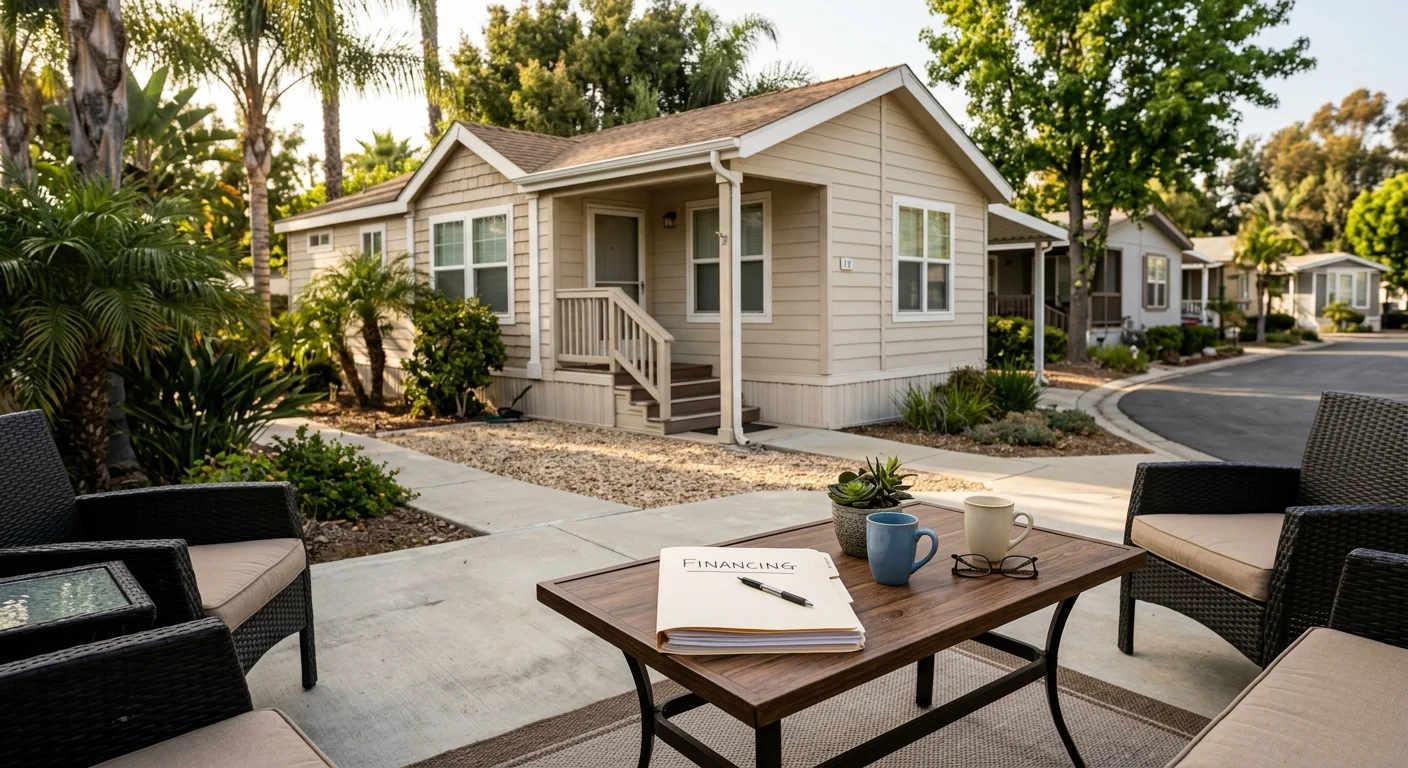
Confirm the home and land arrangement
Start by identifying exactly what the seller is offering. Don’t assume the listing price includes any ownership interest in the land. Ask the seller, agent, and park management to describe the arrangement in writing.
Your first checklist should answer these questions:
- Is the sale limited to the home?
- What document governs the buyer’s use of the space?
- Who currently appears as the home’s registered owner?
- Does the sale include any separate ownership interest?
- How is the home described on its current title records?
- Which park charges would become the buyer’s responsibility?
Don’t label the home’s ownership or finance status from an advertisement. Give the actual documents to the lender and let that lender explain its classification.
The home’s age also matters when describing it. California law calls a qualifying structure built before June 15, 1976, a mobilehome. A qualifying structure built on or after that date is a manufactured home. Use the wording shown in the records when speaking with lenders.
San Diego County buyers should repeat this check for every property. Don’t carry assumptions from an Oceanside tour into Escondido. The same caution applies between El Cajon, Santee, Chula Vista, and San Ysidro. Each park sets its current conditions, so another park’s paperwork isn’t a substitute.
The buying and placement process provides a broader sequence for reviewing the home, ownership, and transaction. For this purchase, keep the rented-space arrangement at the top of every conversation.
Ask which loan path fits that ownership
Don’t begin by asking only for the lowest advertised rate. Begin by explaining that the purchase involves a home on rented park space. Then ask whether the lender offers a loan for that exact arrangement.
Loan types, down payments, loan limits, approval standards, and insurance requirements depend on the lender and transaction. Ask each lender to review the exact park-home purchase and put its current terms in writing.
Useful questions include:
- Do you finance a home when the land isn’t included?
- How will you classify this home after reviewing its records?
- Which title and registration documents must you review?
- Which park documents do you need from the buyer?
- Must park approval occur before a specific lending step?
- What rate, payment terms, costs, and conditions apply now?
- Which facts could change the lender’s initial answer?
The lender should answer using the actual home, title, buyer, and park information. A general online product description doesn’t confirm eligibility for one San Diego County property.
Our manufactured home financing guide can help you organize the conversation. The manufactured home mortgage guide covers questions for other ownership arrangements. Don’t assume its mortgage language applies to a rented-space purchase.
California HCD regulates manufactured and mobilehomes. Its manufactured and mobilehomes page is a useful starting point for current agency information. If a dealer or salesperson is involved, use the HCD occupational licensing page and ask HCD how to confirm current status.
Gather title, park, and insurance documents
Build one shared document packet before comparing lenders. This keeps the property description consistent. It also makes missing answers easier to spot.
California HCD handles manufactured-home registration and titling, not the DMV. For a used-home resale, California law requires the escrow instructions to include the current registration card, title certificate, and registration copies held by junior lienholders. Legal owners and junior lienholders must also address the release or approved assumption of their interests.
Ask the seller or escrow contact which records are available. Don’t treat a photo of one page as a complete title review. The HCD registration and titling page is the agency destination for current information.
Keep separate folders for the home, park, lender, and insurer. Your working packet may include:
- The title and registration records supplied for review
- The seller’s written description of what’s included
- The park’s current application materials
- The document governing occupancy of the space
- Current park charges disclosed for this property
- Written lender requests and conditional answers
- Insurance questions and written carrier responses
- Inspection or valuation documents requested for this loan
That isn’t a universal approval list. Each lender, park, insurer, and escrow participant sets or communicates its current conditions. Ask each party what’s missing.
For insurance, provide the same property facts given to the lender. Ask the insurer to identify its current requirements, exclusions, and costs in writing for that home and park arrangement.
Keep the original wording from each document. Don’t rewrite the home type, title status, park arrangement, or ownership description to make applications appear consistent. Resolve any conflict with the party responsible for that record.
Compare lender conditions using the same facts
Mobile home park financing becomes harder to compare when lenders receive different descriptions. Give each lender the same home address, title information, purchase arrangement, buyer facts, and park documents. Record any extra information one lender requests.
Use a comparison sheet with one column per lender. Include the date of each written response because current terms may change. Compare the full proposal, not one highlighted figure.
Your sheet should capture:
- The lender’s name for the proposed loan
- The property and ownership facts it reviewed
- The amount it says it may finance
- The stated rate and whether it may change
- The stated payment term and payment structure
- Buyer funds requested for the transaction
- Lender and third-party costs disclosed
- Appraisal, inspection, title, and insurance conditions
- Park-related conditions
- Any stated expiration or update point
- Questions that remain unanswered
Don’t fill a blank with an estimate. Mark it “not confirmed,” then ask the lender who sets that condition. A clean blank is safer than a guessed fee, schedule, or approval rule.
Use our California chattel lender comparison as a question guide. Ask each lender whether that terminology applies to your transaction. The article doesn’t replace a written answer based on the home’s current title and rented-space arrangement.
Check that every proposal describes the same purchase. One lender may be answering a different question if its paperwork assumes land ownership. Point out the rented space and request a corrected explanation.
Land & Home SD doesn’t make loans, approve buyers, quote lending terms, or handle escrow. We help buyers prepare better questions and connect with licensed independent manufactured-home professionals. The buyer contracts and pays those professionals directly.
Resolve park approval questions before closing
Treat lender review and park approval as separate questions unless the written documents say otherwise. A lender’s positive response doesn’t explain the park’s process. Likewise, a park response doesn’t confirm financing.
Approval standards, fees, income rules, document lists, and schedules can differ by park. Request the current instructions and conditions directly from management for the park you are considering.
Ask these questions before relying on an approval:
- Who accepts and reviews the park application?
- Which buyer and household documents are requested?
- What current park terms will apply to this space?
- Are any questions still pending?
- How will the park communicate its decision?
- Does the decision have conditions or an expiration?
- Who should receive updates if the transaction changes?
- What does the lender need from the park?
Give the lender a copy of the park response if requested. Give park management only the lender information the park requests. Ask both parties to identify any unresolved dependency in writing.
Whether you’re buying in Oceanside or Chula Vista, use that park’s current documents. Don’t borrow a checklist from another community. Park names, forms, charges, and decision procedures can’t be confirmed from a nearby listing.
Review any remaining title, lender, insurance, and park questions together before committing. If the wording conflicts, ask the issuing party to clarify it. The buying process guide can help you place these checks within the larger purchase.
When to call us
Call before you commit if the land arrangement, title records, lender answer, or park process remains unclear. Land & Home SD can help you organize the right questions without acting as the lender, park, dealer, or escrow holder. Call us at (858) 400-4608 and we’ll walk through your options and connect you with a licensed local dealer.