A double-wide is two factory-built sections joined on your lot. The floor plan can look right on paper and still fail the parcel. Jurisdiction, records, truck access, and utilities decide that before you pick a model.
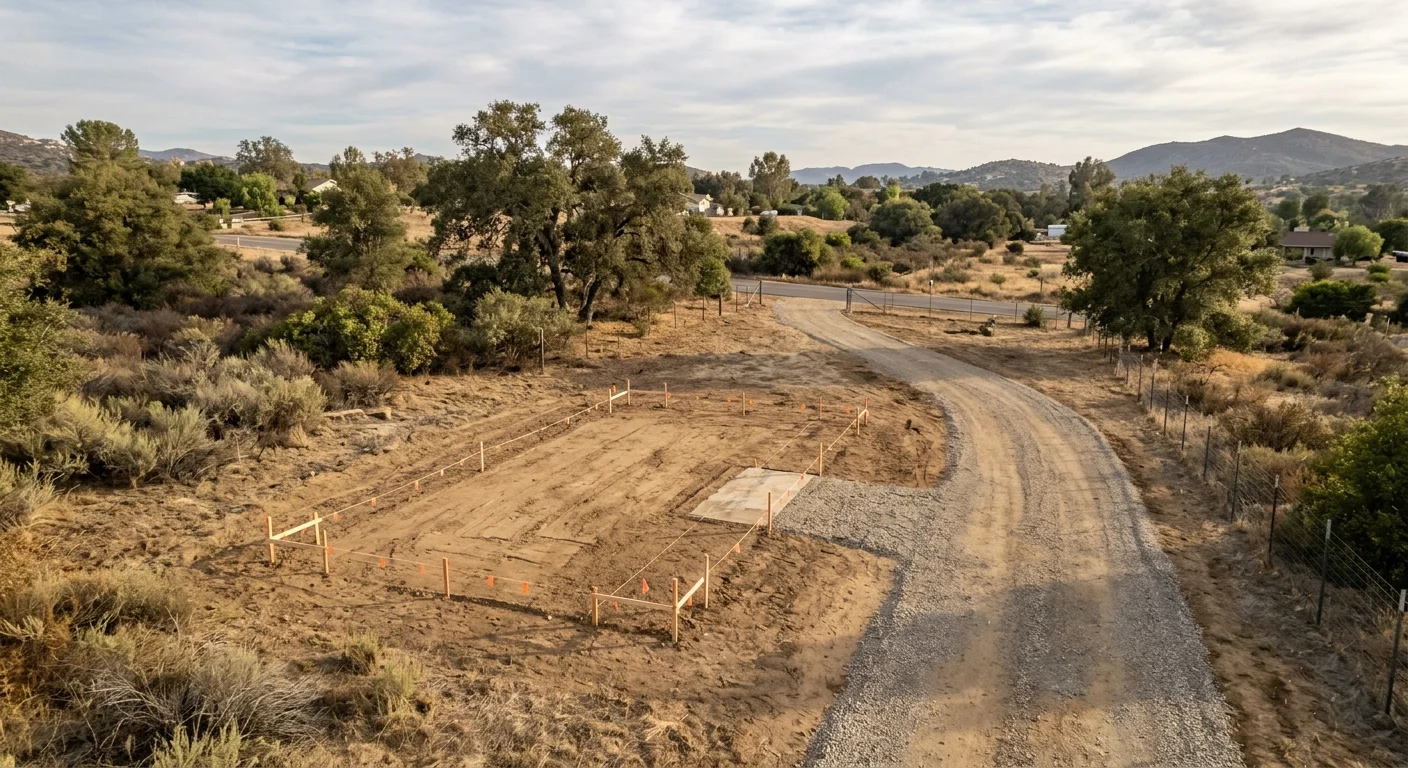
Identify the San Diego city or county jurisdiction
Start with who governs the land, not with a floor plan. San Diego County is not one permitting desk. An unincorporated parcel in Lakeside, Ramona, Alpine, Valley Center, or Fallbrook usually runs through San Diego County Planning & Development Services. A lot inside the City of San Diego, Chula Vista, El Cajon, Escondido, Oceanside, Encinitas, or another incorporated city runs through that city.
Those desks do not use the same packet. County Planning & Development Services publishes PDS 103 for eligible manufactured homes on private lots in County jurisdiction. That handout covers qualifying mobilehomes built September 15, 1971 through June 14, 1976, and manufactured homes built from June 15, 1976 with the stated approval. It also has roof-pitch and eave rules with listed exceptions and a Director waiver. Those County appearance rules are not a snow-load rating, and they are not a citywide rule for Encinitas, Chula Vista, or downtown San Diego. Ask the agency that actually issues the permit for your APN.
Private land and a park space are different questions. California’s Mobilehome Residency Law is a park-residency statute. It does not answer whether a double-wide can sit on a backyard in Clairemont, a ranch in Ramona, or your parents’ lot in El Cajon. A City of San Diego bulletin about work inside a mobilehome park does not decide a private-lot case. If the search in your head is “can I put a double wide on my property,” you are in the private-land lane unless the space is a park lot.
California law also splits the product. Under Health and Safety Code 18007, a manufactured home is a post-June 15, 1976 HUD-code dwelling built on a permanent chassis and transportable in one or more sections. A pre-June 15, 1976 unit is a mobilehome under section 18008. Factory-built housing, often called modular, is a different statute. The California Department of Housing and Community Development is the state regulator for manufactured and mobilehomes. Local planning still decides whether your parcel may take one.
Coastal north county, inland north county, the central city, East County, and the South Bay do not share the same housing stock or the same counter. Confirm the city or the unincorporated county first. Then ask that agency, in writing, whether a manufactured home on that parcel is even an allowed use.
Check the proposed footprint against parcel records
“Will a double wide fit on my lot” is a records question before it is a shopping question. Pull the assessor parcel number, the recorded lot lines, and a current survey if you have one. A tax map is not a substitute for a field survey when the home will sit close to a slope, an easement, or a neighbor’s wall.
A double-wide is two transportable sections. Under California’s manufactured-home definition, each section is part of a structure that is at least eight body feet wide, or at least 40 body feet long, and at least 320 square feet when erected on site. That legal minimum is not a floor plan. Dealers sell many widths and lengths. The only footprint that matters is the one on the plan you intend to set, plus whatever stairs, decks, and mechanical pads the installer will add.
Lay that plan on the parcel, not on the street frontage. Canyons in La Mesa and El Cajon, tight coastal lots in Encinitas and Imperial Beach, and deep inland parcels in Valley Center all waste space in different ways. Setbacks, easements, septic fields, and driveway turnaround are local rules. Land & Home SD cannot publish a countywide setback number, because no verified figure in our claims ledger covers every city. The planning desk and a licensed surveyor give the buildable envelope for that APN.
If you are comparing a narrower single section with a two-section home, read the single-wide versus double-wide guide before you fall in love with a model. Size on a brochure is not size on a pad. Marriage-line length, roof overhangs, and hitch removal all change the rectangle the lot has to hold.
Do not treat an existing house, garage, or old coach as proof the new home fits. The replacement unit can be longer, wider, or rotated. Confirm the proposed corners against recorded lines. If the records and the field do not match, stop and get a survey before anyone orders a factory slot.
Confirm delivery and installation access
A double-wide does not arrive as one box. Two sections travel on separate tows, then get set, joined, and finished on site. The lot can be large enough on paper and still block the truck. That is common on older streets in National City and City Heights, on canyon cul-de-sacs in El Cajon, and on long private drives in Ramona and Alpine.
No verified statewide delivery-width, grade, or crane standard sits in our claims ledger. Do not guess a number from a forum. The transporter and the installer walk the route: public road, last turn, overhead lines, trees, slope, and the pad itself. They tell you whether the sections can reach the set location without an off-site staging yard or a different floor plan.
Access is not only the day of delivery. The installer still needs room to join the sections, set the roof cap, and work the marriage line. A pad jammed against a retaining wall can pass a tape-measure check and fail the set. Coastal lots with mature landscaping and inland lots with orchard rows fail for different reasons. The professional who will move the home has to say so in writing.
If the parcel is in a park, the park operator and the enforcement agency control space access. If the parcel is private land, the city or County building desk and the transporter control the public-road piece. Land & Home SD does not transport sections or perform the set. The licensed dealer and installer we connect you with do that work, and they should see the driveway before you sign a home order.
Separate home size from utility and site work
Fitting the box is only half of “double wide on private land San Diego.” Power, water, sewer or septic, and a lawful foundation are separate scopes. A 1,400-square-foot plan can sit on a pad that still cannot take the load, the trench path, or the tank field.
For installation as a permanent fixture, California Health and Safety Code 18551 requires a building permit first. The owner must show proof of property ownership or a long-term lease of 35 years or more (or mutually agreed terms), evidence the home is lien-free or written consent from lienholders, department-approved foundation plans, and the manufacturer’s installation instructions. The statute also states an $11 fee per transportable section. That figure is in the code and may be subject to adjustment. It is not the cost of the project. Land & Home SD does not set prices, and no verified market total for a San Diego double-wide set is in our ledger. Ask the dealer and installer for a written scope, then confirm fees with the permitting agency.
A double-wide is two transportable sections, so that statutory section fee, if it still applies at the current amount, is charged per section. Site work is the larger unknown. Urban South Bay lots often already have sewer and SDG&E service. East County and inland north county parcels more often mean a well, a septic system, or a long service drop. Those conditions are parcel-specific. A perc result, a panel upgrade, or a new tank is not something to invent from a blog.
HSC 18551 also says that within five business days of a certificate of occupancy, the enforcement agency records a document naming the owner of the real property and stating the home has been affixed. HCD consumer guidance says a manufactured home installed on a foundation system is no longer registered by HCD. Follow HCD registration and titling to cancel registration and confirm the property record. That process is not a lender approval, and it is not a substitute for the building permit.
HUD Title I can finance a manufactured home, a lot, or both, and HUD notes the home may be personal property or real estate. That is not a promise of a loan, a rate, or a term. Foundation conversion can change classification, taxes, and resale. Get those answers from the lender, the tax collector, and HCD, not from a floor-plan brochure.
Parents’ land does not make the home free. If you want the unit affixed as a permanent fixture, 18551 still wants ownership or a qualifying long-term lease, lien clearance, plans, and a permit. Living in a travel trailer on a backyard is a different product and a different local rule. We could not confirm a countywide “yes, you can live in a trailer on your lot” standard from our verified ledger. Ask the same planning desk that will review a manufactured home.
For the private-land path itself, use the home on private land service page and the longer manufactured home on private land in San Diego guide. Those pages keep park rules and land rules from getting mixed.
Get written findings before choosing the home
Do not order a double-wide because a neighbor has one. Get written findings on your APN first. That packet should come from the people who actually decide the file: the city or County planner, the building desk, a licensed surveyor if lines are in doubt, the dealer, the transporter, and the installer. Land & Home SD does not approve parcels, sell homes, or pull permits. We explain the sequence and connect you with licensed independent local pros.
Ask the jurisdiction, in writing, whether a HUD-code manufactured home is an allowed use on that parcel, what application they want, and which agency inspects the set. Ask the dealer for the exact transportable-section count and the manufacturer’s installation instructions. Ask the installer how the two sections will sit on the surveyed pad. If anyone answers with a shrug, wait.
The buying and placement process is the order of work. Factory production and site work can overlap only after the lot is known. A consultation with Land & Home SD is free to buyers and has no obligation. Use it before you put a deposit on a model that cannot reach Fallbrook, cannot sit inside a Chula Vista setback, or cannot connect to the septic field you already have.
Written findings also protect you from mixing products. A modular, factory-built house, a manufactured double-wide, and a park trailer are not interchangeable under California law. If the counter says no to one, that is not automatically a no to the others. It is also not a yes. Get the finding on the product you intend to set.
When to call us
Call before you buy a floor plan, and before you assume a parents’ lot, a vacant side yard, or a large inland parcel will take a two-section home. If the jurisdiction, the survey, or the driveway is still a guess, stop. Call us at (858) 400-4608 and we’ll walk through your options and connect you with a licensed local dealer.