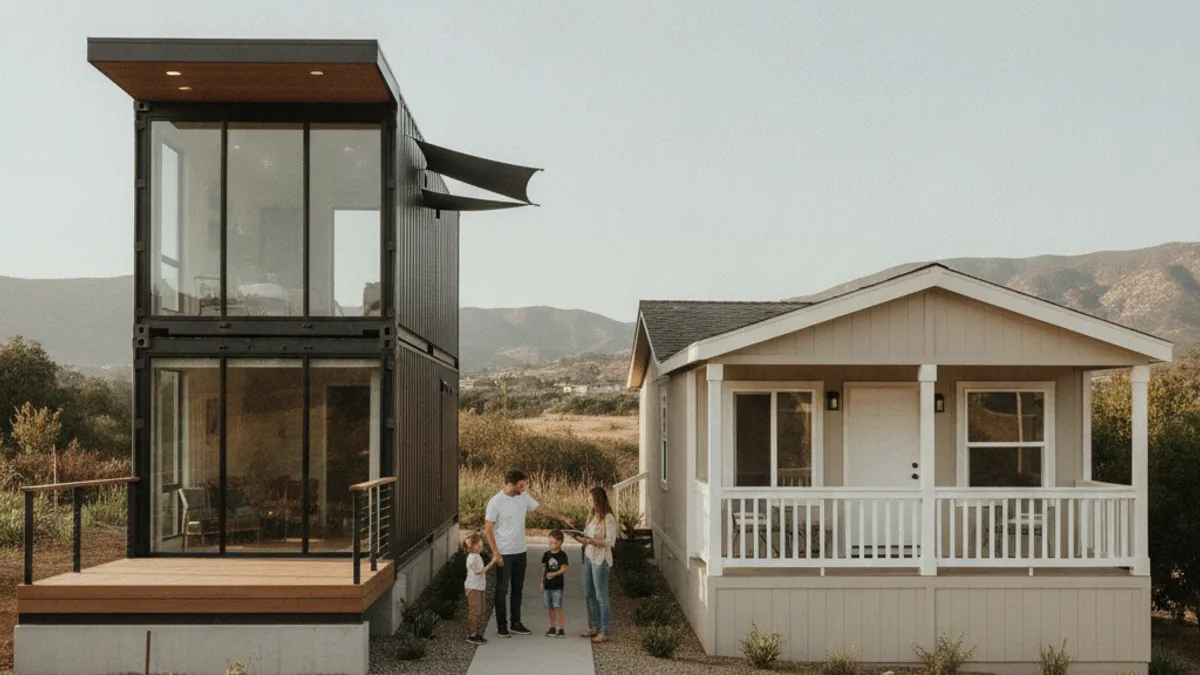
Shipping container homes show up constantly in design feeds and social media, styled with huge windows and clean modern lines. Manufactured homes don’t get the same aesthetic treatment, but they carry something container homes largely don’t: a well-established, decades-old regulatory and financing framework built specifically for them.
What you’re actually comparing
A manufactured home is built in a factory to a federal HUD construction code, inspected at the factory, and delivered largely complete. A container home starts as a steel shipping container, originally built to move cargo, and gets converted into livable space through cutting, insulating, framing, and finishing, either by a specialized builder or as an ambitious DIY project. The finished product can look striking, but the construction path getting there is far less standardized than manufactured housing.
Permitting is the biggest gap between the two
Manufactured homes have an established permitting and placement path in San Diego County, built around decades of state and local regulation specific to factory-built housing. Container homes don’t have an equivalent standardized path. Depending on the jurisdiction, a container home conversion may be permitted as a standard site-built structure, which means it has to meet the same building code requirements as any conventional house, insulation, egress, structural, electrical, plumbing, all applied to a steel box that wasn’t originally engineered as a dwelling.
Whether a specific container home project can be permitted, and what it would take to bring it up to code, depends entirely on your local jurisdiction’s building department and the specific design. This is genuinely a case-by-case question, and it’s worth a conversation with your local building department before you commit to a container home project, rather than assuming it will be straightforward because the exterior shell is inexpensive.
Financing container homes is harder
Manufactured homes have established financing paths, including loan products built specifically around them. Container homes generally don’t, since most lenders don’t have a standardized underwriting approach for a converted shipping container, and many treat a container home conversion more like a custom construction project, if they’ll finance it at all. Buyers often end up paying cash or using a construction loan intended for conventional building, which can come with different terms and requirements than a typical mortgage.
The real cost comparison isn’t just the shell
A bare shipping container is genuinely inexpensive to buy. The conversion cost, insulation, framing, utilities, code-compliant finishes, is where container home budgets tend to expand well past initial expectations, and unlike a manufactured home’s factory price, that conversion cost is much harder to estimate in advance without a specific contractor bid. A manufactured home’s total cost is more predictable upfront because the construction process is standardized. A container home’s total cost depends heavily on the scope of the conversion and the specific contractor doing the work.
How steel performs in a San Diego climate
A shipping container is built from steel, which conducts heat and cold far more readily than the materials used in conventional or manufactured home construction. Without substantial added insulation, a container home can run hot in San Diego’s inland valleys and East County heat, and steel is also prone to corrosion over time in coastal air unless it’s properly treated and maintained. None of this makes a container home unlivable, but it does mean the insulation and moisture-barrier work has to be done thoroughly, which adds to the conversion cost mentioned above rather than being optional.
Manufactured homes built to HUD standards already account for climate performance as part of the federal construction code, which is one more reason their total cost is more predictable than a container conversion’s.
Which one is the smarter investment
For most San Diego County buyers who want a predictable cost, an established financing path, and a straightforward placement and permitting process, a manufactured home is the more proven option. Container homes can work well for buyers with construction experience, a specific design vision, and the patience to navigate a less standardized permitting and financing process, but it’s worth going in with clear eyes about how different that process is from buying a manufactured home.
Frequently asked questions
Are container homes cheaper than manufactured homes overall?
The container shell itself is inexpensive, but conversion costs can add up significantly, and the total often ends up comparable to or higher than a manufactured home once permitting, utilities, and finishing are factored in.
Can I get a mortgage for a container home in San Diego County?
Financing is less standardized than for manufactured homes. Some buyers use construction loans or pay cash. Check with a lender directly about what they’ll finance for your specific project.
Is it harder to get a permit for a container home than a manufactured home?
Generally yes, since manufactured homes have an established regulatory path and container homes are often permitted as custom site-built structures, which means meeting the same code requirements as any conventional house. Confirm specifics with your local building department.
Do container homes hold their value as well as manufactured homes?
Resale value for container homes is less established since there’s a smaller market and more variability in build quality. Manufactured homes have a more predictable resale market in most San Diego County communities.
If you’re weighing a container home against a manufactured home for your San Diego County property, call Land & Home SD at (858) 400-4608 and we’ll help you compare the real costs and timelines.